AUO G121XN01 V0: A Robust Industrial Display for Extreme Temperatures
## AUO G1.1XN01 V0 XGA Industrial TFT-LCD Display
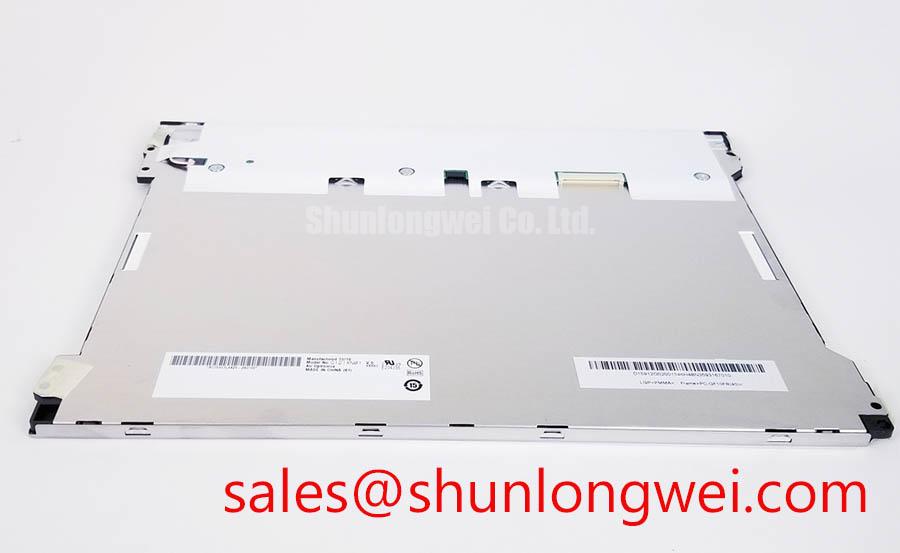
This AUO G121XN01 V0 is a 12.1-inch a-Si TFT-LCD module engineered for high reliability in demanding industrial applications. It delivers consistent optical performance across an exceptionally wide operating temperature range, ensuring operational stability in thermally challenging environments. This makes it a prime candidate for systems where dependability is a primary engineering concern.
* **Core Specifications:** 12.1-inch | 1024×768 XGA | 400 cd/m² | -30°C to +80°C Operating Temperature
* **Key Advantages:** Delivers stable performance in extreme thermal conditions; ensures excellent readability with anti-glare surface treatment.
* **Application Focus:** Suitable for industrial controls and HMIs deployed in environments without climate control, such as outdoor kiosks or unheated warehouses.
Download the official G121XN01 V0 Datasheet (PDF)


Technical Analysis for System Integration
The standout feature of the G121XN01 V0 is its wide operating temperature range of -30°C to 80°C, a critical parameter verified in the official datasheet. This capability allows the display to function reliably in environments where other commercial-grade displays would fail, from refrigerated areas to sun-exposed enclosures. The stability of the liquid crystal material at these temperatures prevents issues like freezing (slow response time) or blackouts (overheating). Think of this thermal robustness as an all-weather capability for your HMI; it maintains consistent visual performance without requiring complex and costly external heating or cooling systems, thereby simplifying the overall mechanical design.
This thermal resilience is complemented by the display’s optical characteristics. A brightness of 400 cd/m² (nits) paired with a high 700:1 contrast ratio ensures strong image legibility. Furthermore, the datasheet specifies an anti-glare surface treatment. This is not just a coating; it’s an engineered surface designed to diffuse ambient light, preventing distracting reflections and preserving image clarity on a factory floor or in a vehicle cabin. This combination of brightness, contrast, and anti-glare treatment ensures that critical data remains readable for operators under varied lighting conditions. For more on ensuring display durability, see our guide on vibration and shock resistance for industrial displays.
Optimized Application Scenarios
The specific set of features documented in the datasheet makes the G121XN01 V0 a strong choice for several applications:
* **Industrial Automation:** The XGA (1024×768) resolution is a standard for many HMI software platforms, and the wide temperature range allows for placement directly on machinery where temperatures fluctuate.
* **Outdoor Kiosks & Vending:** The ability to operate at -30°C is crucial for systems deployed in cold climates, preventing display failure during winter months.
* **Transportation Systems:** In-vehicle or marine bridge displays benefit from the wide viewing angles (80°/80°/60°/70°) and anti-glare surface, ensuring readability for operators who may not be positioned directly in front of the screen.
* **Medical Equipment:** The reliable and stable performance of the display is essential for patient monitoring and diagnostic devices where data accuracy is non-negotiable.
This module is an optimal fit for systems requiring proven visual performance across a broad and challenging thermal spectrum.
Key Specifications of the G121XN01 V0
| Parameter | Specification | |
|---|---|---|
| Display | Panel Size | 12.1 inches |
| Resolution | 1024(RGB) × 768 (XGA) | |
| Aspect Ratio | 4:3 | |
| Pixel Pitch | 0.240(H) × 0.240(V) mm | |
| Optical | Luminance | 400 cd/m² (Typ.) |
| Contrast Ratio | 700:1 (Typ.) | |
| Viewing Angle (L/R/U/D) | 80/80/60/70 (Typ.) (CR≥10) | |
| Surface Treatment | Anti-Glare, Hard coating (3H) | |
| Electrical & Interface | Interface | LVDS (1 ch, 6-bit) |
| Supply Voltage (VDD) | 3.3V (Typ.) | |
| Backlight | CCFL, 50,000 hours (Typ.) | |
| Mechanical & Environmental | Module Size | 260.5(W) × 204.0(H) × 9.2(D) mm |
| Operating Temperature | -30°C to +80°C | |
| Storage Temperature | -30°C to +80°C | |
Note: All specifications are sourced directly from the official manufacturer’s datasheet. For detailed electrical and timing characteristics, refer to the full PDF document.
Engineer’s FAQ
How does the G121XN01 V0 handle performance at the extreme low end of its temperature range?
The datasheet specifies a -30°C minimum operating temperature. At this temperature, the display is engineered to remain fully functional. However, as is typical for LCDs, the liquid crystal response time may be slower compared to its performance at 25°C. System designers should account for this potential increase in pixel transition time in applications where high-speed video is critical at low temperatures.
What is required to drive the backlight on this module?
The G121XN01 V0 includes a CCFL backlight system. According to the datasheet, the module’s backlight inverter is not built-in. Therefore, an external CCFL inverter is required to power the backlight lamps. The datasheet provides specifications for the lamp voltage and current to facilitate the selection of a suitable inverter.
What are the primary LVDS interface connection considerations?
This module uses a single-channel, 6-bit LVDS interface. It’s crucial to match the pinout on the host controller board to the specified connector pinout in the datasheet to ensure proper data transmission. Careful attention should be paid to the differential pair routing on the PCB to maintain signal integrity, a topic explored in our article on mastering signal integrity.
Is this display compatible with touch panel integration?
The G121XN01 V0 is a display module only and does not come with an integrated touch panel. However, its flat bezel design and robust mechanical structure make it suitable for integration with third-party resistive or projected capacitive (PCAP) touch overlays.
Enabling Reliable System Design
The AUO G121XN01 V0 provides a foundation for building reliable human-machine interfaces that must operate without fail in fluctuating thermal conditions. Its combination of a wide temperature range, solid optical performance, and standard XGA resolution allows engineers to focus on system-level innovation, confident in the display’s ability to deliver consistent visual output.