AUO M150XN07 V9: A Technical Review for Industrial System Integration
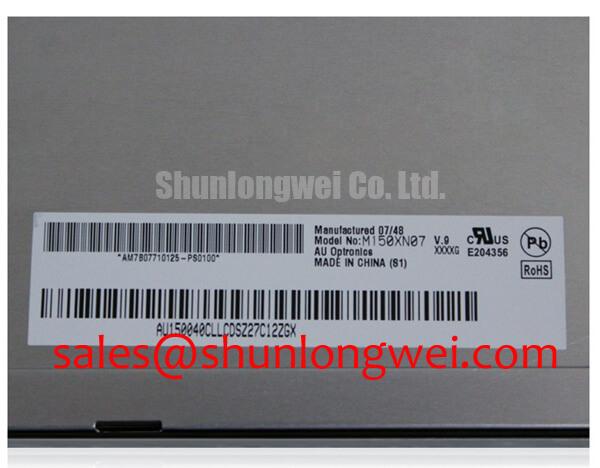
## AUO M150XN07 V9 15.0-inch XGA Industrial TFT-LCD Module
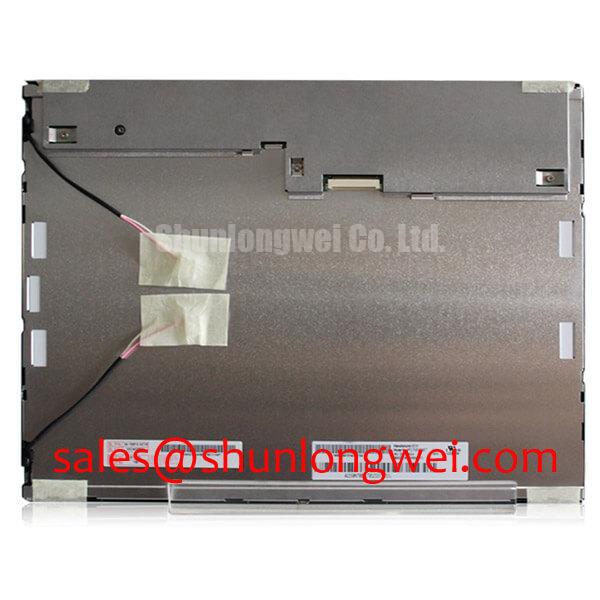
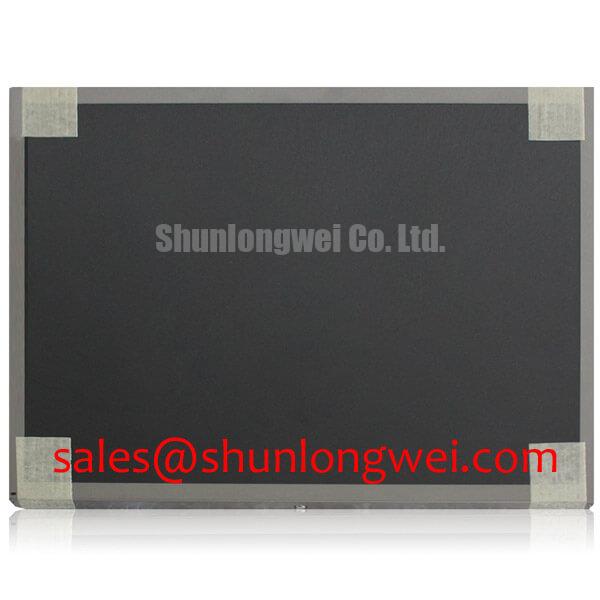
The AUO M150XN07 V9 is a 15.0-inch a-Si TFT-LCD module delivering proven performance for industrial human-machine interfaces and instrumentation. It provides a stable and reliable display solution, balancing optical performance with mechanical durability for integration into a wide range of systems. This panel is engineered for applications where consistent visual output and long-term availability are key design criteria.
* **Core Specifications**: 1024×768 XGA | 700:1 Contrast Ratio | LVDS Interface
* **Key Advantages**: Standardized interface for simplified system integration, anti-glare surface for improved readability.
* **Intended Integration**: The LVDS interface is an industry standard, which helps engineers looking for a straightforward upgrade path or new system design with predictable electrical characteristics.
Download a Representative Datasheet (PDF)
Technical Analysis for System Integration
The M150XN07 V9 is built around a conventional a-Si (Amorphous Silicon) TFT-LCD structure, a technology known for its maturity and reliability in industrial settings. It renders 16.2 million colors using a 6-bit + FRC (Frame Rate Control) driver, providing a sufficient color depth for most industrial GUIs and monitoring applications. The panel’s surface features an anti-glare treatment with a 3H hard coating, which mitigates reflections from overhead lighting and provides a degree of scratch resistance, a necessary feature for displays in active work environments.
A key electrical characteristic is the single-channel LVDS (Low Voltage Differential Signaling) interface. This interface is crucial for maintaining signal integrity over short-to-moderate distances within a system enclosure, reducing EMI issues compared to older parallel interfaces. Think of LVDS as a dedicated, high-speed lane for display data; its differential nature protects the signal from the electrical “noise” of surrounding components like power supplies and motor drives. This contributes to a stable, flicker-free image, a topic further explored in our guide to industrial LCD dimming.
Optimized Application Scenarios
The specific parameter set of the M150XN07 V9 makes it a strong candidate for controlled indoor environments where reliability is paramount.
* **Industrial Control Panels:** The 4:3 aspect ratio and XGA resolution are a common format for legacy HMI software, making this panel an excellent component for system maintenance or upgrades.
* **Medical Diagnostic Equipment:** The 700:1 contrast ratio ensures clear differentiation between graphical elements and text, which is vital for user interfaces on non-critical diagnostic machines.
* **Test and Measurement Instrumentation:** Its standard LVDS interface and 3.3V power requirement simplify integration into custom instrument chassis.
* **Point-of-Sale (POS) Terminals:** The hard-coated, anti-glare surface is well-suited for high-use commercial environments where lighting can be variable.
This display is best matched for systems requiring a proven, long-lifecycle 15.0″ XGA panel without the need for extreme temperature or brightness performance.
Key Specifications of the M150XN07 V9
| Optical & Display Characteristics | |
|---|---|
| Panel Type | a-Si TFT-LCD, LCM |
| Resolution | 1024(RGB)×768, XGA |
| Brightness | 250 cd/m² (Typ.) |
| Contrast Ratio | 700:1 (Typ.) |
| Viewing Angle | 70/70/65/60 (L/R/U/D) (Typ., CR≥10) |
| Display Colors | 16.2M (6-bit + FRC) |
| Response Time | 6/2 ms (Typ.) (Tr/Td) |
| Electrical & Interface | |
| Signal Interface | LVDS (1 channel, 8-bit), 20 pins |
| Supply Voltage | 3.3V (Typ.) |
| Backlight System | 2 pcs CCFL, 35K hours (Typ.) |
| Mechanical & Environmental | |
| Outline Dimensions | 326.5 × 253.5 × 12.0 mm (W×H×D) |
| Active Area | 304.128 × 228.096 mm (W×H) |
| Weight | 1.01 kg (Typ.) |
| Operating Temperature | 0°C to 50°C |
| Storage Temperature | -20°C to 60°C |
Engineer’s FAQ
**1. What is the key difference between this panel’s CCFL backlight and a modern WLED system?**
The M150XN07 V9 utilizes a Cold Cathode Fluorescent Lamp (CCFL) backlight system. CCFLs are a mature technology but typically have a shorter lifespan and require a high-voltage inverter, which is not integrated into this module. Modern WLED backlights offer longer lifespans, lower power consumption, and simpler DC driver circuits. Proactive management of any industrial LCD backlight lifespan is a critical design step.
**2. How should an engineer handle the CCFL inverter requirement?**
Since the module does not include an inverter, designers must source a separate, compatible inverter board. The datasheet specifies the backlight voltage and current requirements, which must be matched to the inverter’s output to ensure proper brightness and prevent damage to the lamps.
**3. What are the primary mounting and handling precautions for this module?**
The panel is designed for landscape orientation and has mounting holes on the side flanges. During installation, it’s critical to avoid applying twisting or bending forces to the module frame to prevent stress on the glass. As with any display, proper ESD precautions should be taken, and the front polarizer surface should be protected from scratches. For more on robust design, see our guide on vibration and shock resistance for industrial displays.
**4. Is the M150XN07 V9 suitable for applications with high ambient light?**
With a typical brightness of 250 cd/m², this model is optimized for indoor or controlled lighting environments. While the anti-glare surface helps reduce direct reflections, it is not considered a sunlight-readable display.
Design & Integration
The M150XN07 V9 represents a mechanically robust display module built on proven technology. It offers engineers a reliable XGA solution with a standard electrical interface that facilitates straightforward integration into industrial HMIs, medical devices, and instrumentation. Its performance characteristics are well-documented, enabling predictable and repeatable system design for indoor applications.