AUO M190PW01 V6: A Technical Review for Industrial Applications
AUO M190PW01 V6 19.0-Inch WXGA+ Industrial TFT-LCD Module
Introduction and Core Highlights
The AUO M190PW01 V6 is a 19.0-inch a-Si TFT-LCD module that provides a stable and reliable display solution for industrial applications. Its core value proposition is the delivery of clear, consistent visuals with wide viewing angles and a high-contrast 16:10 aspect ratio, making it well-suited for complex human-machine interfaces (HMIs) and monitoring systems where data legibility is critical.
- Core Specifications: 1440×900 WXGA+ | 250 nit Brightness | 1000:1 Contrast Ratio
- Key Advantages: Wide 85/85/80/80 viewing angles ensure off-axis readability. A standard LVDS interface simplifies system integration.
- Application Focus: The WXGA+ resolution provides a detailed canvas for visualizing process control data without requiring excessive scaling or scrolling.
Download Official Datasheet (PDF)


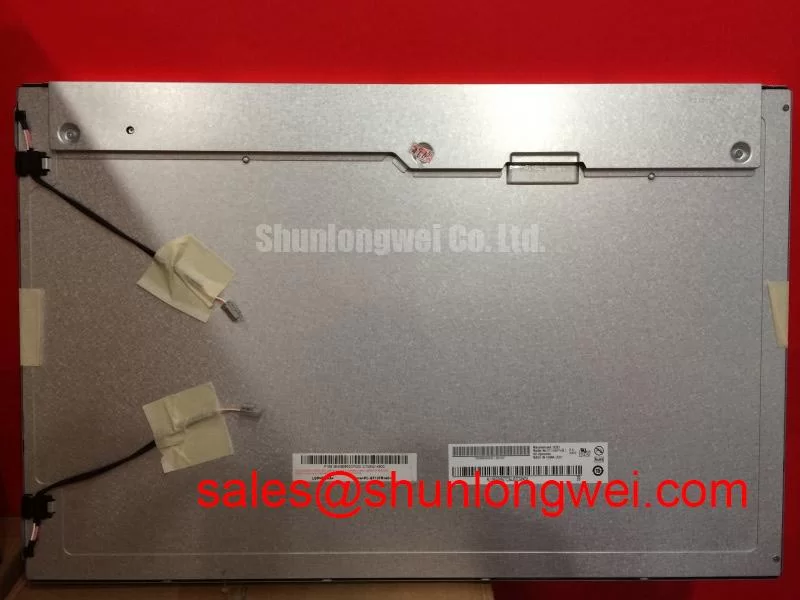
Technical Analysis for System Integration
The M190PW01 V6 is built around a practical set of features for industrial environments. The 1440 x 900 WXGA+ resolution in a 16:10 aspect ratio offers a significant advantage over older 4:3 displays, providing more horizontal space for data-rich graphical interfaces and side-by-side information panels. This reduces the need for operators to switch between screens, which can improve workflow efficiency in control room settings.
A key performance metric is the typical viewing angle of 85/85/80/80 degrees (L/R/U/D). This specification is crucial for applications where an operator might be viewing the display from various positions. Think of this specification like the beam of a flashlight; a narrow beam (poor viewing angle) means you must be directly in front to see clearly, while a wide beam (a good viewing angle) illuminates a much larger area, ensuring image color and brightness remain consistent even from off-center viewpoints. This is a vital characteristic for collaborative workstations or large machinery control panels.
Data connectivity is managed via a 2-channel, 8-bit LVDS (Low-Voltage Differential Signaling) interface, a well-established standard in industrial systems known for its noise immunity over short-to-medium cable lengths. The module’s anti-glare surface with a 3H hard coating provides durability and mitigates reflections from overhead lighting, a common challenge in factory environments. For more details on ensuring signal integrity, see our guide on rugged connectivity solutions.
Optimized Application Scenarios
The technical specifications of the M190PW01 V6 make it a strong candidate for several specific use cases:
- Industrial HMI Panels: The WXGA+ resolution and wide aspect ratio are ideal for displaying complex SCADA graphics and process control dashboards.
- Test and Measurement Equipment: The 1000:1 contrast ratio ensures that detailed waveforms and numerical readouts are sharp and easy to distinguish.
- Information Kiosks: Wide viewing angles and the anti-glare surface provide excellent legibility for multiple users in indoor public settings.
- Medical Carts (Non-Diagnostic): The panel’s consistent image reproduction is suitable for patient monitoring systems and medical equipment interfaces where clarity is essential.
This module is best matched for indoor systems requiring a durable, high-clarity 19-inch display with proven interface compatibility and long-term serviceability.
Key Specification Parameters
| Feature | Specification |
|---|---|
| Manufacturer | AUO |
| Model | M190PW01 V6 |
| Panel Type | a-Si TFT-LCD, LCM |
| Resolution | 1440(RGB)×900 (WXGA+) |
| Active Area | 408.24(H) × 255.15(V) mm |
| Brightness | 250 cd/m² (Typ.) |
| Contrast Ratio | 1000:1 (Typ.) |
| Viewing Angle | 85/85/80/80 (Typ.)(CR≥10) |
| Display Colors | 16.7M (6-bit + Hi-FRC) |
| Response Time | 3.6/1.4 (Typ.)(Tr/Td) ms |
| Signal Interface | LVDS (2 ch, 8-bit), 30 pins Connector |
| Operating Temperature | 0 ~ 50 °C |
| Storage Temperature | -20 ~ 60 °C |
Engineer’s FAQ
1. What is the display technology of the M190PW01 V6 and its typical viewing performance?
The M190PW01 V6 uses a TN (Twisted Nematic), normally white, transmissive display mode. It achieves wide viewing angles of 85° horizontally and 80° vertically, which is quite strong for this technology and ensures good off-axis visibility in industrial settings.
2. How should an engineer approach thermal management for this display?
The specified operating temperature range is 0 to 50°C. Systems should be designed with adequate ventilation to ensure the ambient temperature around the module remains within this range. The datasheet specifies a power consumption for the panel that should be used to calculate the thermal load within the enclosure. For guidance, review our article on thermal management for display reliability.
3. What are the backlight specifications and its expected lifespan?
The datasheet indicates the M190PW01 V6 uses a WLED backlight system. The V6 version listed in most sources features a WLED with a typical lifetime of 50,000 hours, though some older documentation references a CCFL backlight. Always refer to the specific datasheet revision for the purchased component to confirm the backlight type and driver requirements.
4. Is this module suitable for environments with high shock and vibration?
The datasheet specifies a vibration rating of 1.5G (14.7 m/s²). While suitable for many stationary industrial applications, systems intended for high-vibration environments like transportation or heavy machinery would require additional mechanical reinforcement and shock absorption in the mounting design. A detailed analysis is covered in our guide to vibration and shock resistance.
Enabling Clearer Operational Insight
The AUO M190PW01 V6 provides a well-balanced combination of resolution, contrast, and viewing angles. It is engineered to give system designers a reliable and easy-to-integrate 19-inch display component. Its feature set directly addresses the need for clear and consistent data visualization, empowering operators with the visual information required for effective control and monitoring in demanding industrial workflows.