Fuji 2MBI400TC-060-01: Technical Analysis of a High-Efficiency 400A IGBT Module
## Fuji 2MBI4-060-01 IGBT Module | 600V 400A
High-Efficiency Power Conversion with Low Conduction Loss
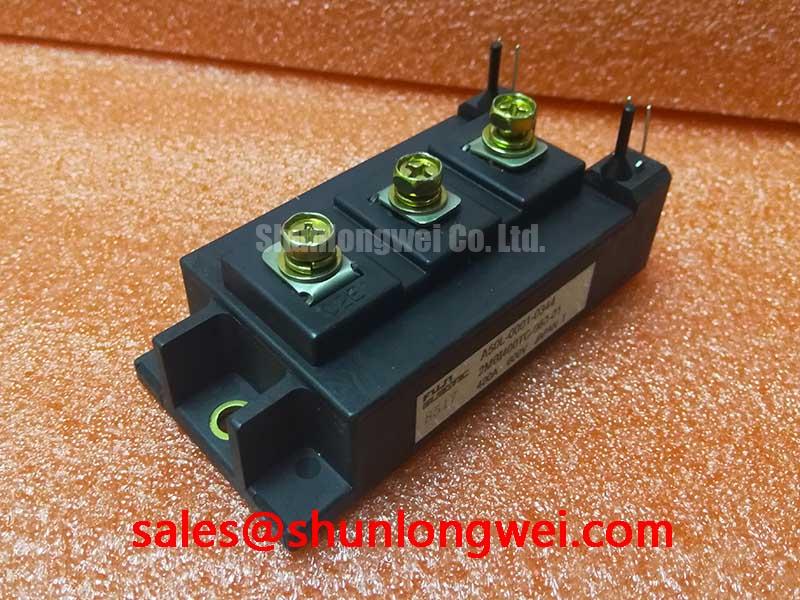
The Fuji Electric 2MBI400TC-060-01 is a half-bridge IGBT module engineered for high-current power conversion systems. Leveraging Fuji’s advanced Trench Gate Field Stop technology, this module delivers a superior balance of low conduction and switching losses. This performance enables designers to achieve higher system efficiency and improved thermal stability.
* **Core Specifications**: 600V | 400A | VCE(sat) 1.75V (typ)
* **Key Advantages**: Minimized conduction losses reduce heat dissipation, and an integrated NTC thermistor allows for precise, real-time temperature monitoring.
* **Engineering Value**: The low VCE(sat) is critical in high-current applications, as it directly translates to less wasted energy, smaller heatsink requirements, and increased system reliability.
Access Official Product & Datasheet Page

Technical Analysis for System Integration
The performance of the 2MBI400TC-060-01 is rooted in its chip technology and thoughtful package design. The Trench Gate structure allows for a higher channel density compared to older planar technologies, which is a primary reason for its low on-state voltage drop. This characteristic is essential for reducing system power losses, a cornerstone of modern power semiconductors.
A key parameter is the collector-emitter saturation voltage, VCE(sat), specified at a typical value of 1.75V at the nominal 400A current. Think of VCE(sat) as the toll current pays to flow through the device when it’s on. A lower toll means less energy is converted into waste heat. This efficiency gain allows for more compact designs or higher power throughput for a given cooling system.
Furthermore, the module includes a co-packaged Free-Wheeling Diode (FWD) optimized for soft-recovery characteristics. A soft-recovery diode helps to reduce voltage spikes and electromagnetic interference (EMI) during switching. This behavior simplifies the design of snubber circuits and contributes to overall system robustness, a critical aspect explored in guides to FWD performance. The inclusion of an NTC thermistor provides a direct path for thermal feedback, enabling critical over-temperature protection.
Optimized Application Scenarios
The specific characteristics of this module make it a strong candidate for several high-power applications where efficiency and reliability are critical.
- Variable Frequency Drives (VFDs): Its high current rating of 400A is well-suited for controlling large industrial motors. The low VCE(sat) directly improves the inverter’s efficiency, reducing operating costs.
- Welding Power Supplies: The module’s robust thermal design and ability to handle high pulse currents are essential for the demanding, cyclical loads found in welding applications.
- Uninterruptible Power Supplies (UPS): In high-power UPS systems, minimizing heat generation is crucial. The efficiency of the 2MBI400TC-060-01 helps reduce thermal stress on components and improves battery life during discharge.
- Solar Inverters: The module’s low conduction and switching losses are vital for maximizing the energy harvested from photovoltaic arrays by minimizing power loss during the DC-to-AC conversion process.
This IGBT module is an optimal choice for high-current systems where thermal performance and efficiency are primary engineering drivers.
Key Specification Parameters
| Parameter | Symbol | Value | Conditions |
|---|---|---|---|
| Collector-Emitter Voltage | VCES | 600V | Tj = 25°C |
| Continuous Collector Current | IC | 400A | Tc = 80°C |
| Collector-Emitter Saturation Voltage | VCE(sat) | 1.75V (typ) | IC = 400A, VGE = 15V, Tj = 125°C |
| Total Power Dissipation | PC | 1560W | Per IGBT, Tc = 25°C |
| Thermal Resistance (Junction-to-Case) | Rth(j-c) | 0.08 °C/W | Per IGBT |
Engineer’s FAQ
How does the thermal resistance of 0.08 °C/W impact heatsink selection for the 2MBI400TC-060-01?
The Rth(j-c) value quantifies the thermal resistance from the semiconductor junction to the module’s case. To select a heatsink, first determine your total power dissipation (Pd). Then, calculate the required case-to-ambient thermal resistance using: Rth(c-a) ≤ (Tj_max – Ta_max) / Pd – Rth(j-c). Always choose a heatsink with a value lower than your calculated Rth(c-a) to ensure the junction temperature stays below its 150°C maximum.
What is the specified mounting torque for this module?
According to the datasheet, the recommended mounting screw torque for the main terminals (M6) is 3.5 – 4.5 N·m. For the module mounting (M6), it is also 3.5 – 4.5 N·m. Adhering to these torque values is crucial to ensure both a secure electrical connection and optimal thermal contact without inducing mechanical stress.
Why is a low VCE(sat) particularly important for a 400A IGBT module?
Conduction power loss is calculated as P_loss = VCE(sat) × Ic. At a high current of 400A, even a minor difference in VCE(sat) results in a substantial change in wasted power. A lower VCE(sat) directly reduces this power loss, leading to higher overall efficiency, lower operating temperatures, and reduced demand on the cooling system.
How can the integrated NTC thermistor be used for system protection?
The built-in NTC thermistor provides a resistance value that changes predictably with temperature. A monitoring circuit can read this resistance to infer the module’s case temperature. This data allows the system controller to trigger alarms, reduce power output (derating), or initiate a shutdown if the temperature exceeds safe operating limits, preventing thermal runaway and enhancing system reliability.
Enabling Efficient and Reliable Power Systems
The 2MBI400TC-060-01 provides a robust component choice for developing high-power converters and inverters. Its foundation of low-loss Trench Gate technology, combined with integrated thermal monitoring, empowers engineers to design systems that are not only more efficient but also more compact and reliable under demanding industrial conditions. For a deeper understanding of thermal characteristics, an engineer may find value in reviewing guides on mastering IGBT thermal design.