Fuji 7MBR50SD120: A 7-in-1 IGBT Module for Compact and Reliable Power Systems
Fuji 7MBR50SD120 1200V 50A PIM IGBT Module
Integrated Power Stage for Compact Motor Drives
The Fuji Electric 7MBR50SD120 is a highly integrated Power Integrated Module (PIM) that consolidates a three-phase rectifier, a three-phase inverter, and a brake chopper into a single compact package. This 7-in-1 topology offers a streamlined solution for engineers developing low-to-mid-power motor drives and power conversion systems, significantly reducing component count and simplifying thermal management. The module also incorporates an NTC thermistor, enabling real-time temperature monitoring to enhance overall system reliability.
- Core Specifications: 1200V | 50A | 7-in-1 CIB Topology
- Key Advantages: Reduces component count and assembly time, enhances system reliability with an integrated NTC thermistor.
This integrated approach helps answer a common engineering challenge: how to build a complete power stage with a smaller footprint and fewer assembly steps. By providing a pre-optimized, all-in-one component, the 7MBR50SD120 accelerates the design cycle.
Download Official Datasheet (PDF)
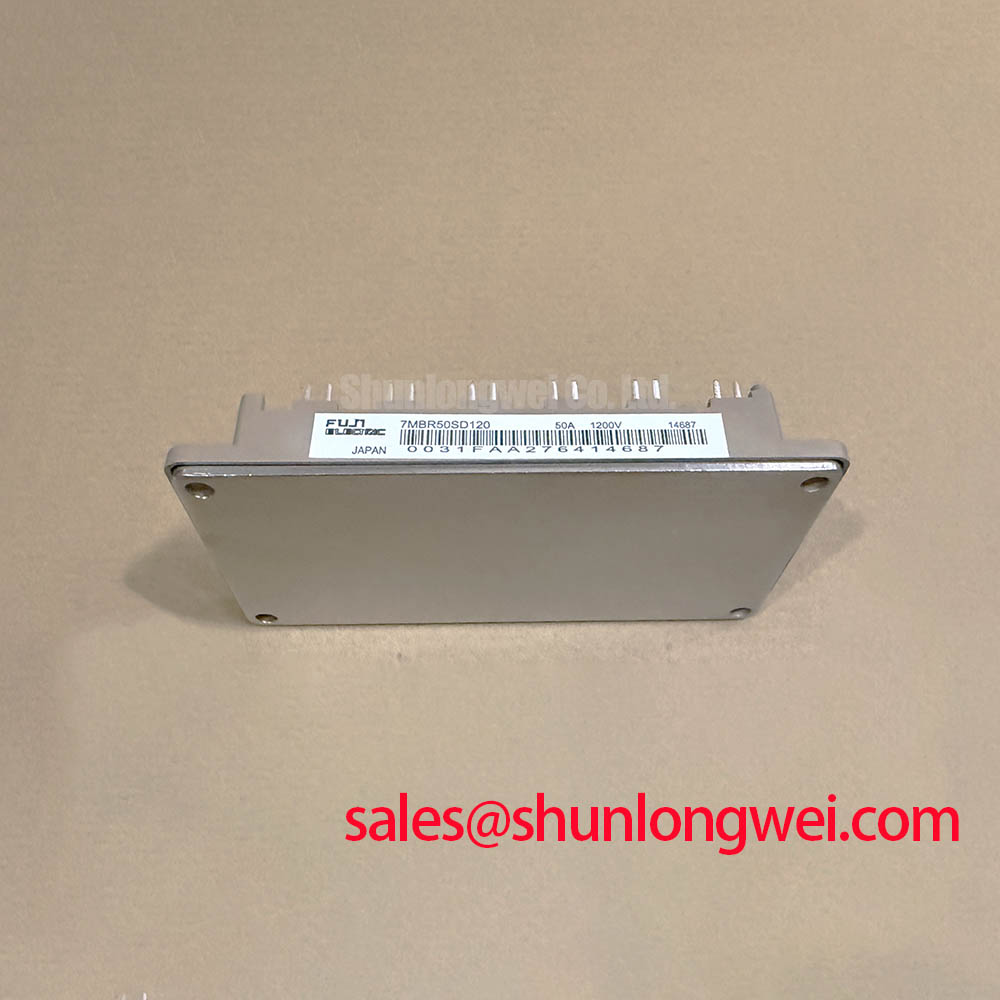

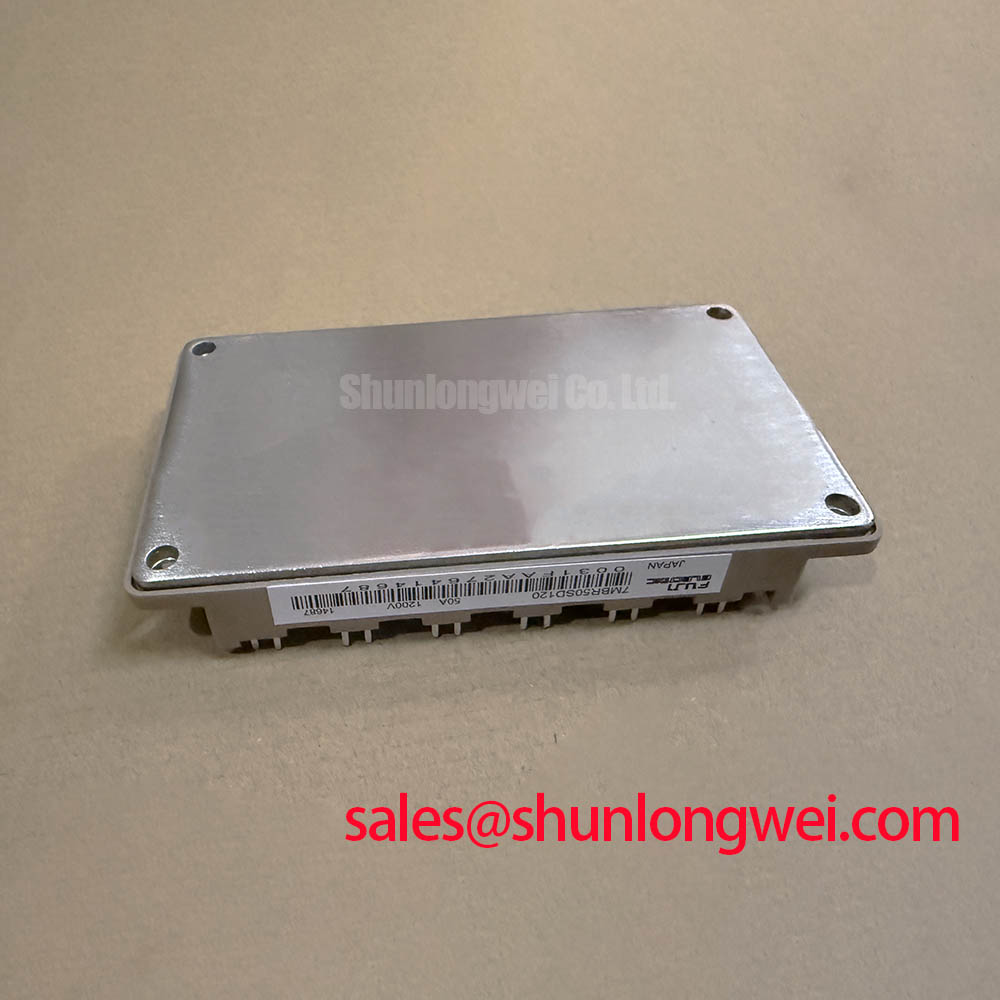
Technical Analysis of the Integrated Design
The primary value of the 7MBR50SD120 lies in its high level of integration. By combining the AC-DC rectifier, DC-AC inverter, and braking IGBT into one module, designers can avoid the complexities of selecting, sourcing, and mounting multiple discrete components. This approach inherently reduces parasitic inductance between power stages, which can lead to lower voltage overshoot during switching and improved EMI performance. This is a critical advantage discussed in resources covering PIM vs. discrete IGBT design.
Effective thermal management is crucial for power module longevity. The datasheet specifies the thermal resistance from junction to case (Rth(j-c)) for the inverter IGBT as 0.45°C/W (max). Think of thermal resistance as the width of a pipe for heat flow; a lower value signifies a wider pipe, allowing heat to escape more efficiently from the silicon chip to the heatsink. This efficient heat transfer is essential for maintaining the junction temperature below the 150°C maximum rating, ensuring reliable operation under load.
Electrical performance is defined by key parameters such as the collector-emitter saturation voltage (VCE(sat)). For the inverter section of the 7MBR50SD120, this value is a maximum of 2.7V at a collector current of 50A and a junction temperature of 125°C. This parameter directly impacts conduction losses—a lower VCE(sat) means less power is wasted as heat during operation, which improves overall system efficiency and can reduce the required size of the heatsink.
Optimized Application Scenarios
- Variable Frequency Drives (VFDs): The all-in-one CIB (Converter-Inverter-Brake) topology makes it a perfect fit for compact AC motor drives, as the module contains the entire power conversion stage.
- AC and DC Servo Drive Amplifiers: The module’s compact footprint and integrated nature are well-suited for space-constrained servo systems that require precise motor control.
- Uninterruptible Power Supplies (UPS): The integrated rectifier and inverter stages are fundamental building blocks for online UPS systems, and this module simplifies their construction.
- General-Purpose Inverters: Its voltage and current ratings are suitable for various small industrial power conversion tasks.
This module is an optimal match for power systems up to 15 kW where design simplification, reduced assembly cost, and reliability are primary objectives.
Key Specifications of the 7MBR50SD120
| Absolute Maximum Ratings (Tj = 25°C) | ||
|---|---|---|
| Parameter | Symbol | Value |
| Collector-Emitter Voltage (Inverter & Brake) | VCES | 1200V |
| Continuous Collector Current (Inverter, Tc=80°C) | IC | 50A |
| Repetitive Peak Reverse Voltage (Rectifier) | VRRM | 1200V |
| Operating Junction Temperature | Tj | +150°C |
| Electrical Characteristics (Inverter Part, Tj = 125°C) | ||
| Collector-Emitter Saturation Voltage (IC=50A) | VCE(sat) | 2.2V (Typ) / 2.7V (Max) |
| FWD Forward Voltage (IE=50A) | VF | 2.0V (Typ) / 2.5V (Max) |
Engineer’s FAQ
1. How does the integrated NTC thermistor in the 7MBR50SD120 improve reliability?
The built-in NTC thermistor provides a direct and real-time measurement of the module’s internal temperature. This allows the system’s microcontroller to accurately monitor thermal conditions and implement protective functions, such as reducing the switching frequency or shutting down the system, if an over-temperature event is detected. This proactive thermal monitoring is essential for preventing catastrophic failure.
2. What is a key consideration when mounting the 7MBR50SD120 to a heatsink?
Proper mounting is critical for effective cooling. The datasheet recommends applying a torque of 2.5 to 3.5 N·m to the M5 mounting screws. It is also vital to apply a uniform layer of thermal grease (typically 100-150 µm thick) between the module’s baseplate and the heatsink to minimize thermal contact resistance and ensure efficient heat transfer.
3. What is the maximum junction temperature (Tj) this module can handle?
The absolute maximum operating junction temperature is specified as 150°C in the datasheet. For sustained reliability and to ensure a long operational lifespan, system designers should implement a thermal solution that keeps the typical operating junction temperature well below this limit, providing a safe margin.
4. What is the specified isolation voltage for this module?
The module is rated for an isolation voltage of AC 2500V for 1 minute between the terminals and the copper baseplate. This ensures sufficient electrical isolation for safe operation in industrial systems connected to main power lines.
Enabling Efficient and Reliable Power Designs
The Fuji 7MBR50SD120 module provides engineers with a robust, all-in-one power stage solution. By integrating key components into a single, thermally efficient package, it addresses the need for compact, cost-effective, and reliable power conversion in a wide range of industrial applications, from motor drives to uninterruptible power supplies. For additional insights into IGBT failures and prevention, consider exploring resources on root cause analysis of IGBT failures.