Hitachi LMG7400PLFC: A Technical Review for Industrial Applications
Hitachi LMG7400PLFC 240×128 FSTN Monochrome LCD Module
Introduction and Core Highlights
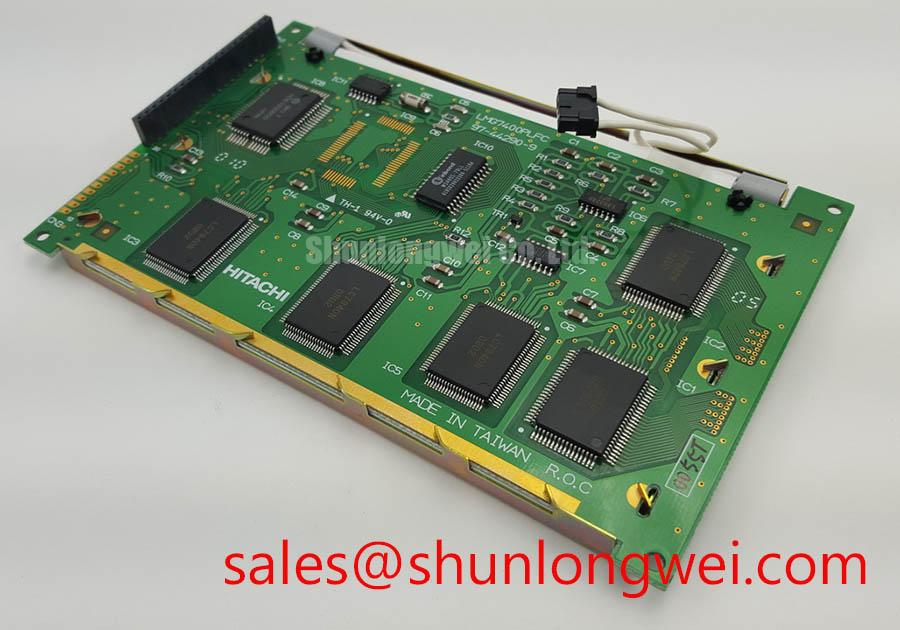
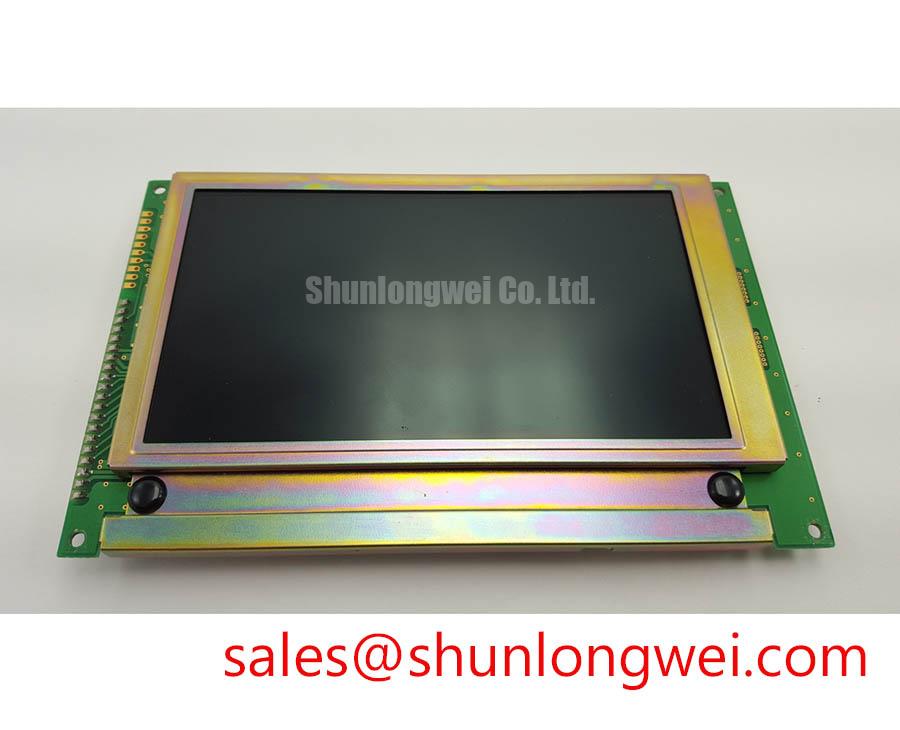
The Hitachi LMG7400PLFC is a 5.1-inch monochrome graphic display module engineered for exceptional clarity and long-term reliability in demanding applications. Its core value lies in the high-contrast Film-compensated Super-twisted Nematic (FSTN) screen paired with an integrated Cold Cathode Fluorescent Lamp (CCFL) backlight, delivering crisp, legible visuals essential for industrial human-machine interfaces (HMIs) and medical instrumentation. This combination ensures that critical data is clearly readable under various ambient lighting conditions.
- Core Specifications: 240×128 Resolution | CCFL Backlight | 18:1 Contrast Ratio
- Key Advantages: Delivers superior text and graphic legibility, ensures stable performance with a wide viewing angle.
- User Intent Answered: An ideal component choice for industrial control panels requiring a robust, easy-to-read monochrome display.
Download Official Datasheet (PDF)
Technical Analysis for System Integration
The engineering value of the LMG7400PLFC is rooted in its fundamental design choices. The use of FSTN technology provides a significant advantage in monochrome applications. Unlike standard STN displays, the addition of a retardation film layer corrects for color dispersion, resulting in a true black-and-white display with a high contrast ratio of 18:1 (typical). This ensures that detailed graphics and text are rendered without the yellowish or bluish tint common in lower-quality modules, reducing operator eye strain.
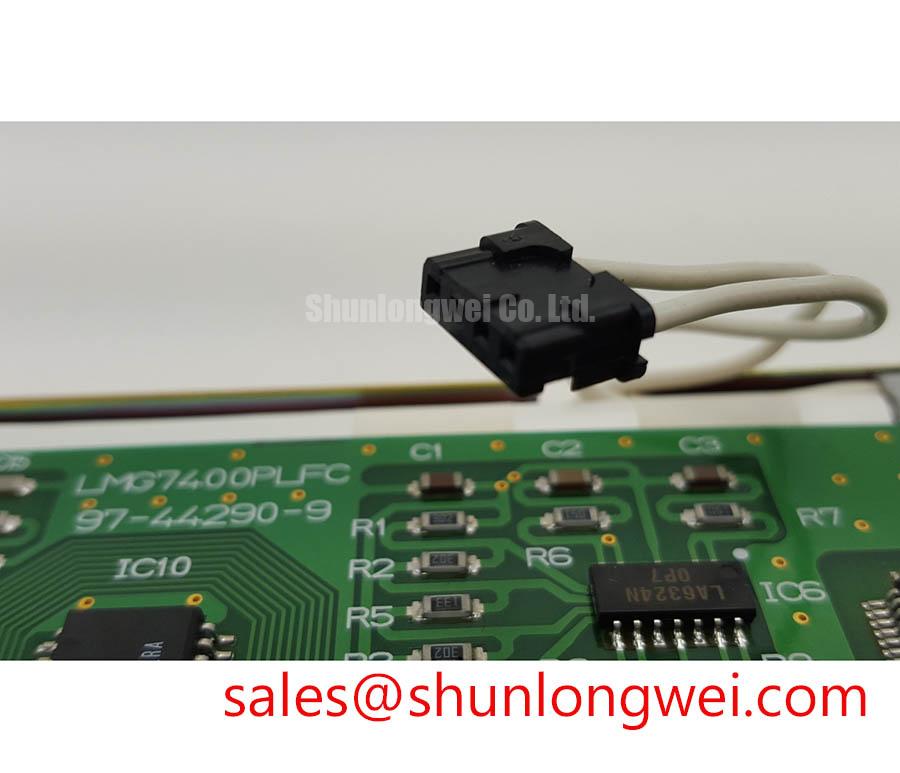
Central to its performance is the integrated CCFL backlight, which provides a typical luminance of 90 cd/m². Think of the backlight’s uniformity as the foundation of a house; if it’s uneven, everything built upon it appears flawed. The CCFL system distributes light evenly across the entire 119.97 x 63.97 mm active area, preventing hotspots or dim corners that could obscure critical data. While modern displays often use LEDs, the CCFL in this module offers proven stability and a consistent spectral output, a known quantity for long-lifecycle industrial equipment.
Optimized Application Scenarios
The LMG7400PLFC is specified for systems where data integrity and readability are paramount.
- Industrial Control Panels: Its robust construction, with a vibration rating of 2.0G (19.6 m/s²), and clear FSTN display make it suitable for machine controllers and process monitoring systems on the factory floor.
- Test and Measurement Equipment: The 240×128 resolution is well-suited for displaying waveforms, spectral data, and numerical readouts in devices like oscilloscopes and network analyzers.
- Medical Instrumentation: The high-contrast, unambiguous monochrome output is effective for patient monitors or diagnostic devices where clear and immediate data interpretation is critical.
- Legacy System Upgrades: The 8-bit parallel interface and integrated controller facilitate straightforward replacement of older, less reliable displays in existing equipment.
Its feature set makes it a best-match for systems requiring a proven, no-fail monochrome display with a long operational life.
Key Specifications of the LMG7400PLFC
| Parameter | Value | |
|---|---|---|
| Display Characteristics | Display Type | FSTN-LCD, Black/White (Negative), Transmissive |
| Resolution | 240 x 128 pixels | |
| Active Area | 119.97(W) × 63.97(H) mm | |
| Typical Luminance | 90 cd/m² | |
| Typical Contrast Ratio | 18:1 | |
| Viewing Angle | 40° (CR≥2) | |
| Electrical Characteristics | Logic Supply Voltage (VDD) | 5.0V (Typ.) |
| Interface | 8-bit parallel | |
| Mechanical & Environmental | Outline Dimensions | 159.4(W) × 101(H) × 11.0(D) mm |
| Operating Temperature | 0°C to 40°C | |
| Storage Temperature | -20°C to 60°C | |
| Backlight System | Backlight Type | CCFL, Edge light type |
| Inverter | External inverter required | |
Engineer’s FAQ
- What are the primary considerations when integrating the LMG7400PLFC into an industrial control panel?
- Key factors include ensuring a stable 5.0V power supply for the logic, allocating space for the 11mm module depth, and designing in an external CCFL inverter. Its 0°C to 40°C operating range should also be matched to the panel’s internal thermal environment.
- What type of inverter is needed for the CCFL backlight?
- The datasheet specifies that an external high-voltage inverter is required to drive the CCFL. The inverter must supply a typical voltage of 360V at a frequency between 30 kHz and 85 kHz, with a startup voltage of at least 1000V.
- How does the 8-bit parallel interface function?
- The 8-bit parallel interface allows for direct and rapid data transfer from a host microcontroller. This standard interface simplifies the software and hardware integration, as it is widely supported by many industrial-grade MCUs.
- Why is the FSTN technology in the LMG7400PLFC a good choice for data-centric displays?
- FSTN technology provides a sharper, higher-contrast image compared to standard STN by adding a compensation film. This results in a true black-on-white display, making it easier to read precise numerical data and graphical information without color distortion, which is critical in measurement and control applications.
Enabling Clear and Reliable HMI Solutions
The technical specifications of the Hitachi LMG7400PLFC confirm its role as a robust and reliable display component. For engineering teams developing or maintaining systems in industrial automation, power control, and specialized instrumentation, this module provides a clear, high-contrast visual interface. Its durable construction and stable performance characteristics facilitate the creation of human-machine interfaces that prioritize data legibility and long-term operational dependability.