Infineon TT104N14KOF: High-Performance 1400V 104A Phase Control Thyristor Module with Pressure Contact Technology
Infineon TT104N14KOF 1400V 104A Phase Control Thyristor Module
Exceptional Power Density and Thermal Cycling Reliability
The Infineon TT104N14KOF is a dual phase-control thyristor module constructed with advanced pressure contact technology, providing superior reliability for industrial power conversion. This 20mm power block enables precise control in AC/DC conversion systems, particularly where high surge current handling is necessary. By utilizing an isolated copper baseplate, the module facilitates efficient heat dissipation, answering the common engineering challenge of maintaining thermal stability in compact enclosures.
- Core Specifications: 1400V | 104A ($T_C = 85^circ C$) | $I_{TSM}$ 2000A
- Key Advantage 1: High surge current capability enhances system robustness against line transients.
- Key Advantage 2: Pressure contact technology significantly extends the module’s power cycling lifetime compared to soldered versions.
For engineers determining the necessary cooling capacity, the TT104N14KOF datasheet provides detailed $Z_{thJC}$ curves to ensure the junction temperature stays within the safe operating limit of $125^circ C$.
Download Official TT104N14KOF Datasheet (PDF)
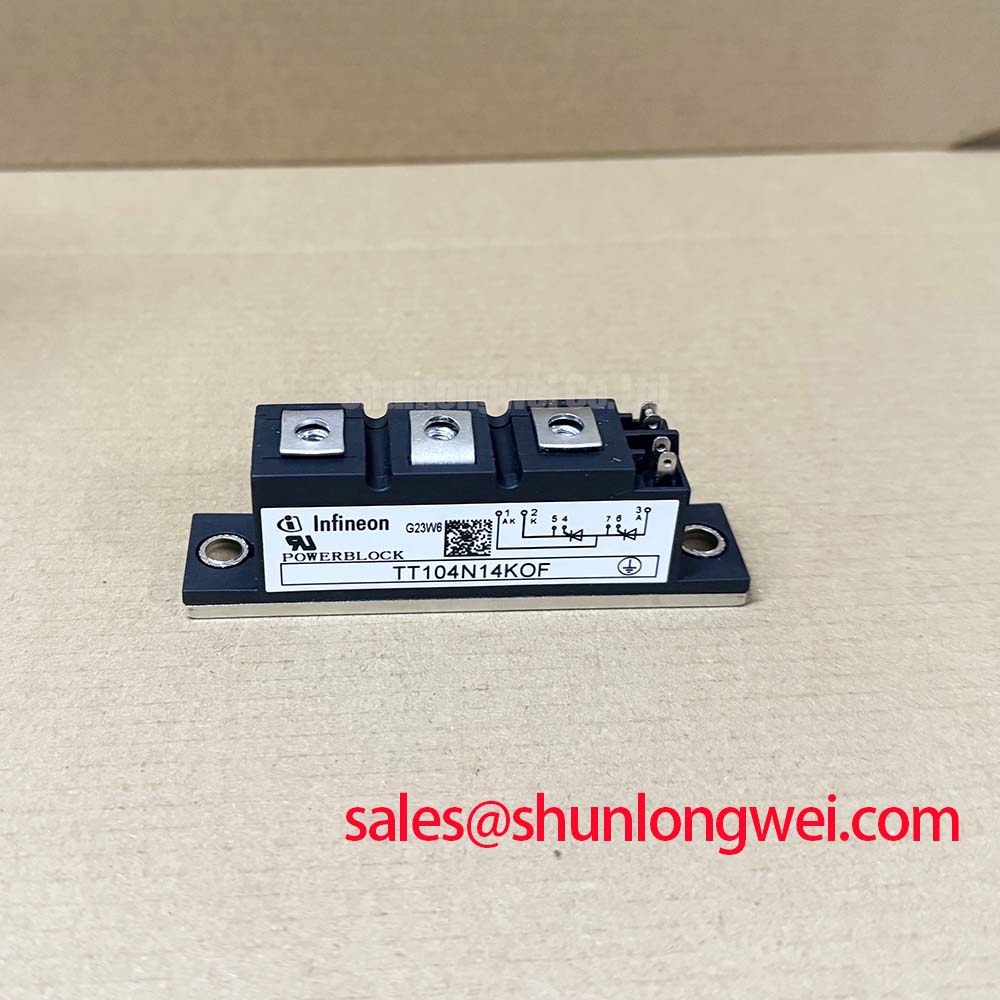
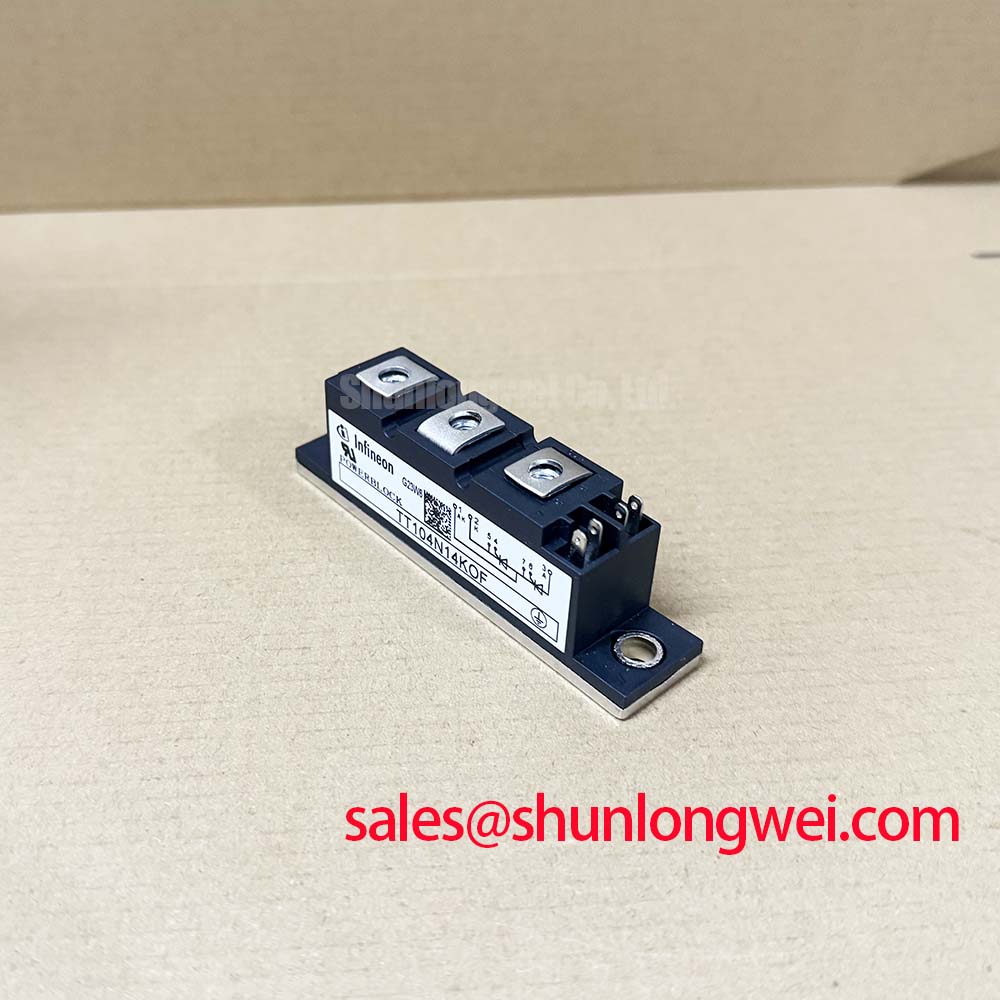
Pressure Contact Technology and Thermal Management Analysis
The engineering core of the TT104N14KOF lies in its pressure contact architecture. Unlike standard modules that rely on solder layers which can fatigue over thousands of thermal cycles, pressure contacts maintain consistent mechanical force across the semiconductor die. This structure minimizes the internal mechanical stress caused by the different coefficients of thermal expansion (CTE) between the silicon and the baseplate materials. In high-power power semiconductors, this translates to a massive reduction in long-term wear-out failures.
Thermal resistance ($R_{thJC}$) in this module is rated at $0.28^circ C/W$ per thyristor. To understand its importance, one can visualize thermal resistance as the diameter of a drainage pipe; a lower value allows heat to “flow” away from the junction more easily, preventing the dangerous accumulation of heat that leads to thermal runaway. When integrating the TT104N14KOF into a system, the use of high-performance thermal interface material is required to bridge the microscopic air gaps between the module baseplate and the heatsink.
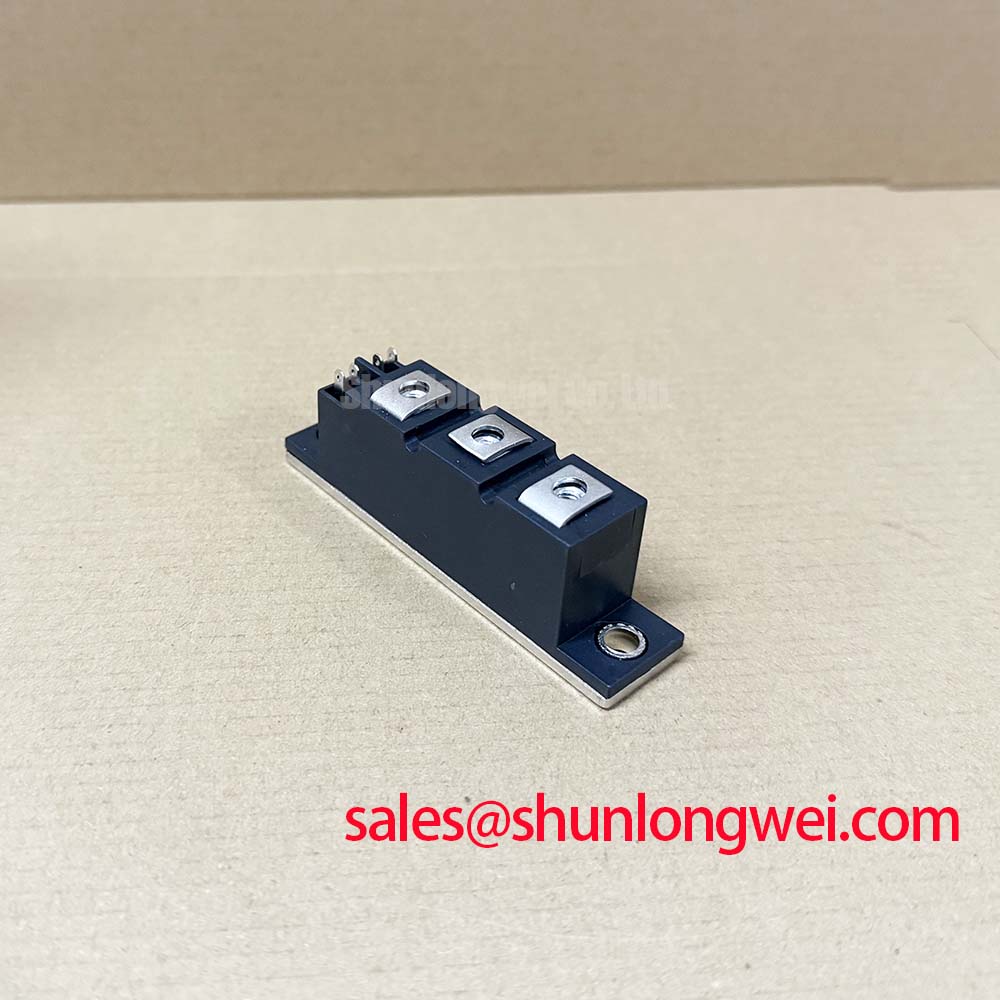
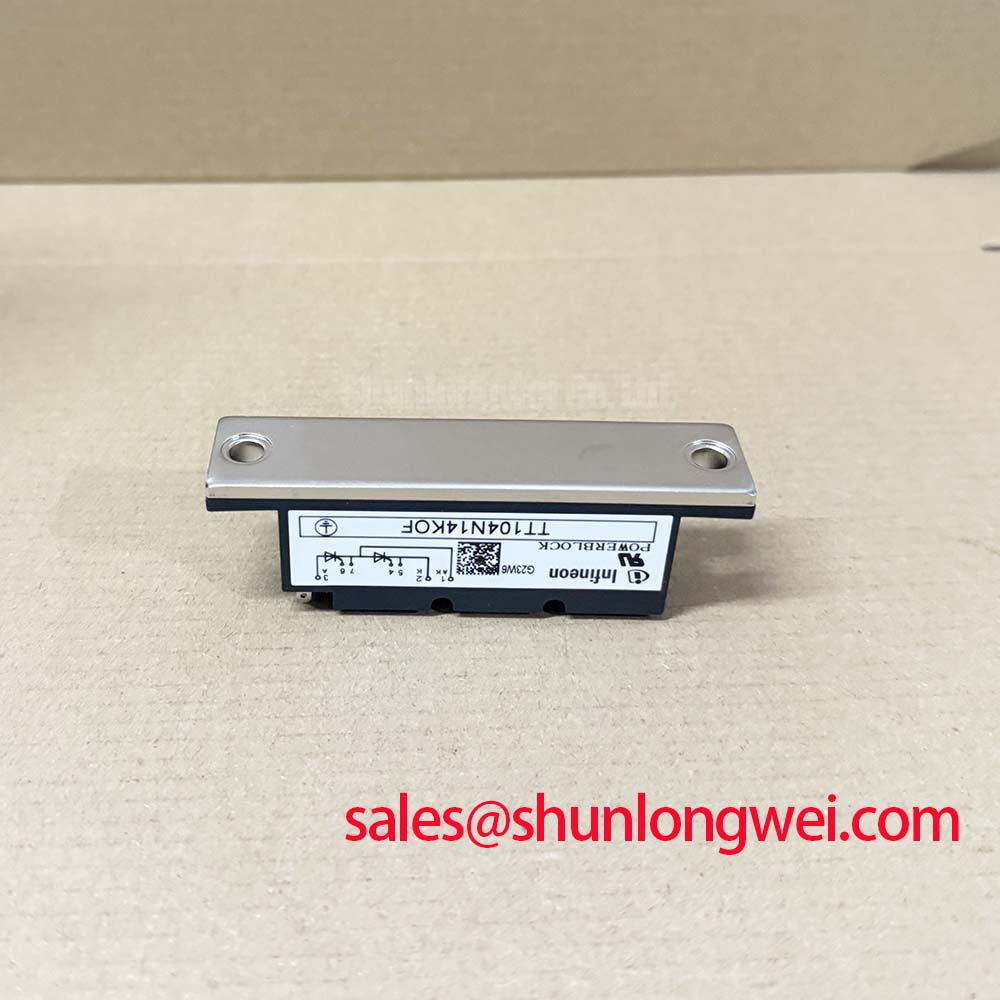
Optimized Application Scenarios
The electrical characteristics of the TT104N14KOF make it highly effective for several industrial implementations:
- Soft Starters for AC Motors: The $I_{TSM}$ rating of 2000A at 10ms ensures the module can withstand the high inrush currents typical of motor startup sequences without degrading the silicon.
- Uninterruptible Power Supplies (UPS): It serves as a reliable component in the rectification stage, where the 1400V blocking voltage provides a significant safety margin against grid voltage spikes.
- Battery Chargers and DC Power Supplies: High current density in the 20mm package allows for the design of compact charging stations with reduced footprint requirements.
- Industrial Heating Controls: Precise phase angle control enables consistent temperature management in resistive heating elements.
The technical synergy between the pressure contact design and high $I^2t$ ratings makes this module a robust choice for heavy-duty cycle rectifiers.
Technical Specifications Table
| Category | Parameter | Typical Value |
|---|---|---|
| Absolute Maximum Ratings | Repetitive Peak Voltages ($V_{DRM}/V_{RRM}$) | 1400 V |
| RMS On-state Current ($I_{TRMSM}$) | 160 A | |
| Surge Current ($I_{TSM}$) @ 10ms, $T_{vj}=25^circ C$ | 2000 A | |
| Electrical Characteristics | Peak On-state Voltage ($V_T$) @ 300A | max. 1.83 V |
| Gate Trigger Current ($I_{GT}$) | max. 120 mA | |
| Critical Rate of Rise of Off-state Voltage ($dv/dt$) | 1000 V/µs | |
| Thermal Properties | Max. Junction Temperature ($T_{vj max}$) | 125 °C |
| Thermal Resistance, Junction to Case ($R_{thJC}$) | 0.28 K/W (per arm) |
Engineering FAQ
Q1: How should the mounting torque be managed for the TT104N14KOF?
A: Proper mechanical installation is critical. The module mounting torque (M1) should be between 3 to 6 Nm, while the electrical terminal torque (M2) should be between 2 to 5 Nm. Inconsistent torque can lead to uneven thermal contact or terminal overheating.
Q2: What are the primary protection requirements for these thyristors?
A: To prevent damage from fast voltage transients, a snubber circuit (RC network) is typically required. Understanding thyristor protection mechanisms such as $di/dt$ and $dv/dt$ suppression is essential for long-term reliability.
Q3: How does the $I^2t$ value impact fuse selection?
A: The $I^2t$ value for the TT104N14KOF is $20,000 A^2s$ at $25^circ C$. To protect the module, the semiconductor fuse must have a clearing $I^2t$ lower than this value. Refer to our guide on the $I^2t$ rating for more on coordinating semiconductor protection.
Empowering High-Reliability Design
The Infineon TT104N14KOF provides a stable foundation for power electronic designs that demand high thermal cycling endurance and surge resilience. By integrating pressure contact technology into a standard industrial footprint, this module allows engineers to achieve higher power density without compromising the operational lifespan of the system. Its balanced electrical characteristics facilitate simplified drive and protection circuit design across various industrial applications.