LTM170E8-L02: A High-Performance PVA Display for Industrial and Medical Applications
## LTM170E8-L02: 17-inch SXGA PVA Industrial LCD Module
The Samsung LTM170E8-L02 is a 17.0-inch a-Si TFT-LCD module that delivers exceptional visual fidelity through its advanced PVA panel technology. It is engineered for industrial and medical systems where off-axis image consistency and high contrast are critical operational requirements. This display provides a stable, high-quality visual foundation for applications demanding precision and reliability.
* **Core Specifications**: 17.0″ SXGA (1280×1024) | 1000:1 Contrast Ratio | 89°/89°/89°/89° Viewing Angle.
* **Key Advantages**: Ensures superior image integrity from any viewing position; Delivers deep black levels and vibrant color saturation.
* **Engineering Value**: The wide, symmetrical viewing cone prevents data misinterpretation in multi-person or dynamic viewing environments.
Download The Official LTM170E8-L02 Datasheet (PDF)
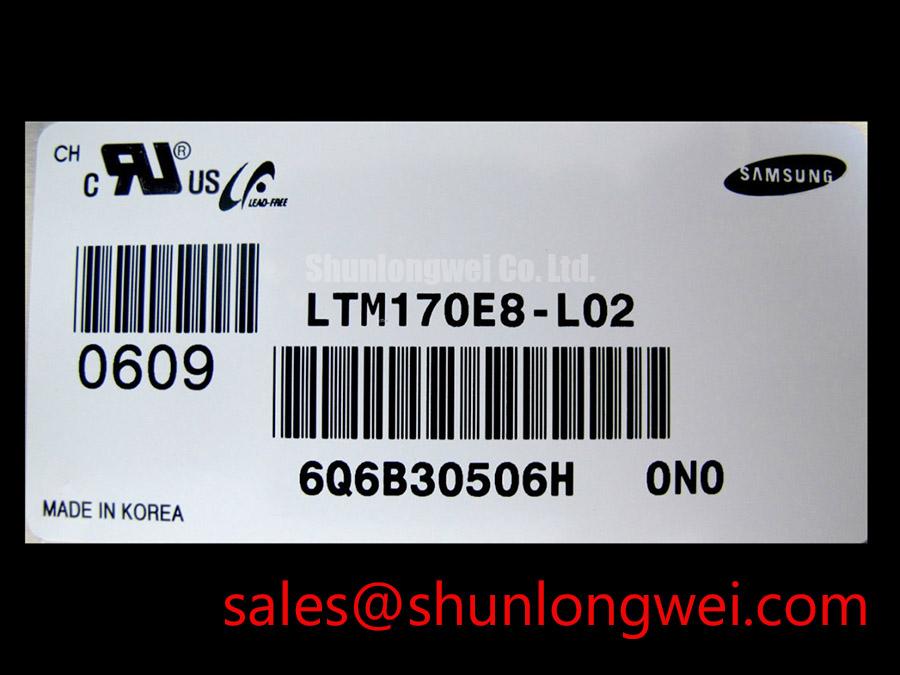

### Technical Analysis for System Integration
The LTM170E8-L02’s performance is rooted in its Patterned Vertical Alignment (PVA) panel. This technology enables exceptionally wide and symmetrical viewing angles of 89 degrees in all directions (left, right, up, and down). This can be compared to the beam of a high-quality floodlight, which illuminates a space evenly, unlike a narrow spotlight. For an engineer, this means an HMI can be installed where operators may be standing or moving without risk of color distortion affecting their interpretation of critical data. This is a fundamental aspect of building ergonomic and safe user interfaces, a topic further explored in guides on industrial display resilience.
The combination of a 1000:1 contrast ratio and a “Normally Black” transmissive mode ensures that the display produces deep, true black levels. This characteristic significantly enhances image clarity, making text sharper and graphical details more distinct. When powered off, the screen remains black, a desirable trait for many industrial control rooms and medical environments. With the capability to display 16.7 million colors covering 72% of the NTSC gamut, the LTM170E8-L02 renders visuals with the accuracy needed for detailed schematic analysis or consistent color-coded status indicators.
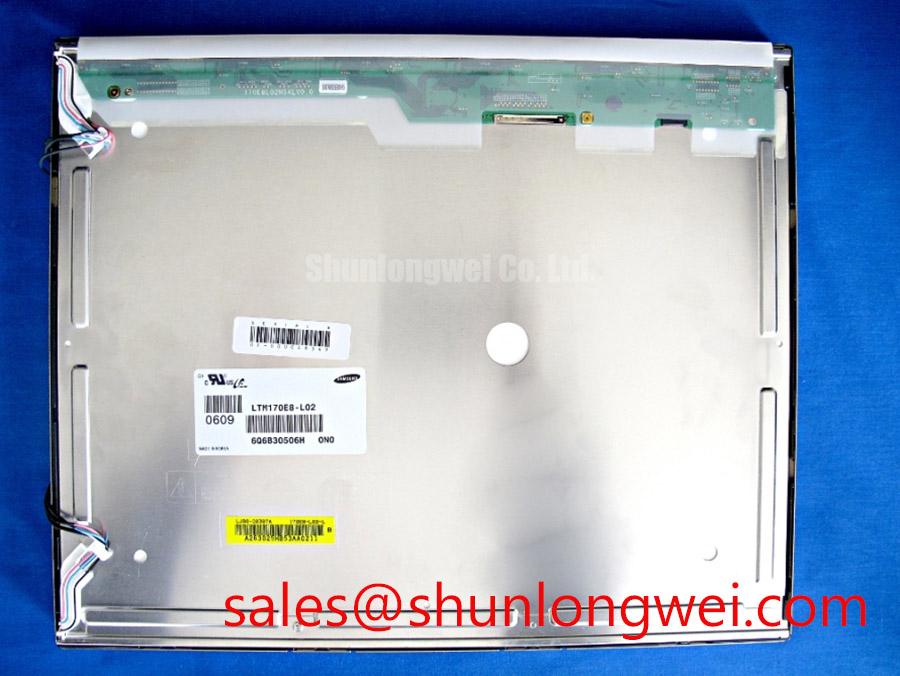
### Optimized Application Scenarios
The specific performance metrics of this display make it well-suited for several demanding fields:
* **Medical Imaging & Diagnostics:** The high contrast ratio and SXGA resolution are vital for rendering the subtle grayscale details found in X-rays, CT scans, and MRIs. The wide viewing angles allow multiple clinicians to consult at a single station without compromising diagnostic accuracy, a key factor in medical display design.
* **Industrial Automation HMI:** In factory settings, operators must be able to read status information from various positions. The 89-degree symmetrical viewing angles of the LTM170E8-L02 ensure data is always legible, improving safety and operational efficiency.
* **Test and Measurement:** The sharp 1280×1024 resolution and excellent color fidelity provide a clear and precise canvas for displaying complex waveforms, charts, and measurement data without ambiguity.
* **Process Control Terminals:** The robust anti-glare surface with 44% haze minimizes reflections from overhead lighting, while the high contrast makes on-screen information easy to read, reducing operator fatigue.
This module is an optimal fit for systems where off-axis viewing integrity and precise grayscale or color differentiation are mandatory operational requirements.
### Key Specifications of the LTM170E8-L02
| General & Optical Characteristics | |
|---|---|
| Screen Size | 17.0 inches |
| Panel Technology | a-Si TFT-LCD, PVA, Normally Black |
| Resolution | 1280(RGB)×1024 [SXGA] |
| Brightness | 250 cd/m² (Typ.) |
| Contrast Ratio | 1000:1 (Typ.) |
| Viewing Angle (L/R/U/D) | 89/89/89/89 (Typ.) (CR≥10) |
| Response Time | 15/10 ms (Typ.)(Tr/Td) |
| Display Colors | 16.7M (8-bit), 72% NTSC (CIE1931) |
| Electrical & Mechanical Details | |
| Signal Interface | LVDS (2 ch, 8-bit), 30 pins |
| Supply Voltage | 5.0V (Typ.) |
| Backlight System | 4 pcs CCFL, 50,000 hours, without driver |
| Outline Dimensions | 354.9 × 290.3 × 13.3 mm (W×H×D) |
| Operating Temperature | 0 ~ 50 °C |
| Surface Treatment | Antiglare (Haze 44%), Hard coating (3H) |
### Engineer’s FAQ
**What makes the LTM170E8-L02 suitable for applications requiring wide viewing angles?**
Its use of PVA technology provides symmetrical viewing angles of 89° horizontally and vertically. This ensures that contrast and color do not shift when the screen is viewed from an off-center position, a critical feature for collaborative workstations and HMIs that are not always viewed from directly in front.
**What are the considerations for the CCFL backlight system?**
The module uses a 4-lamp Cold Cathode Fluorescent (CCFL) backlight system rated for a 50,000-hour lifetime. It requires a separate, external inverter to drive the lamps. Engineers must account for the inverter in their system design and thermal management. For more on this topic, refer to expert guidance on the proactive management of industrial LCD backlight lifespan.
**How does the ‘Normally Black’ PVA mode benefit industrial use cases?**
“Normally Black” means the pixels are opaque (black) in their default, unpowered state. This results in deeper black levels, which enhances the contrast ratio. It also means that in the event of a pixel failure, the defect typically appears as a black dot, which is often less distracting than a bright, “stuck-on” pixel common in Normally White panels.
**What is the specified input voltage and signal interface for this panel?**
The LTM170E8-L02 requires a 5.0V power supply for the panel logic. It uses a standard 30-pin LVDS interface with a 2-channel, 8-bit configuration to handle the SXGA resolution data stream.
This Samsung display provides the stable and precise visual foundation that enables engineers to build highly reliable user interfaces. For these systems, image clarity from any angle is not just a feature, but a functional necessity defined by the core LCD technology within.