M50100TB1600: A Technical Analysis for System Reliability
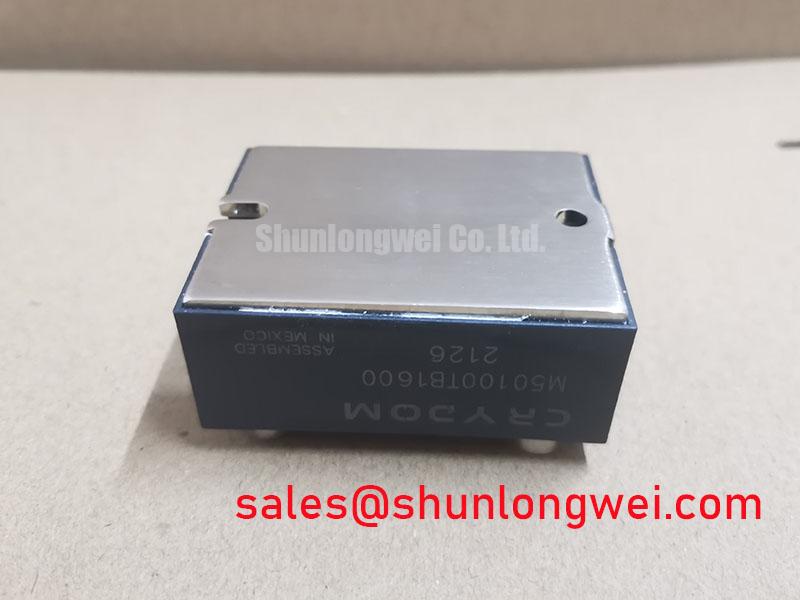
M50100TB1600 Three-Phase Diode Bridge for 1600V Systems
Introduction and Core Highlights
The Sensata M50100TB1600 is a three-phase diode bridge module engineered for high-current AC-to-DC rectification in demanding industrial environments. Its primary value is delivering robust power conversion with significant safety margins, supported by a high blocking voltage and excellent thermal performance. This module integrates six diodes into a single, compact package, simplifying the front-end design of power systems. The 1600V repetitive peak reverse voltage provides a substantial buffer for systems operating on 400VAC or 480VAC lines, safeguarding against transient voltage spikes.
- Core Specifications: 1600V VRRM | 100A ID (DC Output Current) | 3000V Isolation
- Key Engineering Benefits: High voltage headroom enhances system reliability. The integrated, isolated package simplifies assembly and improves thermal transfer.
Download Official Datasheet (PDF)
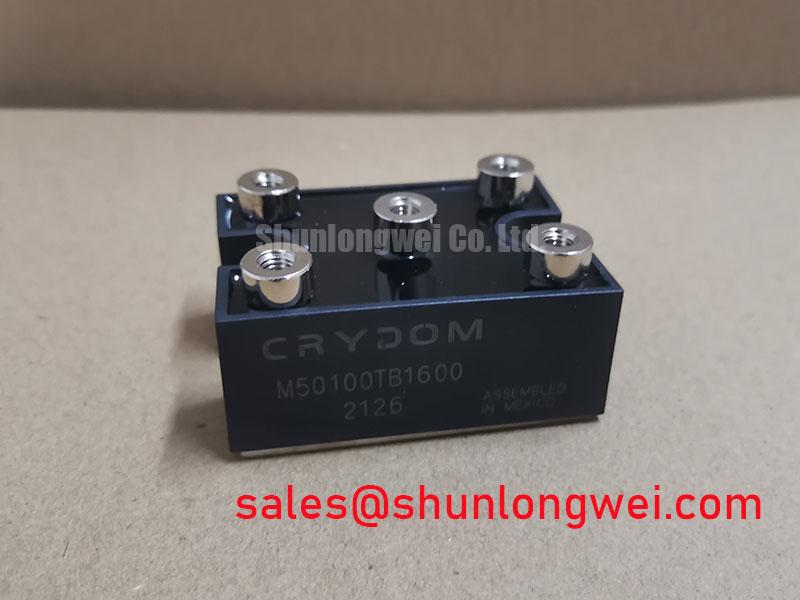
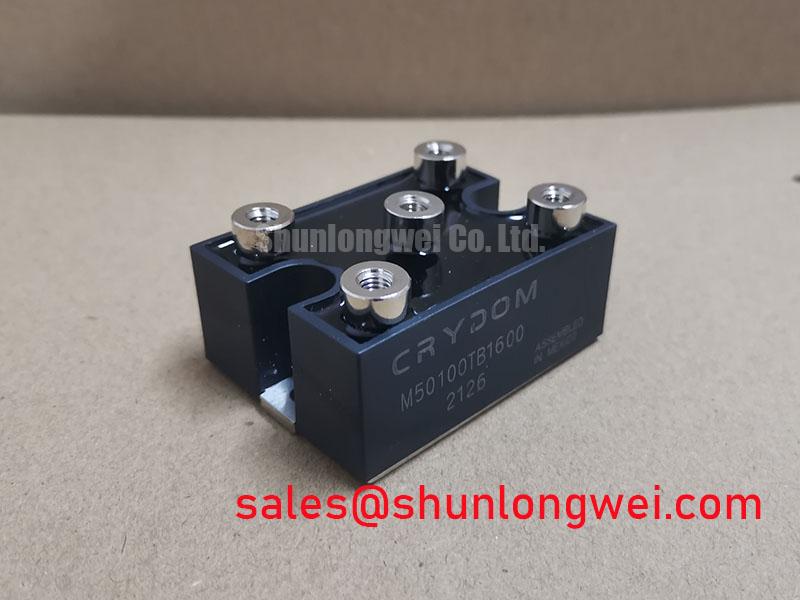
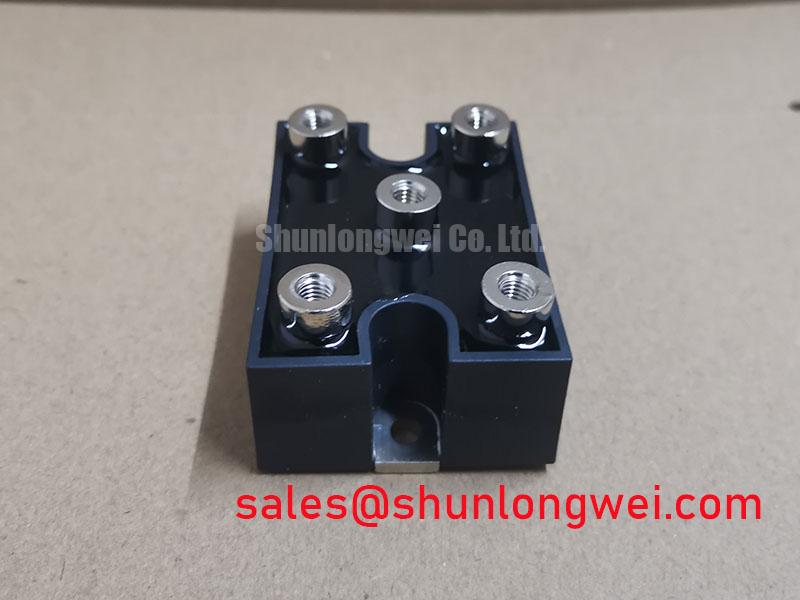
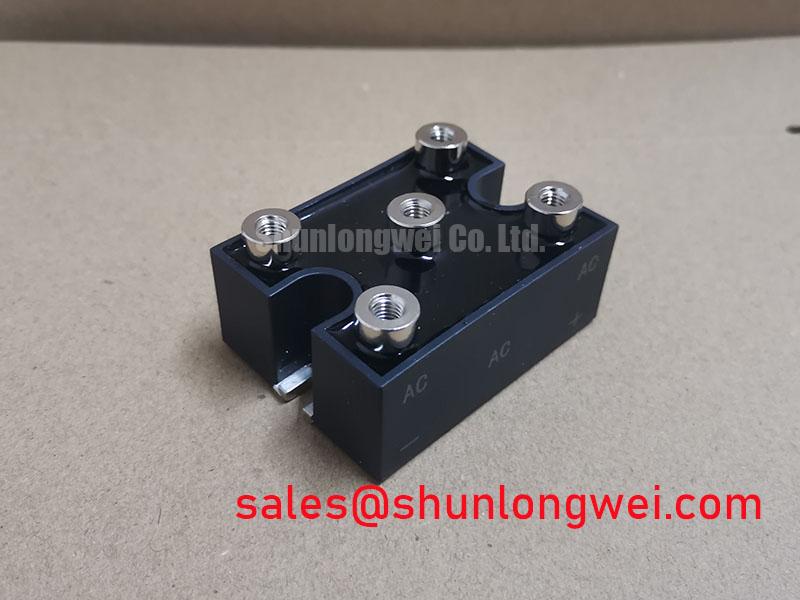
Technical Analysis for System Reliability
The M50100TB1600 is specified with key parameters that directly contribute to long-term operational reliability. Its 1600V repetitive peak reverse voltage (VRRM) is a critical feature for designers of industrial equipment connected to 400V or 480V three-phase AC lines. This high voltage rating provides a significant safety margin to withstand the voltage transients and line fluctuations commonly found in industrial settings, preventing diode failure and enhancing the robustness of the entire power stage. For more information on semiconductor reliability, see our resources on power semiconductors.
Thermal management is streamlined by the module’s construction. The datasheet specifies a thermal resistance from junction to case (Rth(j-c)) of 0.23°C/W per diode. This value can be imagined as the width of a pipe for heat; a lower number signifies a wider pipe, allowing heat to flow more easily from the active silicon junction to the module’s baseplate. This efficient heat transfer, combined with the isolated copper baseplate, allows the module to sustain its 100A DC output current rating at a case temperature of 80°C. This simplifies heatsink selection and helps maintain lower operating temperatures, which is crucial for device longevity.
Furthermore, the module’s 3000VRMS isolation voltage between the terminals and the baseplate is a key safety and design feature. This high isolation rating allows the module to be mounted directly onto a grounded chassis or heatsink without the need for additional insulating materials, reducing assembly complexity and potential points of failure. This integration of high voltage capability and certified isolation makes the M50100TB1600 a dependable component for building simplified and safe power conversion systems. For a deeper dive into thermal design, consider our guide to thermal management.
Optimized Application Scenarios
The specifications of the M50100TB1600 make it well-suited for several high-power industrial applications:
- AC Motor Drives: The module’s 100A current rating and high surge capability (850A IFSM) can reliably handle the inrush currents associated with starting large motors.
- Uninterruptible Power Supplies (UPS): Its 1600V blocking voltage ensures resilience against mains voltage instability, a critical requirement for battery charging circuits in UPS systems.
- Industrial Power Supplies: For front-end AC-DC rectification, the all-in-one three-phase bridge design simplifies construction and improves power density compared to using discrete diodes.
- Welding Equipment: The module’s robust thermal design and high surge current tolerance are essential for managing the demanding, pulsed power loads found in welding applications.
This module is best matched for industrial applications requiring a robust, isolated, and easy-to-implement 100A three-phase rectifier for 400/480V AC lines.
Key Specifications of the M50100TB1600
| Absolute Maximum Ratings (TC = 25°C unless otherwise specified) | |
|---|---|
| Repetitive Peak Reverse Voltage (VRRM) | 1600 V |
| DC Output Current (ID) at TC=80°C | 100 A |
| Non-Repetitive Surge Current (IFSM, 8.3ms half-sine) | 850 A |
| I²t for Fusing (8.3ms) | 3000 A²s |
| Electrical & Thermal Characteristics | |
| Max Forward Voltage Drop (VF) per diode @ 100A, TJ=25°C | 1.55 V |
| Max Reverse Current (IR) per diode @ VRRM, TJ=125°C | 3 mA |
| Operating Junction Temperature Range (TJ) | -40°C to 125°C |
| Isolation Voltage (Visol, terminals to baseplate) | 3000 VRMS |
| Thermal Resistance, Junction to Case (Rth(j-c)) per diode | 0.23 °C/W |
| Recommended Mounting Torque (M5 Screws) | 2.2 – 2.8 Nm (19 – 25 lb-in) |
Note: All specifications are based on the official manufacturer datasheet. For complete details, refer to the document.
Engineer’s FAQ
- Can the M50100TB1600 be used directly on a 480V three-phase AC line?
- Yes. A 480V RMS AC line has a peak voltage of approximately 679V. The M50100TB1600’s 1600V VRRM rating provides a safety factor of over 2.3x, making it highly suitable for such applications and robust against typical line transients.
- What are the key considerations for mounting the M50100TB1600?
- The baseplate should be mounted on a flat, clean heatsink surface (flatness tolerance of 0.05mm). A thin, uniform layer of thermal compound should be applied to ensure minimal thermal resistance. Use M5 screws and tighten them to the recommended torque of 2.2 – 2.8 Nm to ensure proper thermal contact without inducing mechanical stress.
- How do I estimate the power dissipation for selecting a heatsink?
- Power dissipation is primarily the sum of conduction losses. A simplified calculation is: Pdissipation ≈ 2 * VF * IOUT, where VF is the forward voltage at the operating current and temperature, and IOUT is the DC output current. Two diodes conduct at any given time in a three-phase bridge. For a precise calculation, consult the forward characteristic curves in the datasheet. This power dissipation value is then used with the thermal resistances to determine the required heatsink performance.
- What is the advantage of the UL recognized isolation (File E72445)?
- The UL recognition for 3000VRMS isolation simplifies safety certifications at the system level. It confirms the module provides a reliable dielectric barrier, allowing for direct mounting on a grounded chassis and ensuring safety in applications where high voltage is present, which is a common topic in the world of modern power semiconductors.
Enabling Robust Power Conversion
The M50100TB1600 diode module provides engineers with a foundational component for building reliable and efficient high-power rectification stages. Its combination of high voltage and current ratings, certified electrical isolation, and effective thermal design in an industry-standard package offers a straightforward path to developing robust power systems for challenging industrial environments.