MCD162-16io1 Thyristor/Diode Module: A Technical Analysis for Industrial Power Control
MCD162-16io1 Thyristor/Diode Module | 1600V | 181A
Introduction to the MCD162-16io1 Power Module
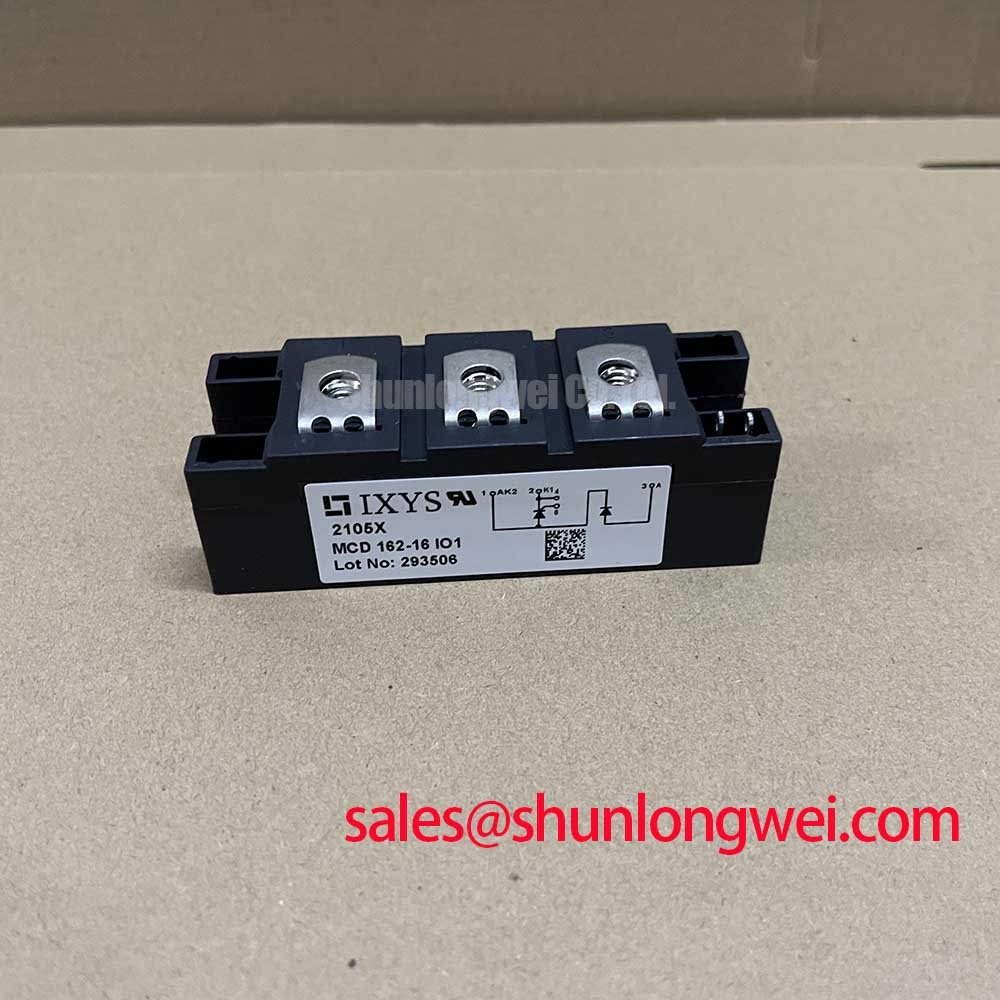
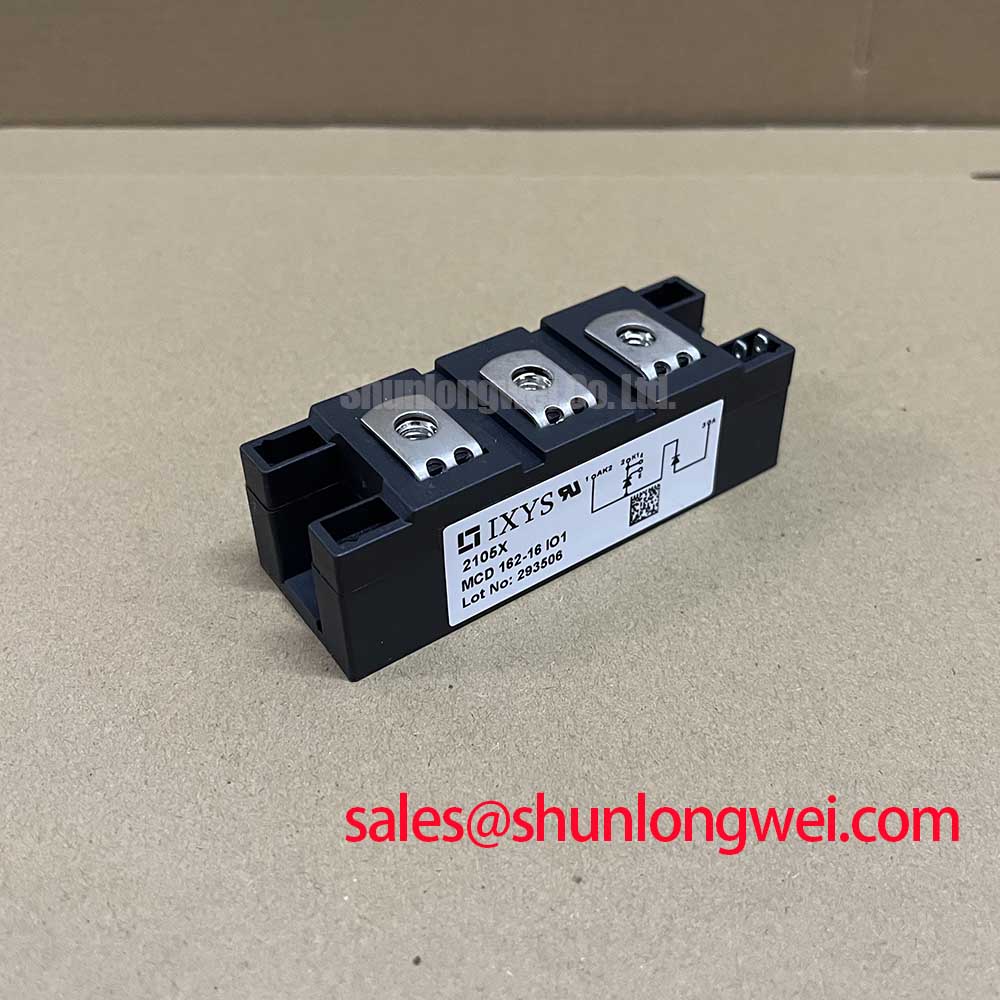
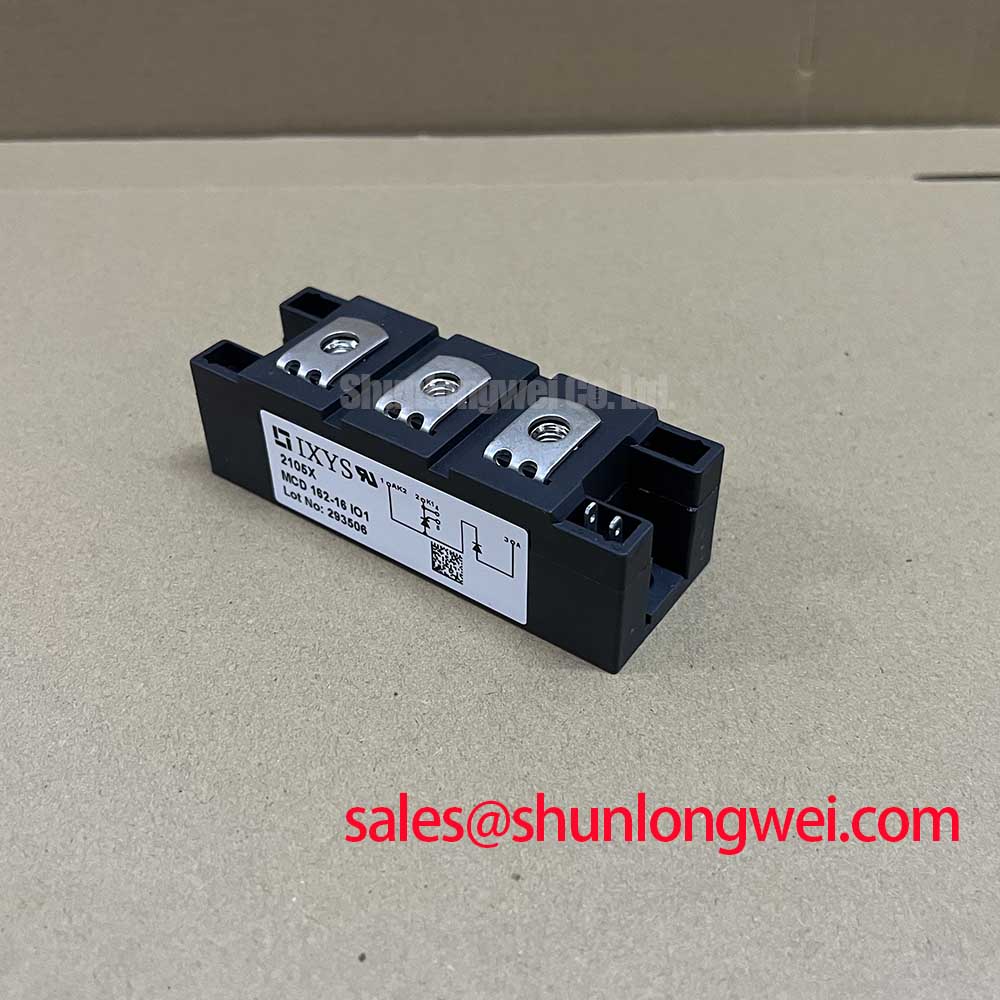
The MCD162-16io1 is a Thyristor/Diode Module configured as a phase-leg (common cathode), engineered for high-reliability AC control and rectification. This module’s primary value proposition is its combination of high voltage capability and superior thermal efficiency, facilitated by an electrically isolated baseplate. It provides a streamlined solution for power system designs requiring robust performance and simplified assembly.
- Core Specifications: 1600V VDRM/VRRM | 181A ITAV | 3600V~ Isolation
- Key Engineering Benefits: Allows mounting on a common, non-isolated heatsink, reducing system cost and complexity. Offers predictable thermal performance for stable operation under demanding load cycles.
- Design Intent Answered: The module’s low junction-to-case thermal resistance simplifies heatsink selection and overall thermal management.
Download the Official MCD162-16io1 Datasheet (PDF)
Technical Analysis: Isolation and Thermal Performance
A defining feature of the MCD162-16io1 is its use of a Direct Copper Bonded (DCB) aluminum oxide substrate. This construction provides 3600V~ of electrical isolation between the power semiconductors and the metal baseplate. For engineers, this eliminates the need for expensive and thermally inefficient isolating pads when mounting multiple modules to a single heatsink. This design choice directly contributes to more compact, cost-effective, and reliable power assemblies, particularly in three-phase control systems.
The module’s thermal resistance from junction to case (RthJC) is specified at 0.155 K/W for the thyristor. This parameter is crucial for system longevity. Consider thermal resistance as the width of a pipeline for heat dissipation; a lower value signifies a wider pipe, allowing heat to escape the active silicon more easily. The efficient heat transfer of the MCD162-16io1 ensures the junction temperature remains within its 125°C maximum limit, even under substantial electrical loads, a key factor in preventing premature failure. This robust thermal design is fundamental to its role in high-current applications.
Optimized Application Scenarios
The electrical and thermal characteristics of the MCD162-16io1 make it highly suitable for a range of demanding industrial applications.
- AC Motor Soft Starters: The module’s high blocking voltage of 1600V and substantial current rating provide the necessary headroom to control the inrush current of large AC motors.
- Controlled Rectifiers: In applications like DC motor drives or power supplies, its thyristor-diode topology is ideal for building efficient and controllable single or three-phase bridge rectifiers.
- AC Power & Temperature Control: For industrial heating or lighting systems, the phase-control capability of the thyristors allows for precise power regulation.
- Line-Frequency Rectification: The device is optimized for 50/60 Hz operation, making it a standard component for line-powered industrial equipment.
Its blend of high voltage isolation and efficient thermal pathways makes it an optimal choice for industrial power control requiring durability and simplified assembly.
Key Specification Parameters for MCD162-16io1
| Absolute Maximum Ratings (TC = 25°C unless otherwise specified) | |
|---|---|
| Repetitive Peak Off-State/Reverse Voltage (VDRM/VRRM) | 1600 V |
| Average On-State Current (IT(AV)M at TC=85°C) | 181 A |
| Peak Non-Repetitive Surge Current (ITSM, 10ms, 50Hz) | 6000 A |
| Operating Junction Temperature (TVJM) | -40°C to +125°C |
| Electrical & Thermal Characteristics | |
| On-State Voltage Threshold (VT0) – Thyristor | 0.88 V |
| On-State Slope Resistance (rT) – Thyristor | 1.15 mΩ |
| Thermal Resistance, Junction to Case (RthJC) – Thyristor | 0.155 K/W |
| Isolation Voltage (VISOL, 50/60Hz, RMS, t=1 min) | 3000 V~ |

Engineer’s Frequently Asked Questions
1. How does the isolated baseplate simplify thermal design?
The 3000V~ isolation allows the MCD162-16io1 module to be mounted directly onto a grounded chassis or a common heatsink with other modules, without needing extra insulating layers. This simplifies the mechanical assembly and improves heat transfer compared to using external mica or silicone pads, leading to a more efficient and compact thermal solution.
2. What are the recommended mounting torque specifications?
For reliable mechanical and thermal contact, the datasheet specifies a mounting torque for the M4 mounting screws of 1.8 Nm to 2.2 Nm. For the M4 electrical terminal screws, a torque of 1.8 Nm to 2.2 Nm is also recommended. Adhering to these values is critical to prevent damage and ensure optimal performance.
3. Can this module be used for soft-starting a three-phase motor?
Yes. Three MCD162-16io1 modules can be used to construct a complete three-phase AC controller. The 1600V rating provides a significant safety margin for standard 400V or 480V line voltages, and the 181A current rating is suitable for a wide range of medium-power industrial motors.
Design Enablement
The MCD162-16io1 Thyristor/Diode Module provides a robust foundation for power control systems. Its architecture, centered on an isolated baseplate and efficient planar passivated chips, empowers engineers to develop high-current AC control and rectification circuits with simplified thermal management and enhanced reliability. This focus on practical integration makes it a valuable component in the power semiconductors landscape.