MCO500-16io1: A Technical Guide to the High-Power Thyristor Module
MCO500-16io1: IXYS Thyristor Module for AC Power Control
Introduction to the MCO500-16io1 High Power Module
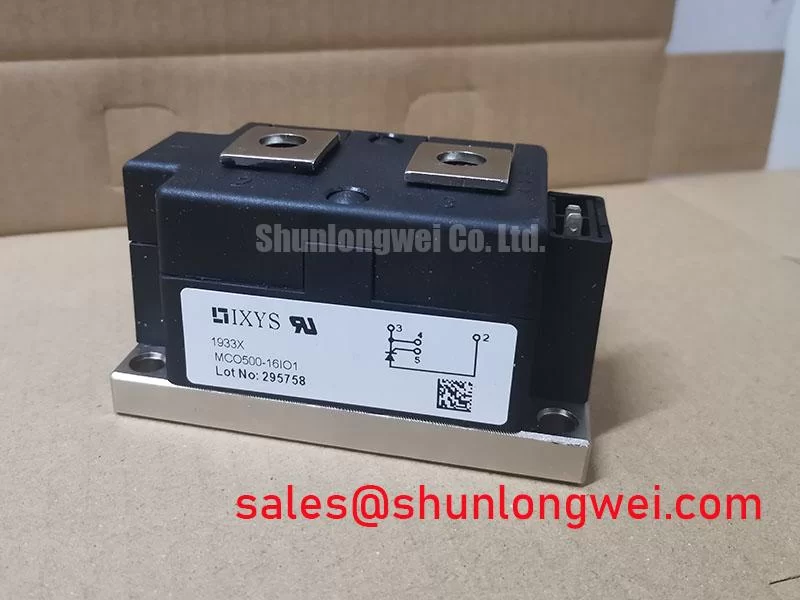
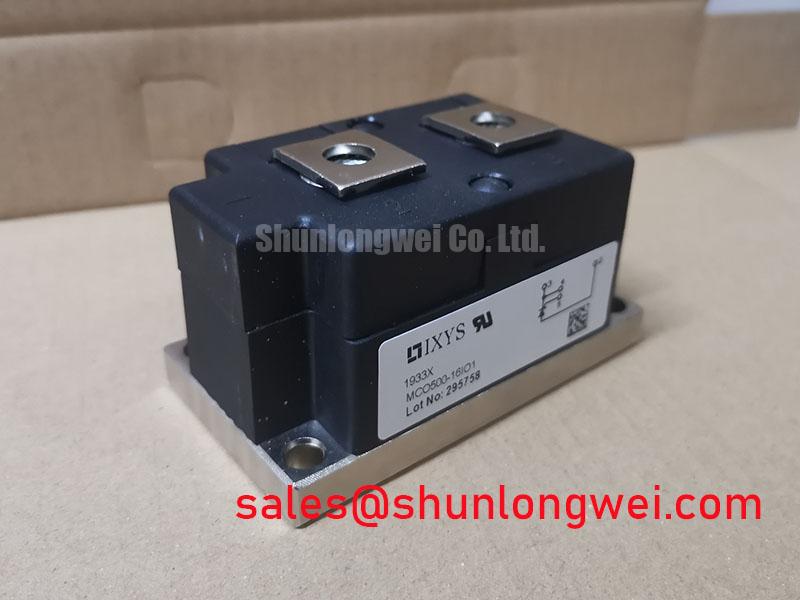
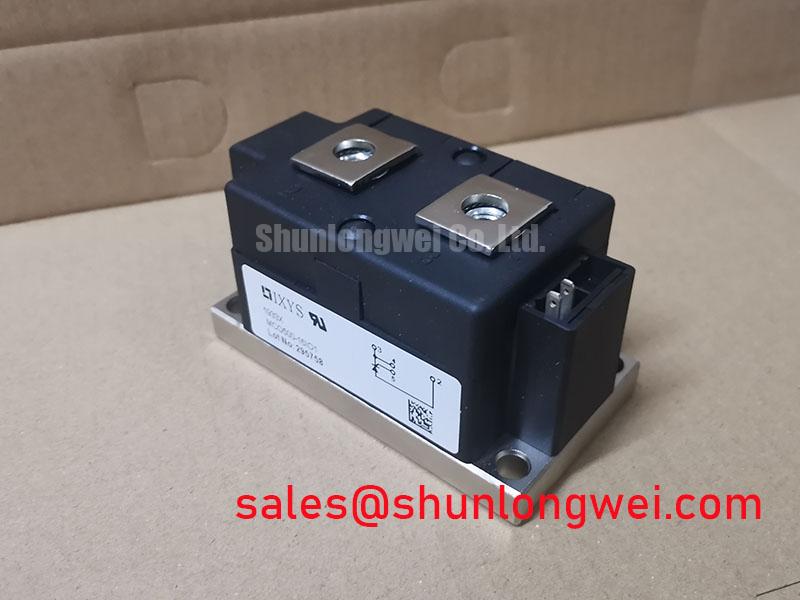
The IXYS MCO500-16io1 is a high-power thyristor module engineered for robust control of AC line frequency applications. Its core value proposition is delivering reliable power handling through superior thermal performance and high electrical isolation. This is achieved with a Direct Copper Bonded (DCB) Alumina (Al2O3) ceramic substrate, a key factor in its low thermal impedance for effective heatsink implementation.
- Core Specifications: 1600V VRRM | 560A ITAV | 3600V~ VISOL
- Key Advantages: Facilitates simplified thermal management and enhances long-term system reliability in harsh industrial environments.
This module provides a durable solution for engineers needing to precisely manage high currents in motor control and industrial heating systems. The robust packaging ensures stability across a wide range of operating temperatures. For detailed specifications, Download the Official MCO500-16io1 Datasheet (PDF).
Technical Analysis for System Integration
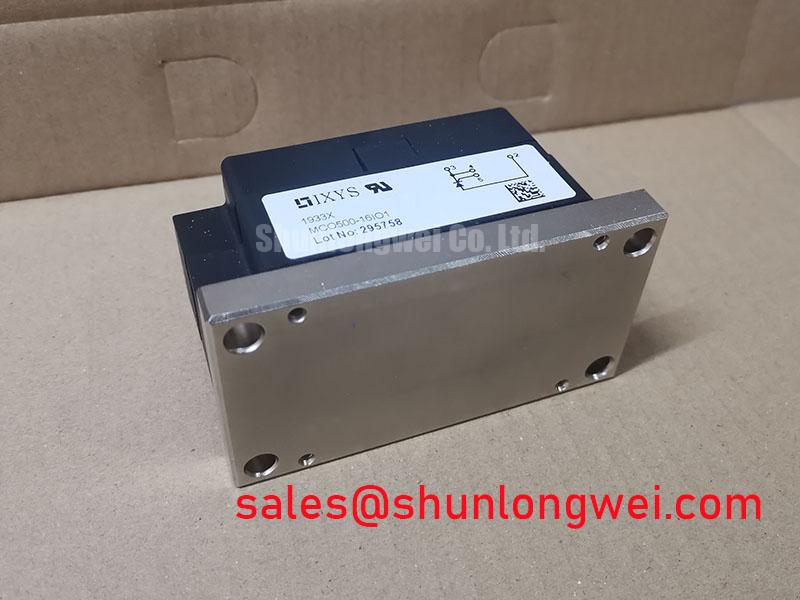
A defining characteristic of the MCO500-16io1 is its exceptional thermal efficiency, directly attributed to its construction. The module utilizes a Direct Copper Bonded (DCB) ceramic base plate. This design creates a very low thermal resistance (RthJC) of 0.072 K/W for the thyristor. Think of thermal resistance as the narrowness of a pipe; a lower value represents a wider pipe, allowing heat to flow away from the semiconductor junction more freely. This efficiency minimizes junction temperature rise under heavy loads, a critical factor for preventing device degradation and ensuring long-term operational stability.
Furthermore, the module specifies an isolation voltage (VISOL) of 3600V~ (RMS). This high isolation rating is fundamental for safety and system integrity in industrial power electronics. It ensures that the high voltage being controlled by the module is safely isolated from the grounded heatsink and chassis. This prevents potential damage to low-voltage control circuits and provides essential protection for equipment and personnel, a key requirement in applications like power semiconductors for industrial motor drives.
Optimized Application Scenarios
The electrical and thermal characteristics of the MCO500-16io1 make it highly suitable for specific high-power AC control tasks.
- AC Motor Soft Starters: Its high surge current capability (ITSM up to 17000A) allows it to safely manage the high inrush currents typical of large motor start-ups.
- Industrial Heating and Furnace Control: The precise phase-angle control enabled by the thyristor is ideal for regulating power to resistive heating elements, ensuring accurate temperature management.
- Power Converters: The 1600V blocking voltage provides a significant safety margin for use in converters operating on 400V, 480V, or 690V AC mains.
- Solid-State Switches: Its robust design and reliable switching characteristics are well-suited for high-power static switching applications, replacing mechanical contactors.
This module is an optimal component choice for AC power control systems where high reliability and efficient thermal management are primary design requirements.
Key Specifications of the MCO500-16io1
| Absolute Maximum Ratings (TVJ = 25°C unless otherwise specified) | ||
|---|---|---|
| VDRM / VRRM | Repetitive Peak Off-State/Reverse Voltage | 1600 V |
| IT(AV)M | Average On-State Current (TC = 85°C) | 560 A |
| ITSM | Surge non-repetitive On-State Current (10 ms, 50 Hz) | 17000 A |
| TVJM | Maximum Virtual Junction Temperature | 140 °C |
| Electrical & Thermal Characteristics | ||
| VT0 | Threshold Voltage (TVJ = 140°C) | 0.80 V |
| rT | Slope Resistance (TVJ = 140°C) | 0.38 mΩ |
| VISOL | Isolation Voltage (50/60 Hz, RMS, t = 1 min) | 3600 V~ |
| RthJC | Thermal Resistance, Junction to Case (DC) | 0.072 K/W |
Engineer’s Frequently Asked Questions
1. What is the main consideration for heatsink selection with the MCO500-16io1?
The primary factor is the module’s low junction-to-case thermal resistance (0.072 K/W). To fully leverage this, a heatsink with a correspondingly low thermal resistance (case-to-ambient) is required, along with a high-quality thermal interface material, to keep the junction temperature below the 140°C maximum rating during operation.
2. What are the specified mounting torque values?
The datasheet specifies a mounting torque for the M6 baseplate mounting screws of 4.5 – 7 Nm (40 – 62 lb.in.). The M8 electrical terminal connections require a torque of 11 – 13 Nm (97 – 115 lb.in.). Adhering to these values is critical for ensuring proper thermal contact and reliable electrical connections.
3. Can this module be used for three-phase control?
Yes. Multiple MCO500-16io1 modules can be configured for single and three-phase bridge applications, such as a six-pulse bridge rectifier or an AC voltage controller. Its isolated baseplate simplifies the mechanical assembly onto a common heatsink.
4. What does the planar passivated chip technology offer?
Planar passivated chips provide high voltage blocking stability and low leakage currents over the device’s lifetime. This manufacturing process ensures reliable performance and contributes to the overall robustness of the module in demanding industrial cycles.
Enabling Reliable High-Power Designs
The MCO500-16io1 thyristor module offers a high-performance component for AC power control. Its design, centered on a thermally efficient DCB substrate and high electrical isolation, provides a dependable foundation for building stable and safe power systems. This empowers engineers to meet the demanding operational requirements of industrial motor control and process heating applications.