Mitsubishi CM300DU-24NFH: A Technical Analysis for High-Frequency Power Conversion
Mitsubishi CM300DU-24NFH IGBT Module | 1200V 300A Dual
Introduction and Core Highlights
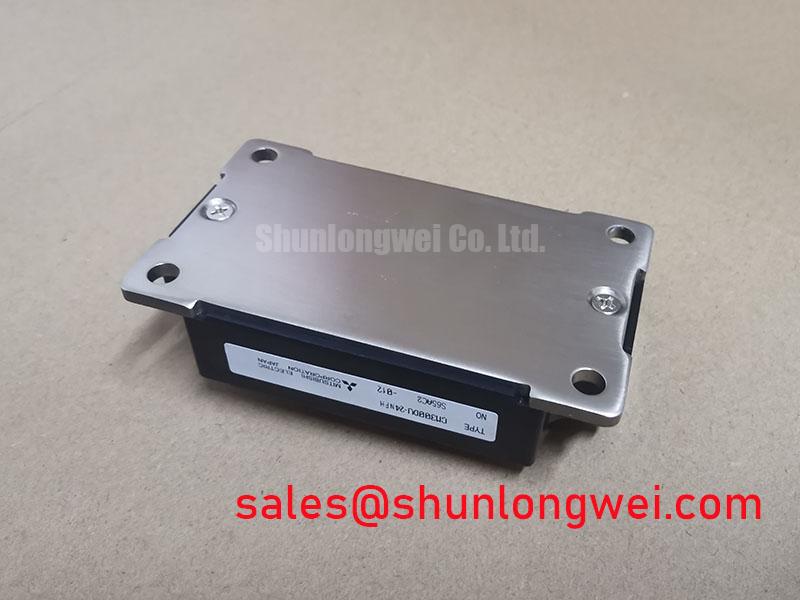
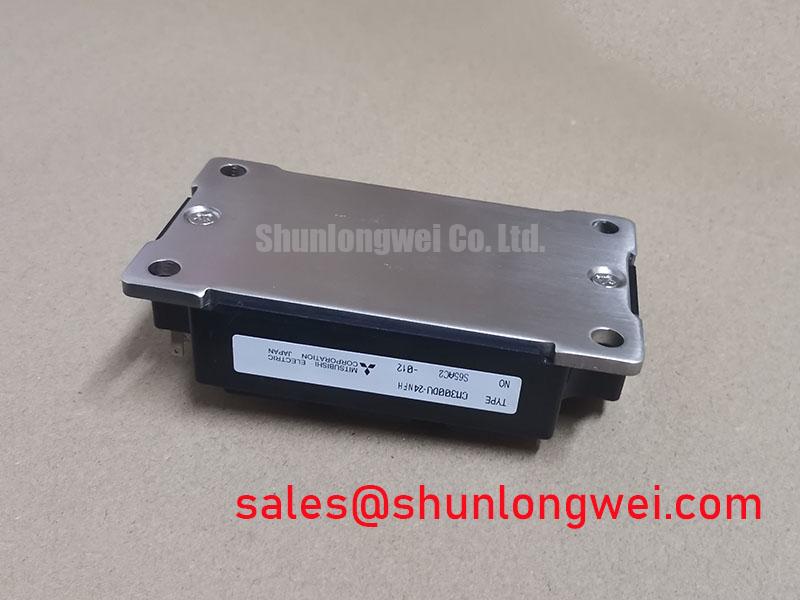
The Mitsubishi CM300DU-24NFH is a dual IGBT module engineered for high-frequency power conversion. Its core value is enabling superior efficiency in demanding applications by minimizing total power loss through optimized high-speed switching characteristics. This module integrates two IGBTs in a half-bridge configuration, providing a robust solution for inverter and power control systems operating from 30kHz to 60kHz. For engineers developing high-frequency power supplies or motor drives, the CM300DU-24NFH offers a direct path to achieving greater power density and improved thermal performance.
- Core Specifications: 1200V | 300A | VCE(sat) 2.7V (Max)
- Key Advantages: Low switching energy loss (Eon/Eoff), integrated fast recovery freewheeling diode.
Download Official Datasheet (PDF)
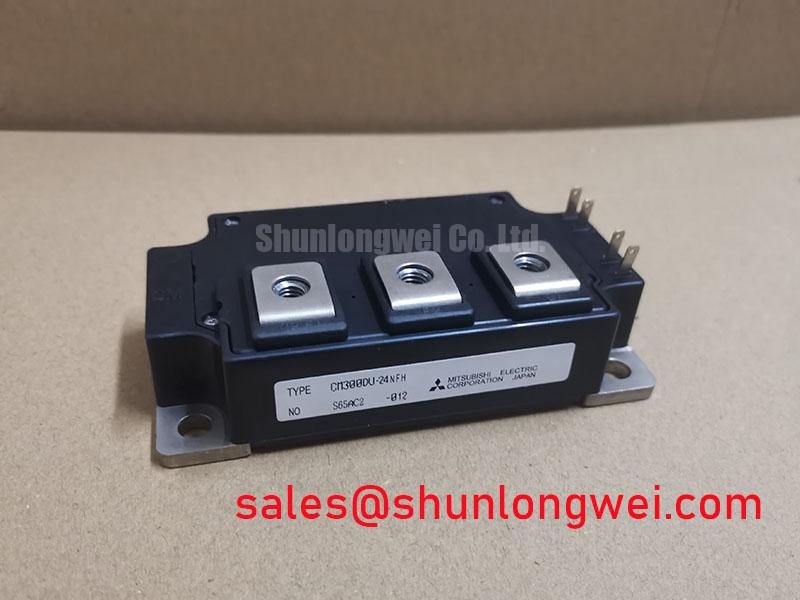
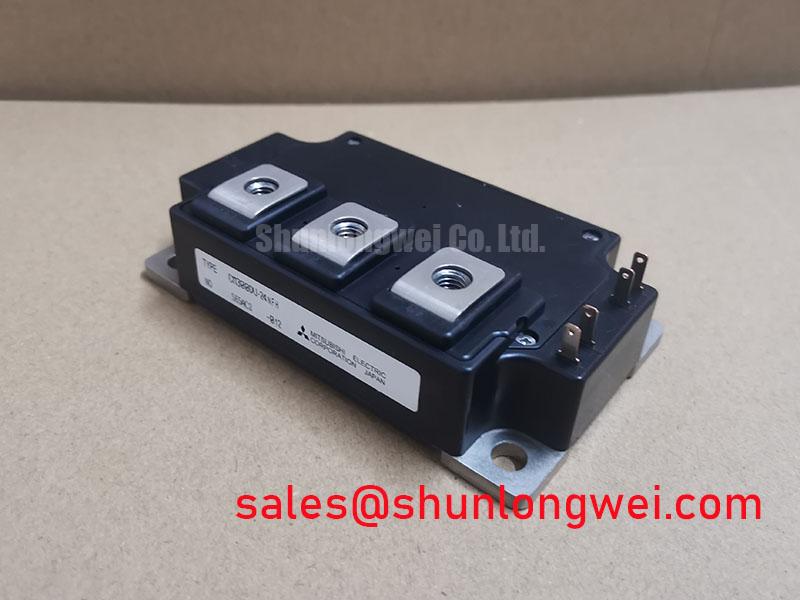
Technical Analysis: High-Speed Switching and Thermal Efficiency
The primary engineering advantage of the CM300DU-24NFH lies in its switching performance. The datasheet specifies typical turn-on and turn-off times (t_on, t_off) that directly contribute to lower switching energy loss (E_on, E_off) per cycle. This is particularly impactful in systems operating at higher frequencies, as cumulative switching losses can become a dominant factor in overall system inefficiency and heat generation. By minimizing these losses, the module allows for either higher operating frequencies without a thermal penalty or reduced cooling requirements for a given frequency, enabling more compact system designs.
Effective thermal management is crucial for reliability in high-power modules. The CM300DU-24NFH specifies a junction-to-case thermal resistance (Rth(j-c)) of 0.11°C/W for the IGBT and 0.17°C/W for the diode. This parameter can be visualized as the width of a pipe for heat flow; a lower value indicates a wider pipe, allowing heat to escape from the active semiconductor junction to the heatsink more effectively. This efficient heat dissipation ensures the junction temperature (Tj) remains within its maximum rating of 150°C during operation, a key factor for achieving long-term operational reliability. Learn more about the critical role of IGBT thermal design for system longevity.
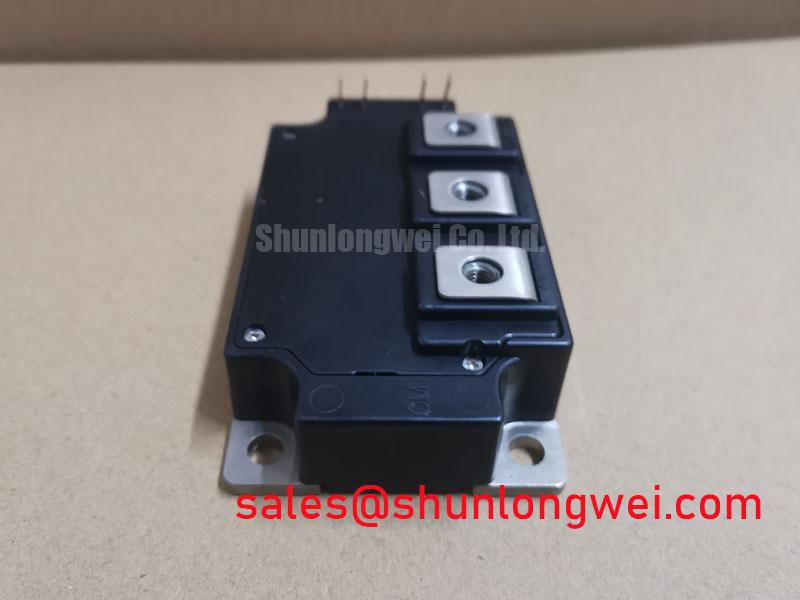
Optimized Application Scenarios
The technical characteristics of this module make it a strong candidate for several specific applications:
- High-Frequency Inverters: Its low switching losses are essential for maintaining efficiency in solar inverters and uninterruptible power supplies (UPS) that operate at elevated frequencies to reduce the size of magnetic components.
- AC Motor Drives (VFDs): The 300A current rating provides ample capacity for controlling medium-power industrial motors, while the efficient switching reduces heat in the drive cabinet.
- Welding Power Supplies: Fast switching enables precise control over the energy delivered to the weld, improving weld quality and consistency.
- Induction Heating: The module’s capability to operate efficiently up to 60 kHz is a direct fit for the resonant converters used in induction heating systems.
Its balance of 1200V blocking voltage, 300A current capability, and fast-switching nature makes this module an optimal fit for power conversion systems that prioritize efficiency and power density.
Key Specifications of the CM300DU-24NFH
| Absolute Maximum Ratings | |
|---|---|
| Collector-Emitter Voltage (Vces) | 1200V |
| Collector Current (Ic) | 300A |
| Peak Collector Current (Icp) | 600A |
| Collector Power Dissipation (Pc) | 1130W |
| Operating Junction Temperature (Tj) | -40 to +150°C |
| Electrical Characteristics | |
| Collector-Emitter Saturation Voltage (Vce(sat)) (Typ/Max @ Ic=300A) | 2.2V / 2.7V (Tj=125°C) |
| Gate-Emitter Threshold Voltage (Vge(th)) | 5.5V to 7.5V |
| Turn-On Switching Energy (Eon) (Typ @ Tj=125°C) | 36 mJ/pulse |
| Turn-Off Switching Energy (Eoff) (Typ @ Tj=125°C) | 37 mJ/pulse |
| Diode Forward Voltage (VEC) (Typ/Max @ IE=300A) | 2.0V / 2.5V (Tj=125°C) |
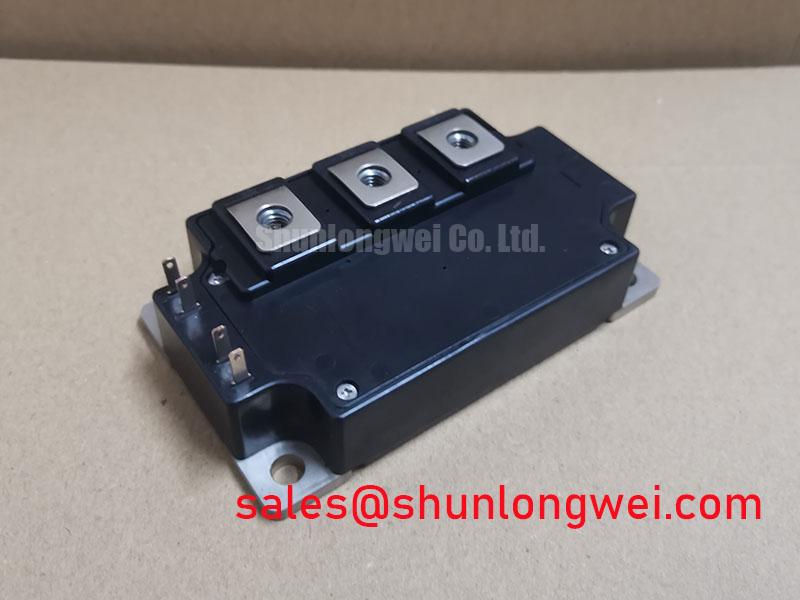
Engineer’s FAQ
What makes the CM300DU-24NFH suitable for high-frequency applications?
This module is part of Mitsubishi’s NFH-Series, specifically developed for high-frequency use (30-60 kHz). Its suitability comes from low typical switching energy values (Eon=36mJ, Eoff=37mJ at 125°C), which reduce the power lost during each switching event. This allows the system to operate at higher frequencies with greater efficiency and less heat generation.
What is the recommended mounting torque for this module?
According to the official datasheet, the recommended mounting torque for the main terminal screws (M6) is 3.5 to 4.5 N·m. For mounting the module’s baseplate to a heatsink (using M6 screws), the recommended torque is also 3.5 to 4.5 N·m. Applying the correct torque is critical for ensuring both a reliable electrical connection and optimal thermal management.
Does this module have short-circuit protection capability?
The datasheet explicitly states, “No short circuit capability is designed.” Therefore, the external gate drive circuitry must provide short-circuit detection and protection (SCSOA protection) to prevent damage to the IGBT module under such fault conditions.
How should the dual IGBTs in the CM300DU-24NFH be utilized in a circuit?
The module contains two IGBTs and two freewheeling diodes in a half-bridge (or dual) configuration. This is ideal for building one phase-leg of a three-phase inverter. By using three of these modules, a complete three-phase inverter can be constructed for applications like AC motor control. Understanding different topologies is key; you can read more in our guide to H-Bridge vs. Half-Bridge topologies.
Enabling Efficient Power Conversion
The CM300DU-24NFH provides a technically sound foundation for high-power, high-frequency systems. Its design prioritizes the reduction of switching losses, a critical factor for improving the efficiency and power density of modern inverters. For engineers tasked with developing compact and reliable power electronics, this module’s documented performance characteristics offer a clear path to achieving system-level goals.