NL2432HC17-10B: A Technical Review of the 2.7-inch Transflective QVGA Display
## NL2432HC17-10B: 2.7-inch Transflective QVGA TFT-LCD Module
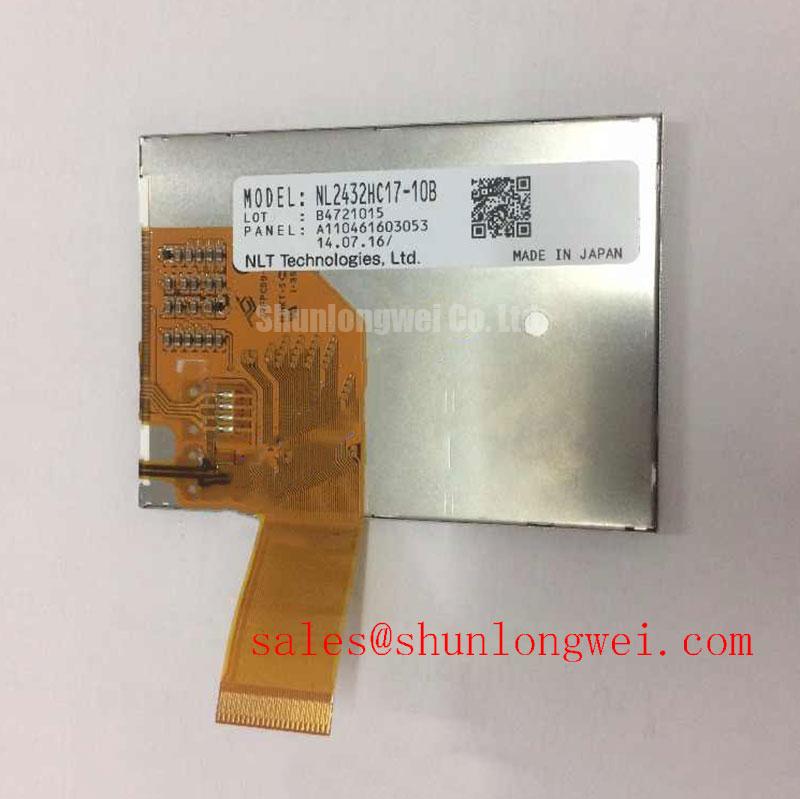
The NL2432HC17-10B is an amorphous silicon active-matrix TFT-LCD module that delivers exceptional visual clarity in a compact 2.7-inch form factor. Its defining feature is its transflective display technology, enabling clear readability in a wide range of lighting conditions, from complete darkness to direct sunlight. This dual-mode operation ensures that data is always accessible while optimizing for power efficiency in portable and industrial applications.
* **Core Specifications**: 2.7″ QVGA (240×320) | Transflective Technology | 400:1 Contrast Ratio
* **Key Advantages**: Excellent readability in bright ambient light, reduced backlight power consumption.
* **Engineering Value**: The transflective capability allows the display to use ambient light for illumination, significantly reducing the need for the power-intensive backlight in well-lit environments and extending battery life for mobile devices.
Download Official Datasheet (PDF)

Technical Analysis for System Integration
The primary engineering value of the NL2432HC17-10B lies in its transflective screen technology. This design incorporates both a transmissive mode, which uses a built-in WLED backlight for viewing in low-light conditions, and a reflective mode, which leverages ambient light to illuminate the screen. This dual functionality is critical for devices intended for both indoor and outdoor use, ensuring consistent image legibility without requiring a high-power backlight that would drain the battery. The transition between modes is seamless, providing a reliable user experience across diverse operational environments. For more insight into designing for visibility, explore this technical guide to sunlight readability.
The display’s optical performance is defined by its contrast ratio and viewing angles. You can think of the contrast ratio as the visual separation between the brightest white and darkest black. The NL2432HC17-10B specifies a typical contrast ratio of 400:1 in transmissive mode, which provides sharp, well-defined images and text. This level of contrast is crucial for accurately interpreting detailed graphical data or text without eye strain. Coupled with viewing angles of 50° left/right, 30° up, and 60° down, the display offers flexibility in how a device can be held or mounted while maintaining legibility for the operator. This is a key consideration in the ergonomic design of handheld equipment.
With a pixel density of 148 PPI (Pixels Per Inch) in a 240×320 QVGA resolution, this module delivers sharp and clear image quality for its compact 2.7-inch size. The RGB vertical stripe arrangement is a standard pixel geometry that ensures good color fidelity for graphical user interfaces. The module integrates a CMOS (1-channel, 6-bit) and SPI interface, a common choice for embedded systems that balances data transfer speed and pin count, simplifying the connection to a host processor. This straightforward integration is beneficial for reducing development time and PCB complexity. To ensure long-term performance, consider strategies for proactive management of industrial LCD backlight lifespan.
### Optimized Application Scenarios
* **Handheld Diagnostic Instruments**: The compact size and robust operating temperature range of -20 to 70°C make it suitable for field service tools where space is limited and environmental conditions vary.
* **Portable Data Terminals**: Its transflective screen technology significantly reduces power consumption in outdoor settings, extending battery life for devices used in logistics and inventory management.
* **Medical Monitoring Devices**: The clear, high-contrast QVGA display provides legible critical data, while the compact form factor allows for integration into portable patient monitors.
* **Industrial Control Panels**: The standard digital interface and wide viewing angles ensure easy integration and clear readability for operators who may not always be directly in front of the screen.
Its combination of a compact QVGA resolution, wide operating temperature, and transflective screen makes this module an excellent fit for battery-powered, portable industrial and medical devices.
### Key Specifications of the NL2432HC17-10B
| Parameter | Specification | |
|---|---|---|
| Display | Screen Size | 2.7-inch |
| Resolution | 240(RGB) x 320 (QVGA) | |
| Active Area | 41.04 x 54.72 mm | |
| Overall Dimensions | 50.54 x 68.62 x 3.85 (Max) mm | |
| Optical Characteristics | Display Mode | TN, Transmissive |
| Luminance | 500 cd/m² (Typ.) | |
| Contrast Ratio | 400:1 (Typ.) | |
| Viewing Angle (CR≥10) | 50/50/60/30 (L/R/U/D) | |
| Electrical & Environmental | Signal Interface | CMOS (1 ch, 6-bit) + SPI |
| Operating Temperature | -20°C to 70°C | |
| Storage Temperature | -30°C to 80°C | |
*All specifications are sourced from the official manufacturer datasheet and subject to change.
Engineer’s FAQ
**Q1: What makes the NL2432HC17-10B a “sunlight readable” display?**
This module utilizes transflective technology. It has a reflective layer that uses strong ambient light, such as direct sunlight, to illuminate the pixels. This allows the display to be read clearly outdoors without the backlight, which would otherwise be washed out.
**Q2: What are the power supply requirements for the LED backlight?**
The datasheet specifies a typical forward voltage of 16V for the WLED backlight, with a maximum of 17.5V. The forward current is typically 18mA. It is critical to use a constant current driver circuit to maintain consistent brightness and prevent over-driving the LEDs, which can shorten the backlight’s lifespan.
**Q3: What type of touch panel is integrated with this module?**
The NL2432HC17-10B is specified with an integrated 4-wire resistive touchscreen. This type of touch technology is known for its reliability and ability to be activated by a finger, stylus, or gloved hand, making it suitable for many industrial environments. It does not include an onboard touch controller, so an external controller IC is required.
**Q4: How should the display be oriented for optimal viewing?**
The optimal viewing direction is specified at the 12 o’clock position. This means the display provides the best image quality when viewed from slightly above, which is typical for devices where the user is looking down at the screen, such as a handheld meter or a desktop control unit. This should be considered during the mechanical design of the end product.
### Design & Lifecycle Considerations
The NL2432HC17-10B provides a balanced set of features for creating clear, power-efficient, and compact visual interfaces. Its transflective nature is the key enabling technology, allowing for the design of versatile devices that perform reliably whether operated indoors or in challenging, bright outdoor conditions. By leveraging this capability, engineers can achieve both superior display legibility and extended battery performance. For systems requiring robust performance, review this guide on vibration and shock resistance for industrial displays.