Powerex CM100TJ-24F: A Technical Analysis of the All-in-One CIB IGBT Module
Powerex CM100TJ-24F 1200V 100A CIB IGBT Module
Introduction and Core Highlights
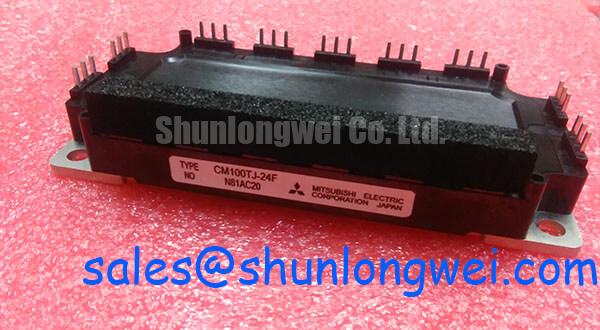
The Powerex CM100TJ-24F is a highly integrated IGBTMOD™ T-Series module engineered to streamline power conversion systems. It consolidates a three-phase input rectifier, a three-phase output inverter, and a dynamic brake chopper into a single, robust package. This all-in-one design is a strategic advantage for engineers looking to reduce system complexity and assembly time.
- Core Specifications: 1200V | 100A | 2500Vrms Isolation
- Key Advantages: Reduces component count and simplifies PCB layout. The integrated design minimizes stray inductance.
- Design Simplification: For engineers developing variable frequency drives (VFDs), this module serves as a complete power stage, significantly accelerating the development cycle.
Download the Official CM100TJ-24F Datasheet (PDF)
Technical Analysis of the Integrated Architecture
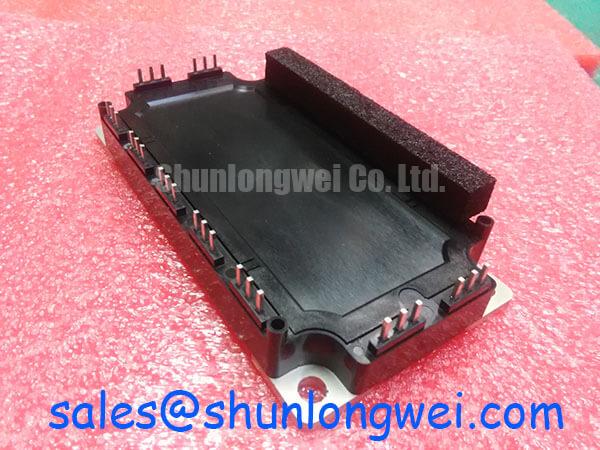
The primary value of the CM100TJ-24F lies in its CIB (Converter-Inverter-Brake) configuration. By integrating the AC-to-DC converter stage, the DC-to-AC inverter stage, and the brake chopper circuit, this module eliminates the need for multiple discrete components. This approach directly reduces the physical footprint of the power system and mitigates the risk of connection failures between stages. The strategy of combining devices into a single module is a key consideration in modern power design, as explored in discussions of PIM vs. discrete IGBTs. This integration simplifies thermal management by consolidating heat sources onto a single isolated baseplate.
Effective thermal dissipation is critical for reliability. The module specifies the thermal resistance from junction to case (Rth(j-c)) for both the IGBT (0.28°C/W) and the free-wheeling diode (0.45°C/W). This parameter is analogous to the width of a water pipe; a lower thermal resistance value signifies a wider pipe, allowing heat to flow more easily away from the active silicon. This efficient heat transfer is essential for preventing IGBT failures under load. Furthermore, the inclusion of an on-board NTC thermistor provides a direct method for monitoring operating temperature, enabling crucial over-temperature protection.
Optimized Application Scenarios
The characteristics of the CM100TJ-24F make it a strong candidate for several power conversion applications:
- AC Motor Control: The all-in-one CIB structure provides the core power stage for compact and reliable AC motor drives.
- General Purpose Inverters: Its 1200V/100A rating is well-suited for a wide range of industrial inverter applications requiring robust performance.
- Uninterruptible Power Supplies (UPS): The integrated rectifier and inverter are fundamental building blocks for online UPS systems, simplifying the power train design.
- Servo Drives: The module’s discrete super-fast recovery free-wheel diodes help minimize switching losses, which is beneficial for the dynamic performance required in servo applications.
With its balanced VCE(sat) and robust voltage rating, this module is an excellent match for cost-sensitive industrial applications requiring a compact and reliable power core.
Key Specification Parameters
| Absolute Maximum Ratings | |
|---|---|
| Collector-Emitter Voltage (VCES) | 1200 V |
| Collector Current (IC) @ Tc=25°C | 100 A |
| Peak Collector Current (ICM) | 200 A |
| Gate-Emitter Voltage (VGES) | ±20 V |
| Maximum Power Dissipation (Pc) | 480 W |
| Electrical & Thermal Characteristics (Inverter Part) | |
| Collector-Emitter Saturation Voltage (VCE(sat)) @ 100A | 2.7 V (Max) |
| Diode Forward Voltage (VEC) @ 100A | 2.6 V (Max) |
| Thermal Resistance, Junction-to-Case (Rth(j-c)) per IGBT | 0.28 °C/W (Max) |
| Isolation Voltage (Viso), AC 1 min. | 2500 Vrms |
Engineer’s FAQ
Q: How does the CM100TJ-24F simplify motor drive design?
A: It integrates the three primary power stages (AC-DC rectifier, DC-AC inverter, brake chopper) into one component. This reduces the need for external bridge rectifiers and brake circuits, shrinks PCB space, lowers assembly costs, and minimizes stray inductance between stages.
Q: What is the primary role of the NTC thermistor inside this module?
A: The integrated NTC thermistor allows for real-time monitoring of the module’s baseplate temperature. This data is critical for the drive’s control system to implement over-temperature protection, preventing thermal runaway and enhancing long-term system reliability. The benefits are further explained in articles on the key role of the NTC.
Q: What is the maximum collector-emitter saturation voltage (VCE(sat)) I should budget for in my loss calculations?
A: According to the datasheet, the maximum VCE(sat) is 2.7V at the nominal collector current of 100A and a junction temperature of 125°C. Using this maximum value is essential for worst-case thermal design.
Q: Is this module suitable for high-frequency switching applications?
A: The CM100TJ-24F is designed for general-purpose applications like motor drives, which typically operate in the range of a few kHz up to 20 kHz. While it features super-fast recovery diodes, its VCE(sat) of 2.7V (max) represents a balance between conduction and switching losses. For applications requiring significantly higher frequencies, a module with lower switching energy (Eon/Eoff) might be more appropriate.
Design Enablement
The CM100TJ-24F offers a practical, integrated solution that enables engineers to develop compact and thermally managed power conversion systems efficiently. Its CIB architecture and robust electrical specifications provide a solid foundation for industrial applications where reliability and streamlined assembly are key objectives.