Sharp LM64C149: A Technical Guide for Industrial Display Integration
Sharp LM64C149: 9.4-inch VGA CSTN-LCD Module
Engineered for Clarity and Longevity in Industrial Systems
The Sharp LM64C149 is a 9.4-inch passive-matrix CSTN (Color Super-Twisted Nematic) display module engineered for long-term reliability in industrial applications. Its primary value proposition lies in providing a robust, high-clarity 640×480 VGA interface for legacy systems where consistent performance is paramount. This module is not designed for high-motion video but excels in presenting static or slow-updating information with precision.
- Core Specifications: 9.4-inch Diagonal | 640×480 (VGA) Resolution | 512 Colors
- Key Advantages: High-contrast text and graphic readability, proven mechanical stability for industrial environments.
- Primary Use Case: Ideal for sustaining and repairing legacy industrial controls, medical devices, and test equipment requiring this specific footprint and interface.
For detailed electrical and mechanical specifications, please refer to the official Sharp LM64C149 datasheet (PDF).
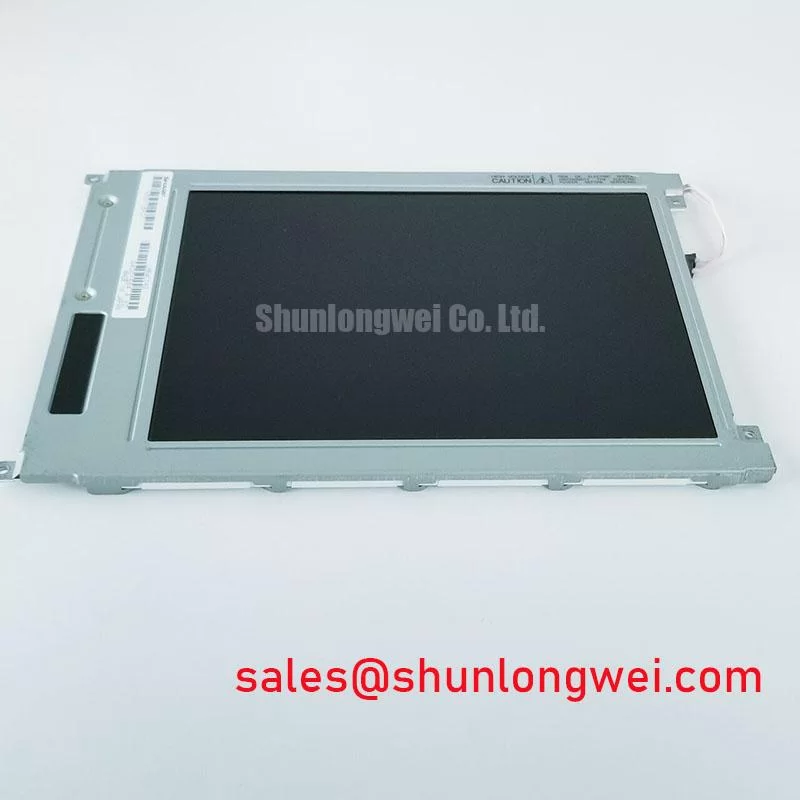


Technical Analysis for System Integration
The LM64C149 utilizes passive-matrix CSTN technology, which provides a cost-effective and reliable solution for displaying user interfaces, system status, and instrumentation data. Unlike active-matrix TFT displays, each pixel is not individually driven by a transistor. This results in a display optimized for low-to-medium refresh rates, making it an excellent choice for applications where the on-screen information does not change rapidly. Its 8-bit parallel RGB data interface (supporting 512 colors) was a common standard in the era of its design, ensuring compatibility with a wide range of industrial motherboards and controllers still in service today.
A key operational feature is its CCFL (Cold Cathode Fluorescent Lamp) backlight system. The datasheet specifies a backlight life of 20,000 hours, a testament to its design for industrial longevity. The 25:1 contrast ratio is important for ensuring readability. Think of contrast ratio as the legibility of text on a page; a higher value means the darks are deeper and the lights are brighter, making characters sharp and easy to distinguish. This level of contrast is effective for the clear presentation of text and simple graphics in typical factory floor or laboratory lighting conditions.
Optimized Application Scenarios
The specific technical characteristics of the Sharp LM64C149 make it a suitable component for maintaining the operational life of existing equipment.
- Industrial HMI (Human-Machine Interface): A direct replacement for older CNC machines, PLC controllers, and process automation terminals that were originally equipped with this 9.4″ VGA module.
- Test and Measurement Equipment: Fits legacy oscilloscopes, spectrum analyzers, and other benchtop instruments where the 640×480 resolution provides sufficient detail for waveform and data display.
- Medical Monitoring Systems: Suitable for patient monitors and diagnostic equipment where its reliability and clear display of vital statistics are critical.
Its feature set is best matched for systems requiring a durable 9.4-inch VGA display with a parallel interface for long-term operational sustainment.
Key Specifications of the LM64C149
| Display Characteristics | |
|---|---|
| Manufacturer | Sharp |
| Part Number | LM64C149 |
| Diagonal Size | 9.4 inches |
| Resolution | 640 x 480 (VGA) |
| Display Technology | CSTN-LCD (Passive Matrix) |
| Display Colors | 512 colors |
| Contrast Ratio | 25:1 (Typ.) |
| Backlight | 1 x CCFL with inverter |
| Electrical & Mechanical | |
| Logic Supply Voltage (VDD) | +5.0 V |
| LCD Driving Voltage (VEE) | -22.0 V |
| Interface | Parallel Data (8-bit RGB) |
| Operating Temperature | 0°C to +45°C |
| Outline Dimensions (W x H x D) | 266.4 x 182.3 x 10.0 mm |
Engineer’s FAQ
1. What are the critical interface and power requirements for the LM64C149?
The LM64C149 requires three primary power inputs: a +5V supply for logic (VDD), a -22V supply for LCD driving (VEE), and a high-voltage AC supply for the CCFL backlight, which is managed by an external inverter. The data interface is a parallel 8-bit RGB connection with standard timing signals like dot clock, Hsync, and Vsync.
2. My existing LM64C149 display is dim. What is the likely cause?
Dimness in a CCFL-backlit display is typically due to the aging of the fluorescent tube. The datasheet specifies a backlight half-life of 20,000 hours, after which brightness will be approximately 50% of its initial value. It is also advisable to verify that the backlight inverter is supplying the correct voltage and current.
3. Can this display be used in a new design?
While possible, the LM64C149 is primarily intended for maintaining existing systems. For new designs, modern a-Si TFT or IPS displays typically offer superior performance in color, viewing angle, and power consumption. However, if a system specifically requires a passive-matrix display with this form factor for certification or compatibility reasons, the LM64C149 remains a viable option.
4. How should this module be handled to prevent damage?
The display is sensitive to electrostatic discharge (ESD). Proper ESD protection procedures should be followed during handling and installation. Avoid applying mechanical stress to the glass surfaces and ensure the connector is seated correctly without excessive force. Mounting should be done according to the mechanical drawings in the datasheet to prevent warping of the chassis.
This module provides a durable and reliable display solution for systems designed around its specific technology. By adhering to the specifications in the official datasheet, engineers can ensure the continued performance and operational life of essential industrial equipment.