Sharp LQ10W03 10.3-Inch WVGA TFT-LCD: Technical Overview and Legacy Applications
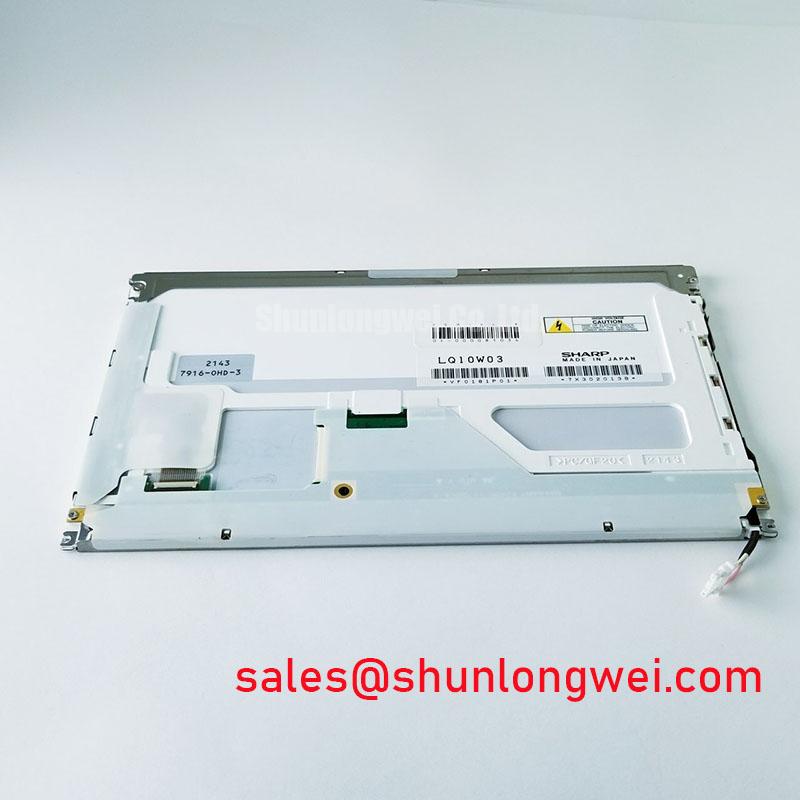
Sharp LQ10W03 10.3-Inch WVGA Widescreen TFT-LCD Display
Introduction and Core Specifications
The Sharp LQ10W03 is a 10.3-inch transmissive widescreen display featuring a native analog RGB interface. It offers a reliable hardware path for servicing and upgrading older control terminals that require direct analog video signals without modern digital conversion pipelines.
- Core Specs: 10.3-inch diagonal | 800×480 WVGA resolution | Widescreen 15:9 aspect ratio
- Key Engineering Benefits: Direct analog RGB signal integration, highly stable transmissive display output
Download Official Datasheet (PDF)
Technical Analysis and Engineering Context
The legacy analog RGB interface of the LQ10W03 operates with separate synchronization signals. This feature allows direct connection to older graphics cards and specialized controllers. It completely avoids the processing latency often introduced by active digital converters, ensuring stable real-time data visualization.
Thermal performance is highly optimized in the mechanical enclosure design. You can think of thermal dissipation like a wide drainage pipe. A larger diameter allows heat to flow out freely without building up pressure. This display structure prevents thermal hotspots, protecting the liquid crystal fluid from premature degradation in enclosed, poorly ventilated operating cabinets.

The rugged frame construction of the LQ10W03 also provides excellent protection against external mechanical stresses. This physical durability makes it suitable for equipment installed in high-vibration machinery areas. For mounting specifications and stabilization recommendations, please refer to our guide on vibration and shock resistance for industrial displays.

Target Application Suitability
- Legacy Industrial HMIs: Provides exact electrical compatibility for older machinery monitors relying on analog RGB inputs.
- Automotive Navigation Retrofits: Widescreen form factor matches early widescreen navigation system cavities with analog outputs.
- Test and Measurement Instruments: Serves as an excellent replacement screen for legacy spectrum analyzers and oscilloscopes.
- Marine Control Displays: Transmissive mode ensures consistent on-screen readability under standard bridge operating light.
Understanding LCD core technology is vital when selecting direct retrofits for legacy system architectures.
Widescreen Fit: The LQ10W03 is the ideal replacement display for analog-driven industrial terminals and legacy automotive navigation monitors.

Key Technical Specifications
| Specification Category | Parameter Detail |
|---|---|
| Diagonal Dimensions | 10.3 inches |
| Resolution | 800 × 480 (WVGA) |
| Aspect Ratio | 15:9 Widescreen |
| Signal Interface | Analog RGB |
| Display Operation Mode | TN, Normally White, Transmissive |
| Backlight Unit | CCFL (1 tube) |
| Outline Physical Dimensions | 247.0 (W) × 152.2 (H) × 12.5 (D) mm |

Engineering FAQ
Q: How can I interface the LQ10W03 display panel with digital system controllers?
A: An active digital-to-analog board is necessary to translate digital video formats such as LVDS or CMOS into the analog RGB signals required by the display.
Q: Does this legacy module support variable brightness dimming?
A: Yes, backlight dimming is supported. Dimming control is managed directly through the external CCFL inverter module. Consistent current regulation is necessary to prevent flicker at lower levels. You can read more in our guide on industrial LCD dimming.
Q: What physical mounting guidelines must be followed?
A: Mount the panel using the designated integrated mounting frame holes. Ensure the mounting bezel does not apply localized or uneven pressure to the LCD cell, which can degrade display uniformity.
Summary
The Sharp LQ10W03 display provides an essential, straightforward hardware solution for operators wishing to sustain and maintain analog industrial infrastructure. By offering direct analog RGB signal mapping in a widescreen WVGA frame, it resolves backward-compatibility challenges without requiring expensive, system-wide controller redesigns.