SKD146/16 Technical Review: Robust 1600V Rectification for Industrial Power
SKD146/16: Technical Review of a 1600V Bridge Rectifier
High-Reliability Three-Phase Rectification with the SKD146/16
The SEMIKRON SKD146/16 is a three-phase bridge rectifier module engineered for robust performance in demanding industrial power conversion systems. Its core value proposition lies in the combination of a high reverse voltage capability, excellent thermal performance, and a durable construction within an industry-recognized package. This integration provides a dependable foundation for power supply and drive applications where long-term reliability is a primary engineering concern. The module’s design, featuring a high-isolation ceramic baseplate, directly addresses the need for efficient heat dissipation to maintain operational stability.
- Core Specifications: 1600V | 157A (at Tc=85°C) | 3000V~ Isolation
- Key Advantages: Robust thermal management, high electrical safety margin.
This component is well-suited for engineers looking to implement a straightforward and reliable front-end rectification stage.
Download the Official SKD146/16 Datasheet (PDF)
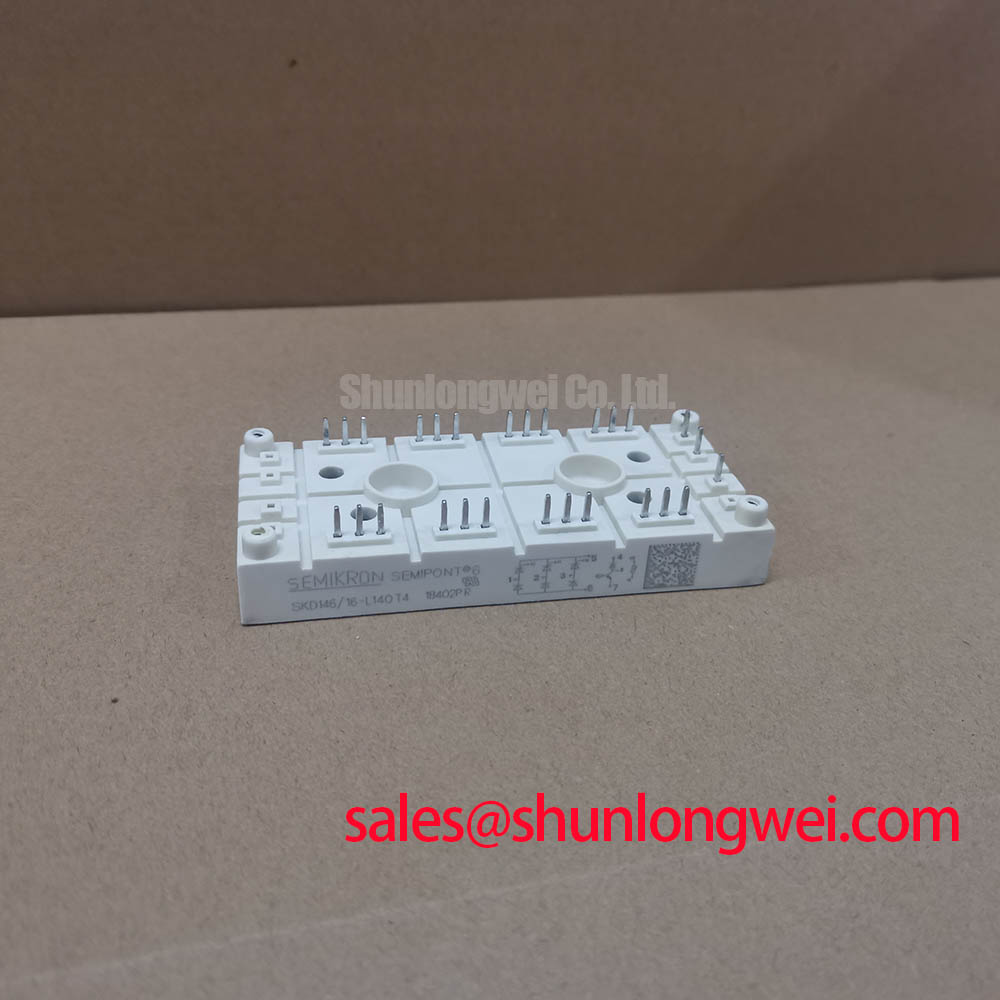
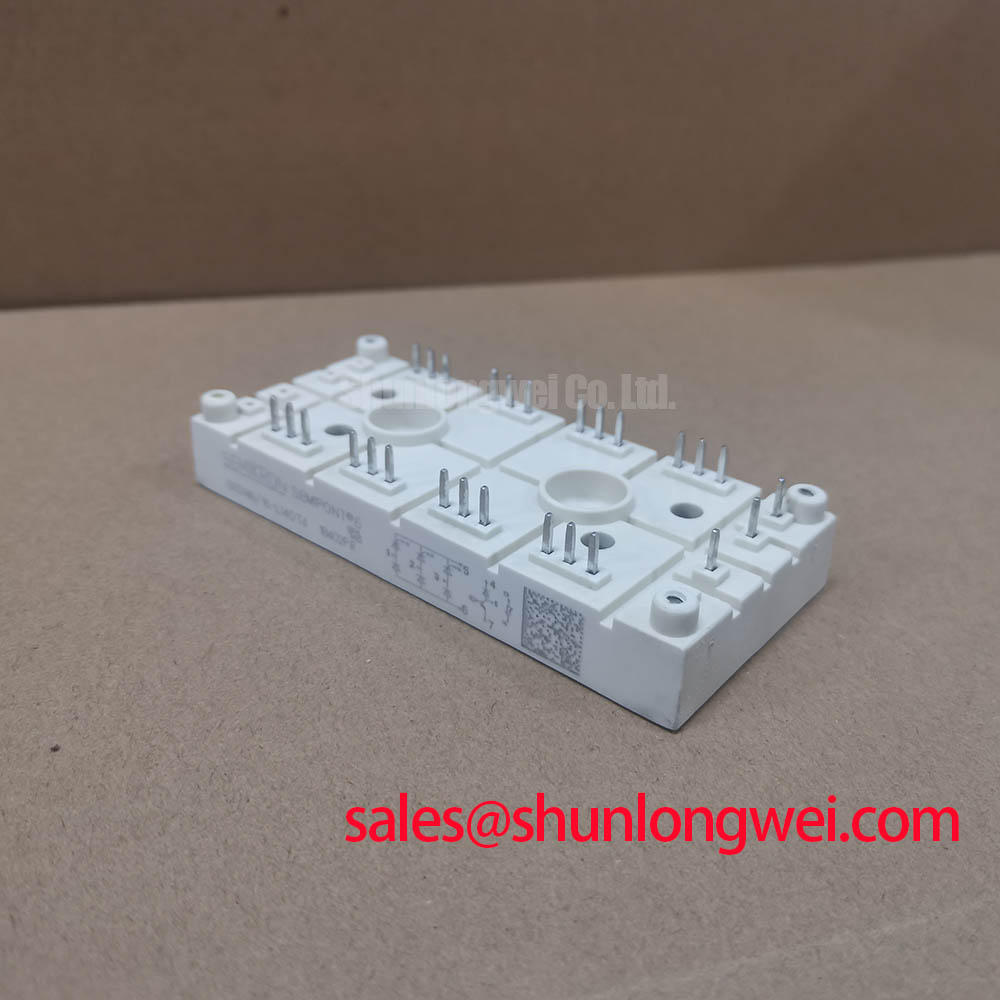
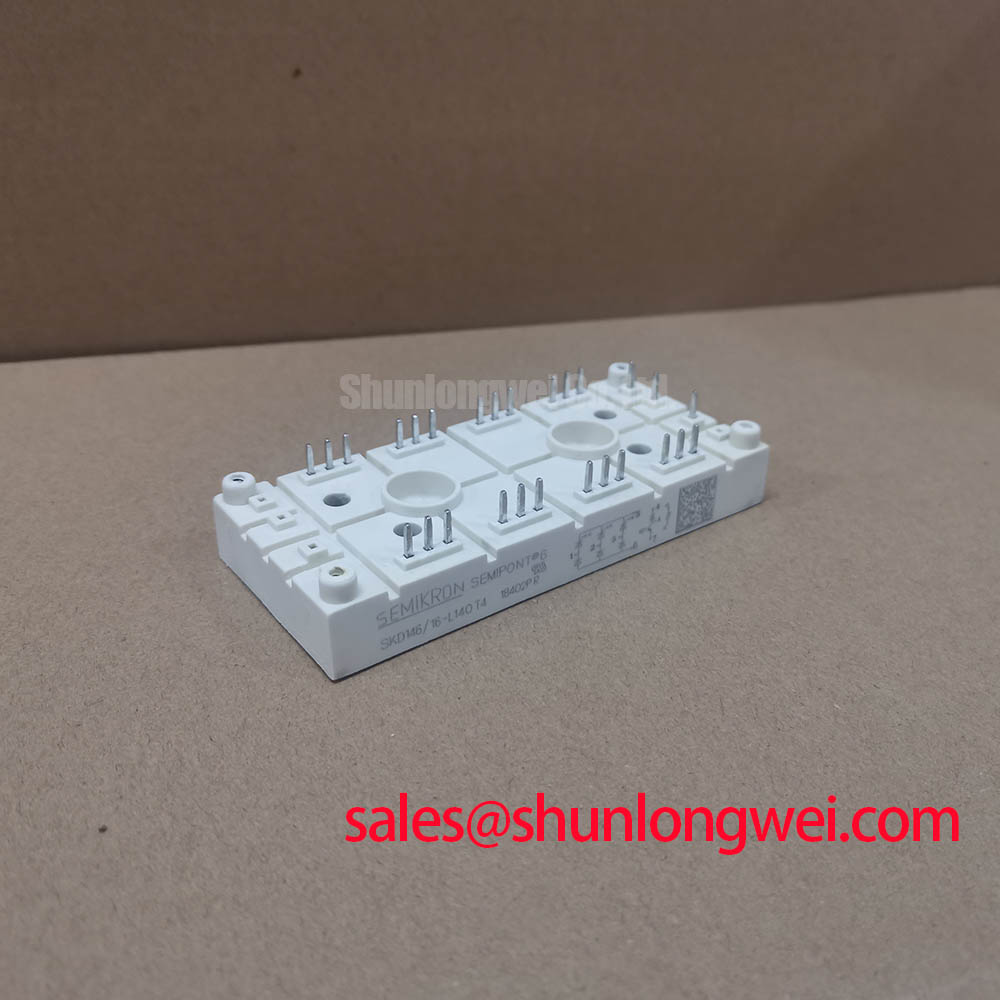
Technical Analysis for System Integration
The engineering value of the SKD146/16 is evident in its thermal and electrical characteristics. The module specifies a thermal resistance from junction to case (Rth(j-c)) of 0.17 K/W per diode. This parameter is crucial for thermal design. One can think of thermal resistance as the width of a pipe; a lower value signifies a wider pipe, allowing heat to flow away from the active semiconductor more easily. This efficient heat transfer, when paired with a suitable heatsink, is fundamental to preventing the device from exceeding its maximum junction temperature of 150°C and ensuring operational longevity.
Furthermore, the module’s construction utilizes a direct copper bonded (DCB) aluminium oxide ceramic substrate. This technology provides both effective heat transfer and a high electrical isolation voltage of 3000V~ (rated for 1 minute). This high isolation ensures a safe barrier between the high-voltage electrical circuit and the grounded metal heatsink, a critical safety feature in industrial power systems. The combination of these features simplifies the mechanical and thermal design process for engineers.
Optimized Application Scenarios
The SKD146/16 module’s specifications make it a strong candidate for several power applications:
- AC Motor Drives: Its high surge current rating (IFSM) of 1550 A is capable of withstanding the inrush currents typical of inductive motor loads.
- Industrial Power Supplies: The 1600V repetitive peak reverse voltage (VRRM) provides a substantial safety margin for systems operating on 400V or 480V three-phase AC lines.
- Battery Charging Systems: Delivers the continuous and reliable DC current necessary for high-capacity industrial battery chargers.
- Welding Power Converters: The robust die and packaging can tolerate the demanding power cycles inherent in welding applications.
Its high voltage overhead and thermal efficiency make it an optimal front-end rectifier for systems requiring up to 157A of continuous DC output.
Key Specification Parameters for the SKD146/16
| Absolute Maximum Ratings (Tc = 25°C unless otherwise specified) | |
|---|---|
| Repetitive Peak Reverse Voltage (VRRM) | 1600 V |
| DC Output Current (Id) @ Tc = 85°C | 157 A |
| Surge Forward Current (IFSM) @ tp = 10 ms, Tvj = 150°C | 1550 A |
| I²t value @ tp = 10 ms, Tvj = 150°C | 12000 A²s |
| Electrical & Thermal Characteristics | |
| Forward Voltage (VF) @ IF = 150 A, Tvj = 25°C (max) | 1.35 V |
| Threshold Voltage (V(TO)) @ Tvj = 150°C | 0.85 V |
| Slope Resistance (rT) @ Tvj = 150°C | 2.4 mΩ |
| Thermal Resistance, Junction to Case (Rth(j-c)) per diode | 0.17 K/W |
| Insulation Test Voltage (Visol) | 3000 V~ (1 min.) |
| Operating Junction Temperature (Tvj op) | -40 to 150 °C |
Engineer’s FAQ
1. What are the primary considerations for the thermal design using the SKD146/16?
The key is to manage the heat generated, which is a product of the output current and the diodes’ forward voltage drop. An effective heatsink is required to keep the junction temperature below the 150°C maximum. The calculation must use the specified Rth(j-c) of 0.17 K/W and the thermal resistance of the chosen heatsink, ensuring adequate performance under maximum load conditions.
2. What is the correct mounting procedure for the SKD146/16 module?
The datasheet specifies mounting the module to a heatsink with two M6 screws. A mounting torque of 3 – 5 Nm should be applied to ensure good thermal contact. It is essential to apply a thin, even layer of thermal grease between the module’s baseplate and the heatsink to eliminate air gaps and minimize thermal resistance.
3. What does the I²t rating signify for fuse selection?
The I²t rating of 12000 A²s represents the thermal energy the device can withstand during a short, non-repetitive surge event. For system protection, a semiconductor fuse should be selected with an I²t rating *below* this value to ensure the fuse opens before the rectifier is damaged during a fault condition.
4. Is the SKD146/16 UL recognized?
Yes, the datasheet for related family parts indicates that the module is UL recognized under file number E 63 532, which is an important consideration for systems requiring certification for the North American market.
The SKD146/16 provides a reliable, thermally efficient solution for power rectification. Its design enables engineers to build robust and safe high-power conversion systems with simplified assembly and effective thermal management.