SKiiP39AC126V20: An Integrated Power Module for Compact Motor Drives
SKiiP39AC126V20 1200V CIB Intelligent Power Module
Integrated Power Stage for Compact Motor Drives
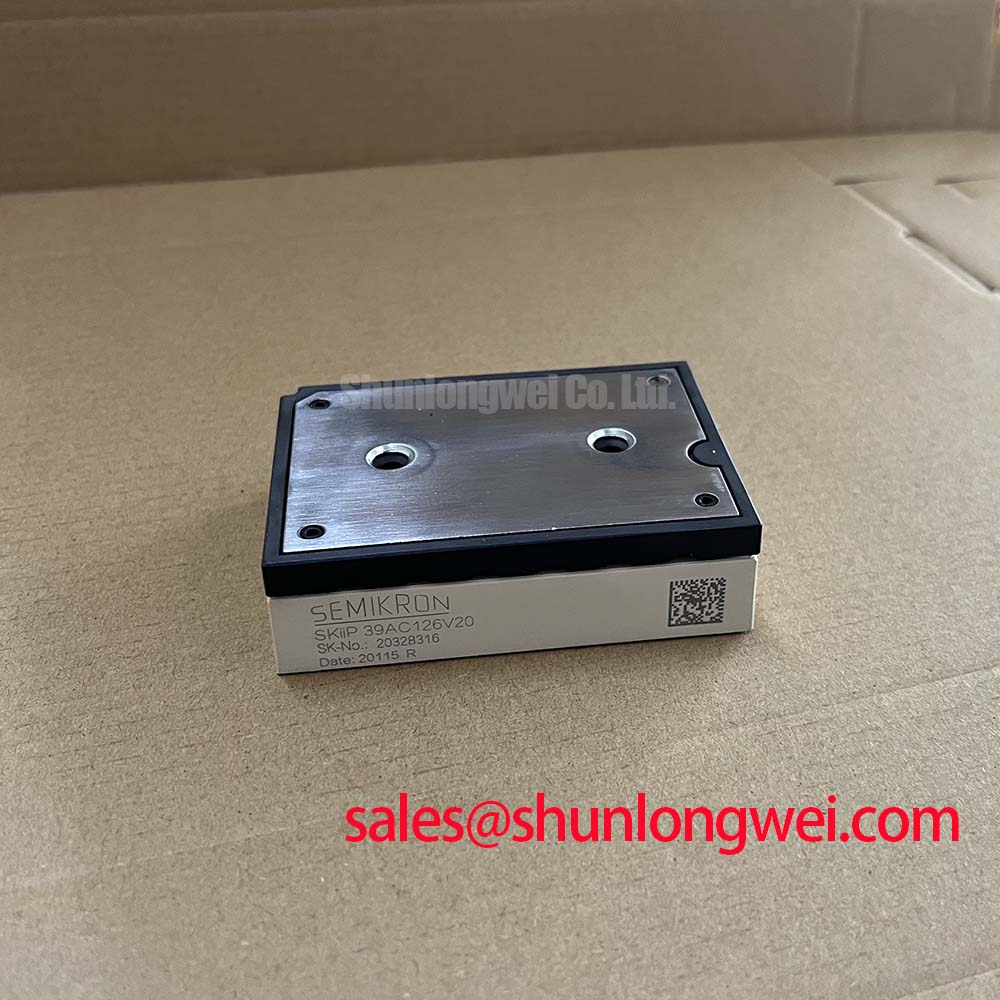
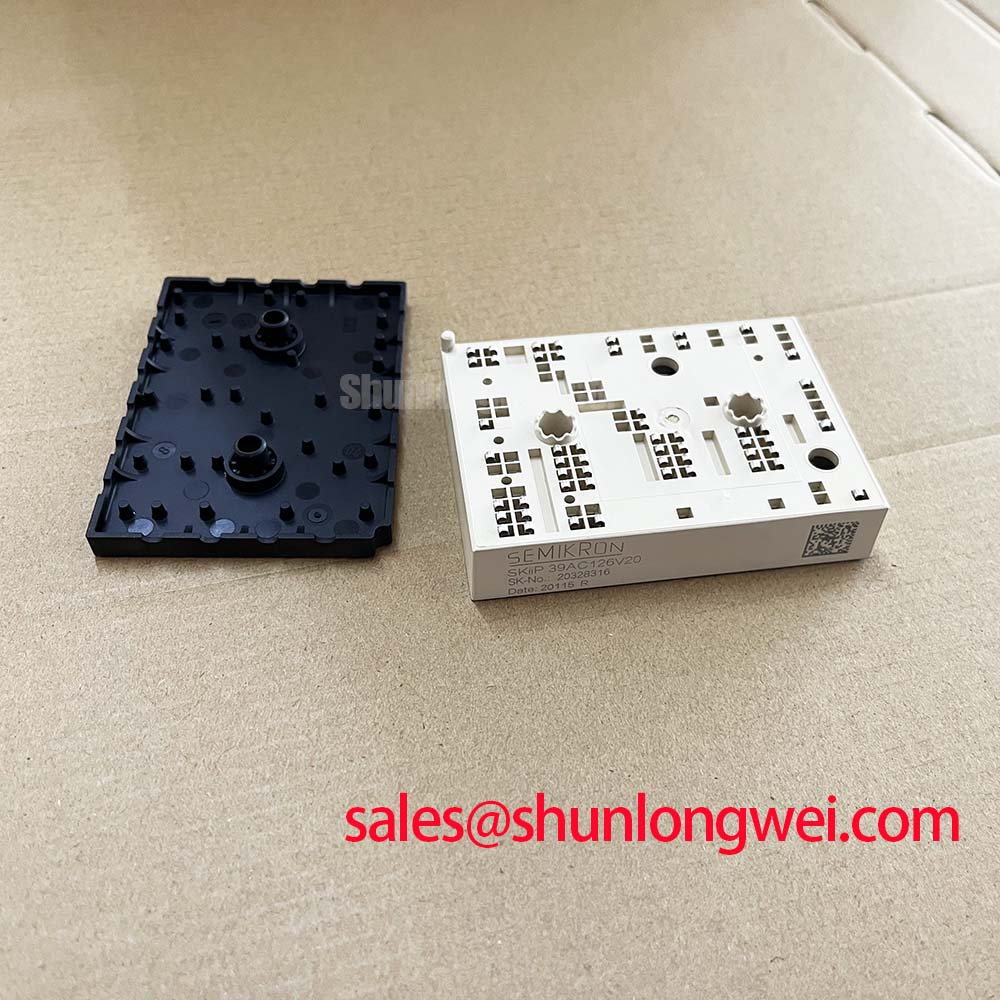
The Semikron SKiiP39AC126V20 is a high-integration Intelligent Power Module (IPM) that combines a three-phase input rectifier, a three-phase IGBT inverter, and a brake chopper into a single compact package. This module’s primary engineering value lies in its ability to significantly reduce system complexity and component count, providing a robust power core for variable frequency drives. With an integrated gate driver and comprehensive protection features, it enables faster assembly and enhanced operational reliability.
- Core Specifications: 1200V (Inverter & Brake) | 140A (Nominal Inverter Current) | Integrated Rectifier & Brake Unit
- Key Advantages: Streamlines thermal management with a single heatsink interface, simplifies PCB layout, and improves system reliability.
For systems requiring a complete, pre-validated power stage, this module provides a direct path to a reliable and efficient design. Download the official SKiiP39AC126V20 datasheet (PDF).
Technical Analysis: Integration and Thermal Efficiency
The defining feature of the SKiiP39AC126V20 is its Converter-Inverter-Brake (CIB) topology. By integrating the AC-DC input stage, the DC-AC inverter stage for motor control, and a braking chopper for energy dissipation during deceleration, the module replaces a multitude of discrete components. This integration minimizes stray inductance and capacitance, which simplifies EMI management and improves overall electrical performance. It allows engineers to focus on control logic rather than complex power stage layout and component matching.
Effective heat dissipation is critical for reliability in power semiconductors. The module specifies a low thermal resistance from junction to heatsink (Rth(j-s)) of 0.3 K/W for the IGBTs and 0.4 K/W for the diodes. This parameter can be visualized like the width of a pipe; a lower value signifies a wider pipe, allowing heat to flow more easily from the silicon chip to the heatsink. This efficient thermal pathway is crucial for preventing overheating, ensuring stable performance under continuous high-current operation and maximizing the module’s operational lifespan.
Optimized Application Scenarios
- Variable Frequency Drives (VFDs): The all-in-one CIB configuration is an exact match for the power requirements of a VFD, providing AC rectification, motor inversion, and braking in one component.
- Industrial Motion Control Systems: For multi-axis machinery, the compact footprint and high integration of the SKiiP39AC126V20 simplify the power electronics cabinet, reducing both size and assembly costs.
- Servo Drives: The module’s integrated brake chopper is essential for the dynamic braking required in precision positioning applications, while its robust design handles demanding load cycles.
- Pumps and Fan Controllers: The module’s power rating is well-suited for controlling industrial pumps and fans, where reliability and efficiency are key operational requirements.
This module is best matched for three-phase motor drive applications up to approximately 30 kW, delivering a compact and reliable power stage solution.
Key Specifications of the SKiiP39AC126V20
| Electrical & Thermal Characteristics (Tj = 25°C unless otherwise specified) | ||
|---|---|---|
| Parameter | Condition | Value |
| Inverter VCE(sat) (Collector-Emitter Saturation Voltage) | IC = 140A, Tj = 125°C | 2.0V (typ.) / 2.4V (max.) |
| Inverter VCES (Collector-Emitter Voltage) | – | 1200V |
| Inverter Diode VF (Forward Voltage) | IF = 100A, Tj = 125°C | 1.8V (typ.) / 2.4V (max.) |
| Rth(j-s) (Thermal Resistance, Junction to Heatsink) | Per Inverter IGBT | 0.3 K/W |
| Rts (NTC Thermistor Resistance) | TR = 25°C | 1000 Ω (±3%) |
| Visol (Isolation Voltage) | AC, 1 minute | 2500V |
Engineer’s FAQ
1. What is the main benefit of the CIB topology in the SKiiP39AC126V20?
The Converter-Inverter-Brake (CIB) topology integrates the three core functions of a motor drive power stage into one module. This reduces the number of power components, simplifies the DC bus layout, lowers parasitic inductance, and shrinks the overall size of the inverter system. For more on this topic, see our analysis of PIM vs. discrete IGBT designs.
2. How should I manage thermal design for this module?
Effective thermal management requires a flat and clean heatsink surface with an appropriate thermal interface material (TIM). The datasheet specifies a mounting torque of 2 to 2.5 Nm. Applying the correct torque is critical to ensure low thermal resistance without inducing mechanical stress on the module’s substrate.
3. What is the role of the integrated NTC thermistor?
The integrated NTC thermistor provides a means for real-time temperature monitoring of the module’s baseplate. The control system can use this resistance value to estimate the junction temperature, enabling over-temperature protection (OTP) and ensuring the module operates within its Safe Operating Area (SOA). This is a key element for building a reliable system, as discussed in our guide to the importance of integrated NTCs.
4. What IGBT technology is used in this module?
The SKiiP39AC126V20 utilizes Fast Trench IGBTs paired with robust and soft freewheeling CAL (Controlled Axial Lifetime) diodes. This combination is engineered to balance conduction and switching losses, providing efficient performance in typical motor drive switching frequency ranges while ensuring high ruggedness.
Enabling Robust and Compact Power Designs
For engineering teams tasked with developing efficient and space-constrained motor drives, the SKiiP39AC126V20 offers a highly effective solution. Its integrated CIB architecture and reliable packaging technology provide a pre-engineered power core that mitigates common design risks, simplifies assembly, and enhances the final system’s operational robustness.