SKKT122/16E: A Technical Analysis for Reliable Industrial Power Control
SKKT122/16E Thyristor/Diode Module Technical Overview
Reliable AC Control with the Semikron SKKT122/16E Module
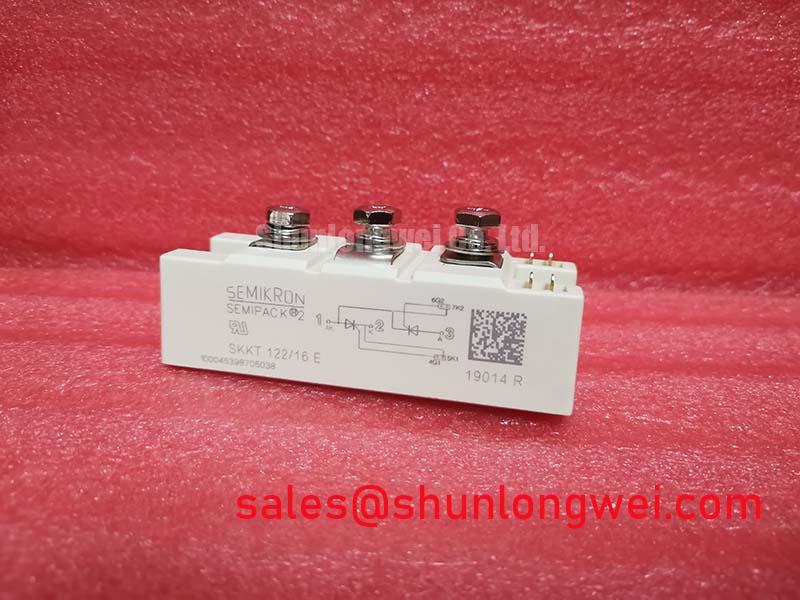
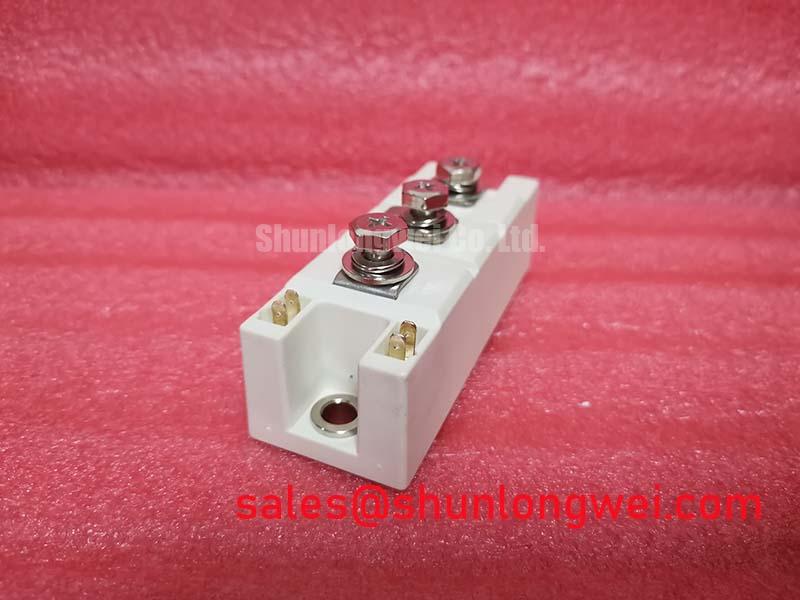
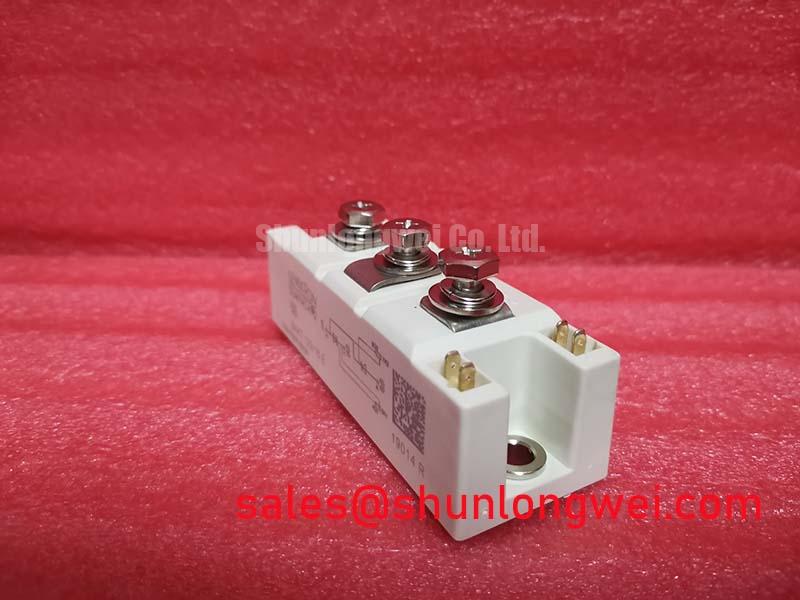
The Semikron SKKT122/16E is a Thyristor/Diode Module configured with two series-connected SCRs (common cathode), engineered for high-reliability AC power control. Its core value stems from a robust mechanical design featuring a hard-soldered die on an electrically isolated baseplate, ensuring both durability and simplified thermal management in demanding industrial environments.
- Core Specifications: 1600V | 129A | Visol 3000V~
- Key Advantages: High electrical isolation, proven thermal performance.
- Design Consideration: The module’s SEMIPACK 2 housing and isolated baseplate simplify assembly and heatsink requirements.
Download Official SKKT122/16E Datasheet
Technical Analysis for System Integration
The engineering value of the SKKT122/16E is anchored in its construction. The module utilizes an aluminium oxide ceramic insulated metal baseplate. This provides a high dielectric strength, with an isolation voltage (Visol) of 3000V (RMS) specified for one minute. This high isolation simplifies system safety design and can reduce the need for external isolation components in certain circuit topologies, contributing to a more compact and cost-effective final assembly.
Effective thermal management is fundamental to power semiconductor reliability. The SKKT122/16E specifies a thermal resistance from junction to case (Rth(j-c)) of 0.2 K/W for the thyristor component. This parameter can be viewed like the width of a pipe for heat flow; a lower value indicates a wider pipe, allowing heat to move more easily from the active semiconductor to the heatsink. This efficient heat transfer is critical for maintaining the junction temperature within safe operating limits during high-current operation.

Optimized Application Scenarios
The characteristics of this module make it suitable for a range of phase-control applications.
- AC Motor Soft Starters: The high surge current rating (ITSM) of up to 3600A allows the module to withstand the large inrush currents typical during motor startup.
- Industrial Temperature Control: For applications like ovens or chemical processes, the module’s precise phase-angle control capability enables stable and efficient power regulation to heating elements.
- DC Motor Drives: In controlled rectifier circuits, the SKKT122/16E provides robust and reliable AC-to-DC conversion for controlling the speed and torque of DC motors.
- Professional Light Dimming: The module’s ability to handle high currents makes it a solid choice for dimming circuits in large-scale settings like theaters, where reliability is paramount.
Its robust thermal design and high current ratings make it a prime candidate for industrial AC applications requiring precise and reliable power regulation.
Key Specifications of the SKKT122/16E
| Absolute Maximum Ratings (Tc = 25 °C unless otherwise noted) | |
|---|---|
| Repetitive Peak Off-State Voltage (VDRM, VRRM) | 1600 V |
| Average On-State Current (ITAV @ Tc=85°C) | 129 A |
| RMS On-State Current (ITRMS) | 195 A |
| Surge Current (ITSM, t=10ms, 50Hz) | 3600 A |
| Max. Junction Temperature (Tvjmax) | 125 °C |
| Isolation Test Voltage (Visol, RMS, 1 min.) | 3000 V |
Engineer’s FAQ
1. What is the correct mounting procedure for the SKKT122/16E to ensure good thermal contact?
According to the datasheet, the module should be mounted to a heatsink with a mounting torque of 5 Nm ± 15%. A thin, uniform layer of thermal compound must be applied to the baseplate to ensure minimal thermal resistance. The electrical terminals require a mounting torque of 5 Nm ± 15% as well.
2. How does the module’s thermal resistance impact heatsink selection?
The specified Rth(j-c) of 0.2 K/W is a critical input for thermal calculations. To keep the junction temperature below the 125°C maximum, you must calculate the total thermal resistance from junction to ambient and select a heatsink with a low enough thermal resistance (Rth(c-a)) to dissipate the expected power loss under worst-case operating conditions.
3. Can this module be used for single-phase and three-phase applications?
Yes. The SKKT122/16E contains two thyristors, making it directly applicable for controlling a single AC phase (e.g., as an AC controller) or as part of a larger bridge configuration. For three-phase control, multiple modules would be required to build a complete B6C rectifier or AC regulator circuit.
4. What are hard soldered joints and why are they important?
Hard soldered joints, mentioned as a key feature, use higher-melting-point solders compared to standard soft solders. This results in improved thermomechanical stability and a higher resistance to fatigue from power cycling, directly contributing to the module’s long-term operational reliability in applications with frequent temperature fluctuations.
Enabling Robust Power Designs
The SKKT122/16E thyristor/diode module provides a component foundation for building durable and efficient power control systems. Its combination of high electrical isolation, documented thermal performance, and a standardized mechanical footprint empowers engineers to develop reliable solutions for a wide array of industrial AC power regulation tasks.