The NEC NL6448AC20-02: A Serviceable Solution for Industrial Longevity
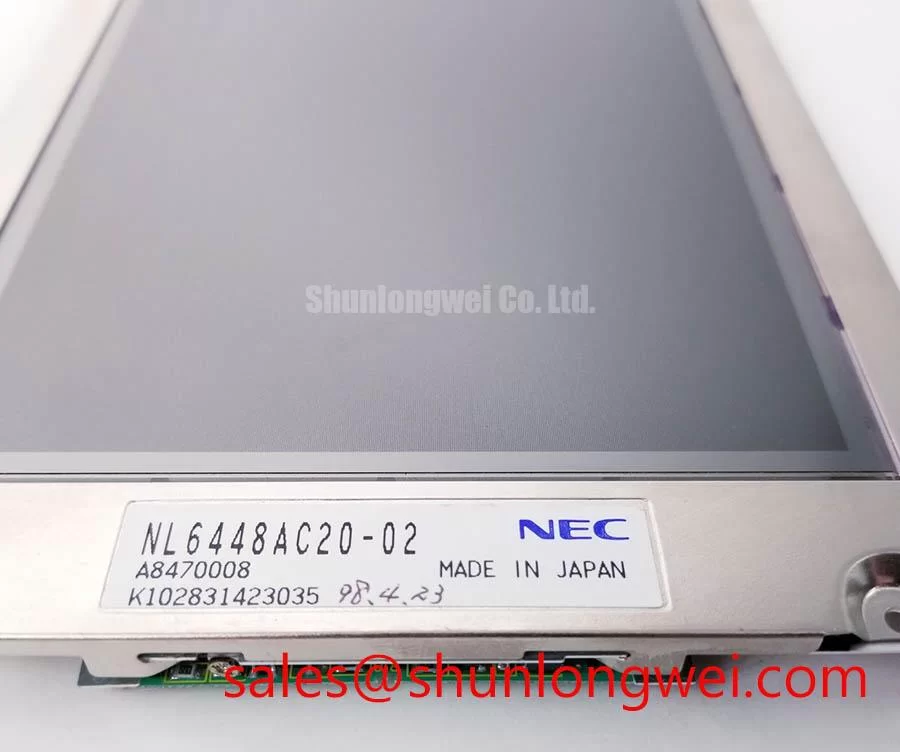
NL6448AC20-02: NEC 6.5″ VGA Industrial TFT LCD Module
Engineered for Reliability and Serviceability in Legacy Systems
The NEC NL6448AC20-02 is a 6.5-inch amorphous silicon TFT active matrix color display module delivering robust, long-term performance for industrial applications. Its key value is providing a stable and serviceable display solution for legacy systems, characterized by its standard VGA resolution, high luminance, and a user-replaceable backlight system. This focus on serviceability ensures extended operational life for the capital equipment it is integrated into.
- Core Specifications: 6.5-inch Diagonal | 640×480 VGA Resolution | 200 cd/m² Brightness | 6-bit Parallel RGB (CMOS) Interface
- Key Engineering Value: Features a user-replaceable CCFL backlight, extending the module’s service life. Standard form factor and interface simplify integration into existing industrial HMI and control systems.
- System Integration: The parallel CMOS interface allows for direct connection to a wide range of legacy microcontrollers and processors, often eliminating the need for interface converter boards in repair and upgrade scenarios.
Download the Datasheet for the Closely Related NL6448AC20-06 Model (PDF)

Technical Analysis for System Longevity
The NL6448AC20-02 is specified with a typical luminance of 200 cd/m² and a contrast ratio of 250:1. These optical characteristics are engineered to provide clear, legible graphics and data in typical indoor industrial environments, such as factory floors and control rooms. The 6-bit digital RGB interface supports up to 262,144 colors, sufficient for the graphical user interfaces common in industrial machinery and diagnostic equipment. This ensures that operators can clearly distinguish between different status indicators and graphical elements, which is fundamental for safe and efficient operation.
A significant feature documented in the related datasheet is the user-replaceable backlight lamp. This is a critical design consideration for long-term industrial deployment. The backlight is often the component with the most limited lifespan in an LCD module. Providing a path for field replacement allows maintenance engineers to restore the display’s brightness to original specifications without replacing the entire TFT module. This feature can be compared to a fuse in an electrical circuit; it’s a serviceable part designed to manage a common wear-out component, thereby protecting the investment in the larger, more complex system.
Optimized Application Scenarios
The specifications of the NL6448AC20-02 make it a strong candidate for maintaining and extending the life of existing high-value equipment.
- CNC Machine Control Panels: The 6.5-inch VGA format is a direct fit for many legacy CNC and PLC controllers, ensuring that operator interfaces remain functional without requiring a complete system overhaul.
- Test and Measurement Instruments: The stable CMOS interface and proven reliability are ideal for oscilloscopes, spectrum analyzers, and other benchtop equipment designed for decades of service.
- Medical Monitoring Systems: For patient monitors and diagnostic equipment with long certification cycles, this display serves as a vital component for repairs, avoiding the need for costly re-validation of the entire device.
- Process Control HMIs: In factory automation, uptime is critical. The replaceable backlight and robust design ensure display systems remain operational with minimal service interruption.
This module is best matched for sustaining equipment where form, fit, and function compatibility with a 6.5-inch VGA display is the primary requirement.
Key Specifications of the NL6448AC20-02
| Display & Optical Characteristics | |
|---|---|
| Screen Size | 6.5 inches (16 cm) |
| Resolution | 640(H) x 480(V) pixels |
| Pixel Pitch | 0.207(H) x 0.207(V) mm |
| Active Area | 132.48(H) x 99.36(V) mm |
| Luminance | 200 cd/m² (typ.) |
| Contrast Ratio | 250:1 (typ.) |
| Interface & Electrical | |
| Interface Type | 6-bit Parallel RGB (CMOS) |
| Power Supply Voltage (Logic) | 3.3V / 5.0V |
| Backlight System | 1 x CCFL (Cold Cathode Fluorescent Lamp) |
| Environmental & Mechanical | |
| Operating Temperature | 0°C to +50°C |
| Storage Temperature | -20°C to +60°C |
| Outline Dimensions | 153.0(W) x 117.0(H) x 10.0(D) mm (max) |
Note: Specifications are based on the datasheet for the closely related NL6448AC20-06 model. Engineers should verify all parameters for their specific application.
Engineer’s FAQ
1. Is the NL6448AC20-02 suitable for upgrading older industrial control panels?
Yes. This module is well-suited for this purpose. Its 6.5-inch size, 640×480 VGA resolution, and parallel CMOS interface were common standards for industrial HMIs of its era. This makes it a potential form, fit, and function replacement, simplifying the repair and life extension of existing systems. For a deeper look into maintaining older systems, see our guide on navigating LCD and driver IC end-of-life.
2. How is the backlight replaced?
The datasheet for the related -06 model indicates the backlight is a replaceable lamp unit. The specific replacement procedure, including handling precautions for the high-voltage inverter, would be detailed in the manufacturer’s service manual. This design allows for field servicing to restore original brightness after long-term operation.
3. What are the key considerations for the thermal management of this module?
With an operating range of 0°C to +50°C, the module is designed for indoor industrial environments. The primary heat source is the CCFL backlight. System designers must ensure adequate ventilation around the rear of the module to prevent heat buildup, especially in enclosed HMI panels. Exceeding the maximum operating temperature can shorten the life of both the backlight and the LCD panel itself. For further reading, consult our resources on thermal management for display reliability.
This module provides a durable and serviceable foundation for industrial interfaces, enabling engineers to maintain system integrity and extend the operational life of critical equipment. Its design prioritizes compatibility and long-term reliability over cutting-edge specifications.