Toshiba MIG20J952H: A 600V/20A IGBT Module for Efficient Motor Control
## MIG20J952H: Toshiba 600V/20A Intelligent Power Module
The Toshiba MIG20J952H is an integrated power module featuring six Insulated Gate Bipolar Transistors (IGBTs) with corresponding free-wheeling diodes in a three-phase bridge configuration. This device is engineered to provide a compact and efficient solution for motor control applications by consolidating the main power switching stage into a single component. It simplifies system design and enhances reliability for low-to-mid power inverter systems.
* **Core Specifications**: 600V | 20A | 6-in-1 IGBT Configuration
* **Key Advantages**: Reduces PCB footprint and component count, simplifies thermal management.
* **Application Focus**: Enables rapid development of compact variable frequency drives and servo systems.
Download Official Datasheet (PDF)
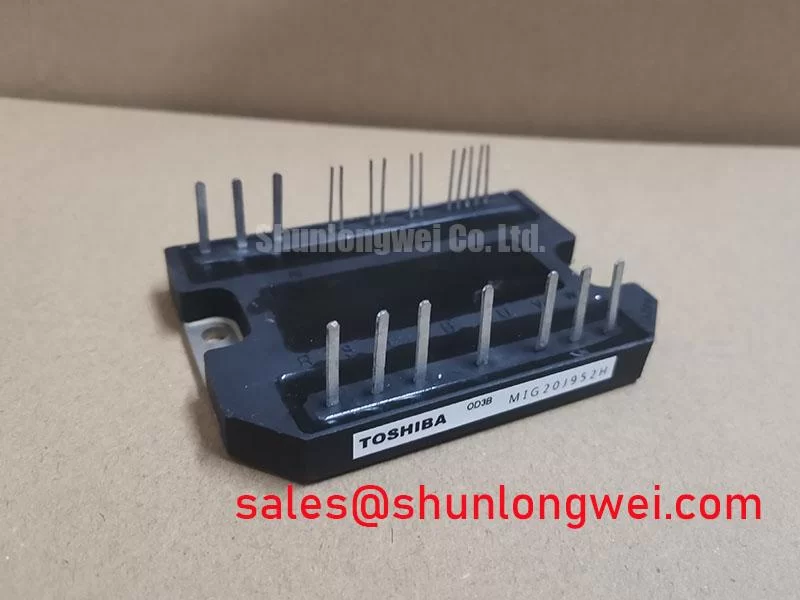
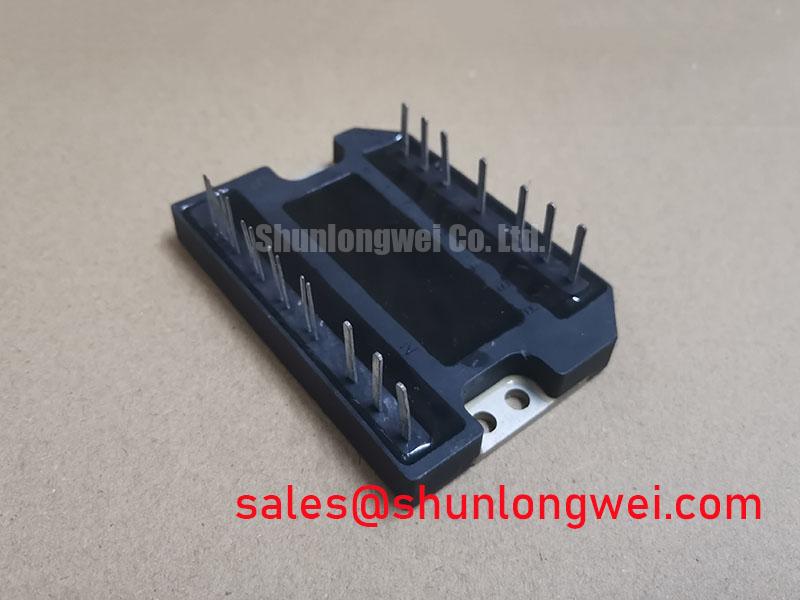
### Technical Analysis: Integration for System Efficiency
The primary engineering value of the MIG20J952H module lies in its high level of integration. By housing a complete three-phase inverter bridge in one package, it significantly reduces the parasitic inductance typically found in designs using discrete components. Lower parasitic inductance minimizes voltage overshoot and ringing during high-speed switching, which can reduce EMI and decrease the need for complex external snubber circuits. This streamlined approach allows engineers to build more robust and electromagnetically compliant power stages.
Furthermore, the module addresses critical thermal design challenges. Its single, isolated baseplate provides a consolidated thermal path to a heatsink. Think of the module’s thermal resistance as a pipeline for heat; the low specified Rth(j-c) of this module indicates a very wide pipe, allowing heat to flow away from the active silicon junctions efficiently. This simplifies the heatsink selection process and helps maintain lower operating temperatures, which is directly correlated with improved system longevity and reliability. Explore more on the importance of IGBT thermal design for robust performance.
### Optimized Application Scenarios
The MIG20J952H is specifically suited for applications where space, assembly cost, and reliability are key design drivers.
* **Small Industrial Motor Drives**: The module’s compact footprint is ideal for creating small Variable Frequency Drives (VFDs) used for conveyors, pumps, and fans up to approximately 2.2 kW.
* **HVAC Systems**: In heating, ventilation, and air conditioning units, the integrated nature of the MIG20J952H allows for smaller control boards for variable speed compressors and air handlers.
* **Appliance Motor Control**: For washing machines, dryers, and other consumer appliances, this module simplifies the power electronics, reducing manufacturing complexity and cost.
* **General Purpose Inverters**: Its straightforward implementation makes it a strong candidate for any low-power three-phase inverter application requiring a quick design cycle.
This IPM is best matched for systems needing a reliable, all-in-one power stage, significantly accelerating the path from concept to production.
### Key Specifications of the MIG20J952H
| Parameter | Symbol | Conditions | Value | Unit |
|—|—|—|—|—|
| **Absolute Maximum Ratings** | | (Tc = 25°C) | | |
| Collector-Emitter Voltage | VCES | | 600 | V |
| Collector Current (DC) | IC | | 20 | A |
| Collector Power Dissipation | PC | Per IGBT | 60 | W |
| Junction Temperature | Tj | | 150 | °C |
| **Electrical Characteristics** | | (Tj = 25°C) | | |
| Collector-Emitter Saturation Voltage | VCE(sat) | IC = 20A, VGE = 15V | 2.2 (Typ.) / 2.7 (Max.) | V |
| Gate-Emitter Leakage Current | IGES | VGE = ±20V | ±500 | nA |
| **Thermal Characteristics** | | | | |
| Thermal Resistance (Junction to Case) | Rth(j-c) | Per IGBT | 2.08 | °C/W |
| Isolation Voltage | Visol | AC, 1 minute | 2500 | Vrms |
*Note: This table presents a selection of key parameters. For comprehensive data, including dynamic characteristics and safe operating area curves, refer to the official datasheet.*
### Engineer FAQ
**1. What are the primary benefits of using an IPM like the MIG20J952H over six discrete IGBTs?**
Using an IPM consolidates the power stage, reducing PCB area and simplifying assembly. It also minimizes parasitic inductance between components, which lowers voltage overshoot and EMI. Furthermore, the thermal performance is optimized as all devices are on a single substrate, simplifying heatsink design. For more insights, consider this comparison between PIMs and discrete IGBTs.
**2. What is a critical mounting consideration for this module to ensure proper thermal performance?**
Proper mounting torque is crucial. Uneven or excessive torque can warp the module’s baseplate, creating gaps between it and the heatsink. These gaps increase thermal resistance and lead to higher operating temperatures. Always use a calibrated torque wrench and follow the datasheet’s specified torque value and tightening sequence.
**3. Does this module include integrated gate drivers or protection?**
No, the MIG20J952H is a Power Integrated Module (PIM) containing the IGBTs and diodes. It does not include the integrated gate drivers or protection circuits found in an Intelligent Power Module (IPM). The designer must implement an external gate drive circuit and protection features like overcurrent and undervoltage lockout.
**4. How does the VCE(sat) of 2.2V (typ.) impact my design?**
The collector-emitter saturation voltage, or VCE(sat), is the voltage drop across the IGBT when it is fully on. A lower VCE(sat) results in lower conduction losses (Power Loss = VCE(sat) × IC). With a typical VCE(sat) of 2.2V at its rated current, the MIG20J952H balances performance and cost, enabling efficient operation while managing thermal load effectively.
This Toshiba module provides a direct path to developing compact, cost-effective, and reliable motor control systems. Its integrated 6-in-1 topology abstracts away much of the complexity associated with discrete power stage design, allowing engineering teams to focus on system-level innovation.