VICOR IP-260-CV: A High-Density, Low-Noise 150W DC-DC Converter Module Analysis
VICOR IP-260-CV | High-Density 150W DC-DC Converter Module
Introduction and Core Technical Highlights
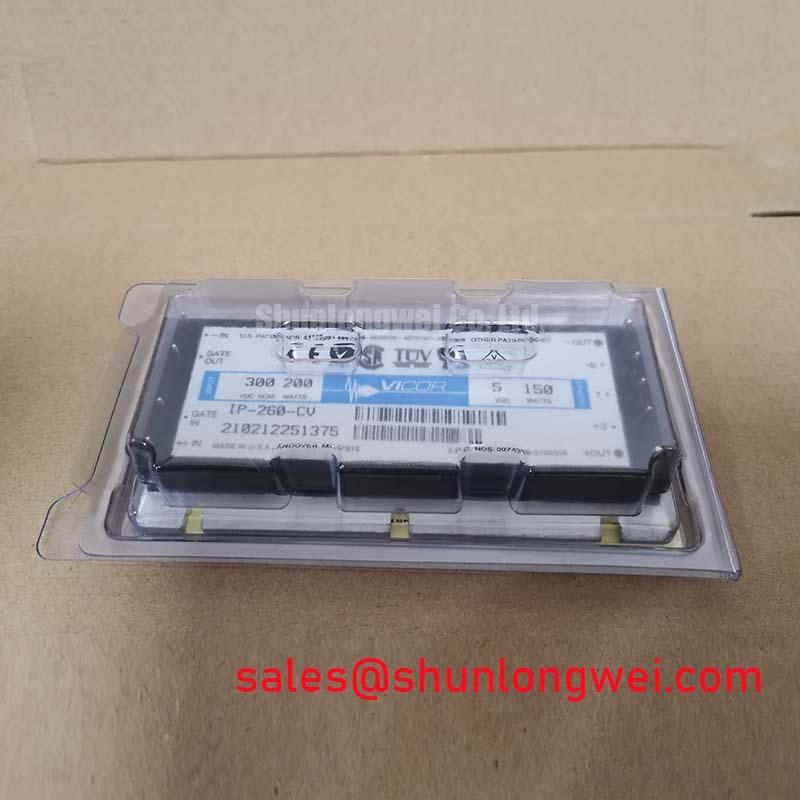
The VICOR IP-260-CV is a high-performance, modular DC-DC converter designed for industrial and military-grade applications requiring reliable power conversion in a compact form factor. As part of Vicor’s established VI-200 series technology, this module leverages a proprietary Zero-Current Switching (ZCS) architecture to achieve exceptional power density and efficiency. By switching at the zero-crossing of the current waveform, the VICOR IP-260-CV minimizes the high-frequency parasitic noise and switching losses typically associated with traditional pulse-width modulation (PWM) topologies.
- Core Specifications: 200-400VDC Input | 15VDC Output | 150W Rated Power.
- Key Advantages: Significant reduction in electromagnetic interference (EMI) and simplified thermal management due to high conversion efficiency.
- Engineering Intent: How do you reduce the size of a power system without compromising on noise? The IP-260-CV answers this by utilizing MHz-level switching frequencies, which allow for the use of much smaller filter components, thereby saving valuable PCB real estate.
Download Official VICOR IP-260-CV Datasheet (PDF)

Technical Analysis of the ZCS Architecture
The defining characteristic of the VICOR IP-260-CV is its transition from conventional hard-switching to Zero-Current Switching (ZCS). In a standard PWM converter, the power switches are forced to turn on and off while carrying full load current, leading to “switching spikes” and heat buildup. You can imagine the ZCS mechanism as a smart water faucet; instead of slamming the handle down while water is rushing through—which causes a noisy “water hammer” effect in the pipes—the system waits for the flow to naturally pause at the zero point before closing the valve. This results in an incredibly quiet electrical environment.
This power semiconductor solution operates with a wide input range of 200V to 400V, making it ideal for systems utilizing a 300V nominal DC bus. The output is precisely regulated at 15V, providing a stable rail for sensitive analog circuitry or industrial logic controllers. Because the ZCS topology allows for switching frequencies in the Megahertz range, the internal transformers and capacitors are drastically smaller than those found in lower-frequency converters. This high-frequency operation is what enables the IP-260-CV to maintain a power density that remains competitive in modern system designs.
Optimized Application Scenarios
The VICOR IP-260-CV is frequently selected for environments where electrical noise can compromise system integrity. Below are the primary fields where its modular characteristics provide the most value:
- Industrial Automation: Ideal for 300V DC bus architectures where the 15V rail powers actuators and sensors. Its robust packaging withstands the vibration often found in factory floors.
- Test and Measurement: The low-noise output is critical for high-precision instrumentation where EMI from a standard converter might distort signal readings.
- Communication Systems: Used in remote base stations where high reliability and a compact footprint are required for localized DC-DC step-down conversion.
- Renewable Energy: Specifically useful in solar power distribution systems that require a high-voltage DC input to be stepped down for local monitoring electronics.
Best Match Conclusion: For high-voltage DC systems requiring 150W of low-noise, regulated 15V power, the IP-260-CV provides a proven, high-density modular solution.
Key Specifications and Parameters
| Category | Parameter | Value |
|---|---|---|
| Input Specifications | Voltage Range | 200 – 400 VDC |
| Maximum Input Current | 1.13 Amps | |
| Input Surge (100ms) | 400V | |
| Output Specifications | Output Voltage | 15 VDC |
| Output Power | 150 W | |
| Maximum Current | 10.0 A | |
| Thermal & Mechanical | Operating Temp (Baseplate) | -25°C to +85°C (C-Grade) |
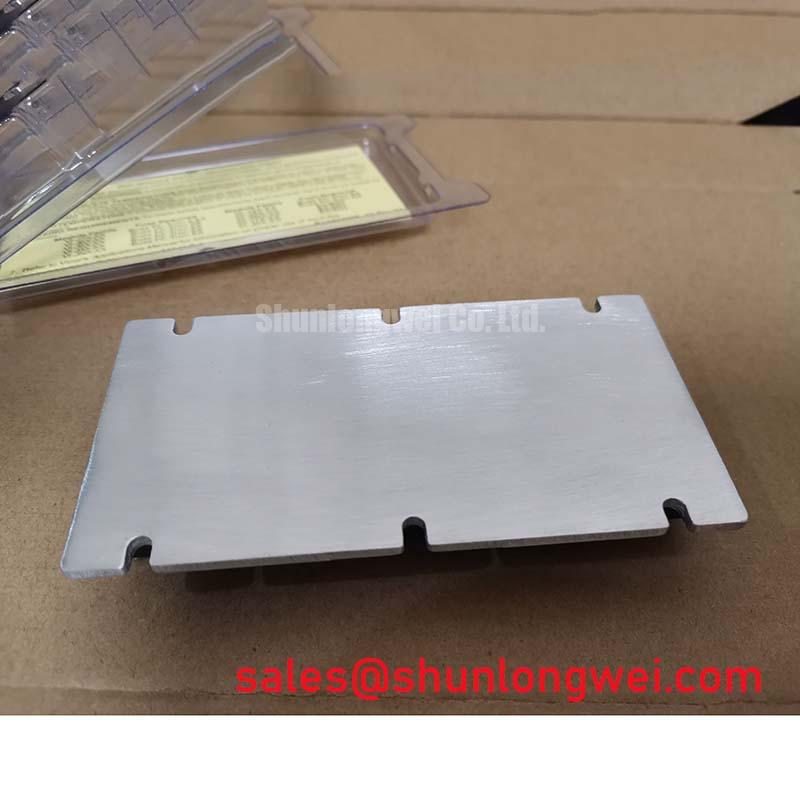
| Package Dimensions | 4.6″ x 2.4″ x 0.5″ |
Engineer’s FAQ
Q1: What is the primary benefit of the ZCS technology used in the IP-260-CV?
A1: ZCS (Zero-Current Switching) virtually eliminates switching losses and drastically reduces EMI. This allows the module to operate at much higher frequencies than conventional converters, resulting in higher power density and reduced filtering requirements.
Q2: How should I manage the heat dissipation for a 150W load?
A2: Effective thermal design is essential. The module is designed to be baseplate-cooled. Ensure the baseplate temperature does not exceed 85°C. For a 150W output, a dedicated heatsink or mounting to a cold plate with thermal interface material is highly recommended to maintain long-term reliability.
Q3: Can multiple VICOR IP-260-CV modules be paralleled for higher power?
A3: Yes, these modules can be paralleled using Vicor’s specialized driver/booster configurations. However, direct paralleling of the outputs requires careful consideration of current sharing and load regulation parameters outlined in the manufacturer’s application notes.
Q4: Is an external input filter required for the IP-260-CV?
A4: While the ZCS topology is inherently low-noise, most industrial applications will still require a modest input EMI filter to meet specific CE or FCC standards. The modular design, however, makes the required filter much smaller than what would be needed for a traditional hard-switching PWM converter.
Design Integration Summary
The VICOR IP-260-CV offers engineers a mature and highly reliable platform for stepping down high-voltage DC power. By integrating Vicor’s ZCS architecture, the module provides a low-noise, high-density solution that simplifies the overall power system design. Its modular nature allows for rapid scaling and integration into complex industrial frameworks, ensuring that power delivery remains efficient and interference-free. When utilized within the specified thermal and electrical boundaries, this module serves as a cornerstone for robust and compact power conversion architectures.