AUO G104SN02 V1: A Technical Review of a Reliable Industrial LCD Module
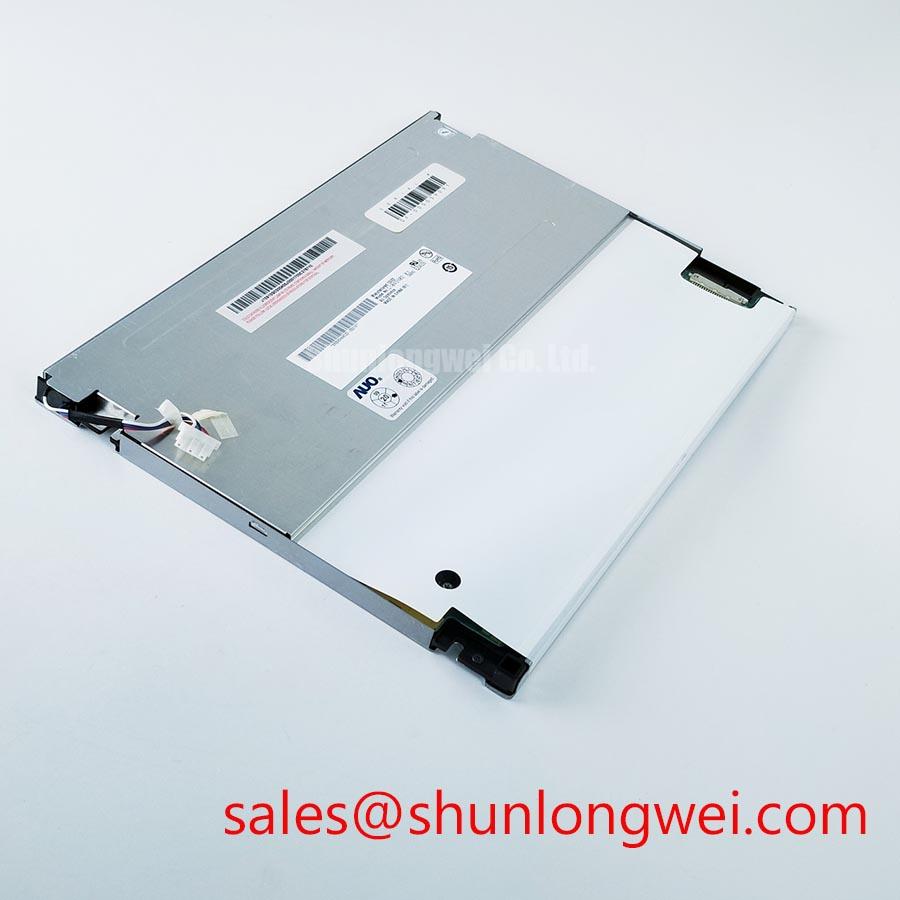
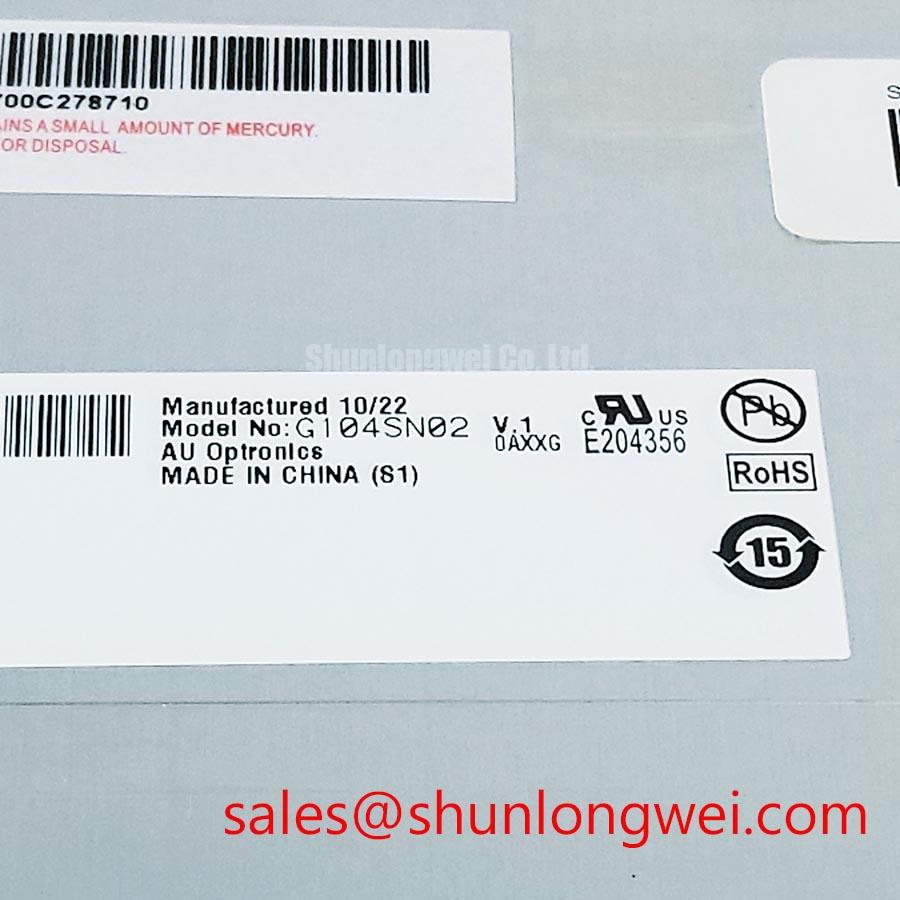
AUO G104SN02 V1 | 10.4-inch SVGA Industrial LCD Module
Introduction and Core Highlights
The AUO G104SN02 V1 is a 10.4-inch SVGA Color TFT-LCD module that delivers proven performance for industrial applications. Its primary value proposition is its combination of a standard, widely adopted form factor with reliable optical characteristics and a conventional LVDS interface. This balance makes it a stable and predictable choice for both new system designs and long-term product sustainment. This display’s standard LVDS interface simplifies the integration process, reducing the engineering effort required to connect with a wide range of single-board computers and display controllers.
- Core Specifications: 10.4-inch Diagonal | 800×600 SVGA Resolution | 500:1 Contrast Ratio
- Key Advantages: Wide viewing angles for off-axis readability, standard interface for simplified integration.
Download the Official G104SN02 V1 Datasheet (PDF)
Technical Analysis of Core Features
A detailed review of the G104SN02 V1 datasheet reveals several engineering-focused attributes that contribute to its suitability for industrial environments. These features provide a dependable foundation for creating effective human-machine interfaces.
Optical Performance for Industrial Clarity
The module’s optical design is specified for functional clarity in typical operator environments. With a typical contrast ratio of 500:1, it renders graphics, text, and data with sharp differentiation. The viewing angles are defined at 60° horizontally and 50° vertically, ensuring that information remains legible even when the operator is not positioned directly in front of the screen. This off-axis performance is critical in control rooms or on factory floors where personnel may be monitoring multiple displays from various positions. The anti-glare surface treatment further enhances usability by diffusing ambient light, reducing reflections that could otherwise obscure the screen content.


Backlight System and Operational Longevity
The G104SN02 V1 utilizes a single Cold Cathode Fluorescent Lamp (CCFL) for its backlight, with a specified minimum lifetime of 20,000 hours to half-brightness. For engineers, this provides a known, quantifiable operational window essential for planning maintenance cycles in long-life industrial equipment. You can think of this specified backlight lifetime as a predictable service interval for a machine. While modern LED backlights may offer longer lifecycles, the CCFL system’s performance is well-documented, making it a reliable choice for applications where consistency and serviceability are paramount. For further reading, see our guide on the proactive management of industrial LCD backlight lifespan.
Optimized Application Scenarios
The specific combination of features in this module makes it a strong fit for several key industrial use cases:
- Industrial Control Panels: The 800×600 resolution on a 10.4-inch screen is ideal for displaying process data, schematics, and status indicators without excessive pixel density.
- Human-Machine Interfaces (HMI): Its anti-glare surface and reliable viewing angles provide a clear and stable interface for operator input and monitoring.
- Test and Measurement Equipment: The standard LVDS interface ensures compatibility with a wide range of controller boards used in specialized instrumentation.
- Legacy System Sustainment: As a module with a CCFL backlight and a common industrial form factor, it serves as a viable replacement part for aging systems, extending their operational life.
This module is best matched for systems requiring a durable, standard-format display with proven interface technology for long-term product stability.
Key Specifications of the G104SN02 V1
The following parameters are derived directly from the official preliminary datasheet.
| Parameter | Specification |
|---|---|
| Screen Diagonal | 10.4 inches |
| Resolution | 800(RGB) x 600 [SVGA] |
| Pixel Pitch | 0.264(H) x 0.264(W) mm |
| Active Area | 211.2(H) x 158.4(V) mm |
| Luminance | 230 cd/m² (Typ.) |
| Contrast Ratio | 500:1 (Typ.) |
| Viewing Angle | 50/60/60/60 (U/D/L/R) (Typ.) |
| Interface | LVDS (1 ch, 6-bit) |
| Operating Temperature | -10°C to 60°C |
| Storage Temperature | -20°C to 70°C |
| Surface Treatment | Anti-Glare, Hard coating (3H) |
Engineer’s FAQ
Q1: What are the key LVDS signal assignments for the G104SN02 V1?
A: The module uses a standard 20-pin connector for its 1-channel, 6-bit LVDS interface. Key pins include VDD for the power supply (typically +3.3V), VSS (Ground), and three pairs of differential data lines (RxIN0-/+, RxIN1-/+, RxIN2-/+) along with one clock pair (RxCLKIN-/+). Refer to the datasheet for the complete pinout.
Q2: How should the CCFL backlight’s lifetime be considered in a system design?
A: The 20,000-hour minimum lifetime refers to the time until the backlight’s brightness decreases to 50% of its initial value. For systems requiring long-term, continuous operation, engineers should consider the potential need for backlight or inverter replacement. Designing for serviceability of these components can extend the overall life of the final product.
Q3: Is the G104SN02 V1 suitable for use in high ambient light or outdoor conditions?
A: With a typical luminance of 230 cd/m², this display is best suited for indoor industrial environments. It is not designed for direct sunlight readability. Its anti-glare coating effectively manages reflections from typical indoor factory or control room lighting, but it lacks the high brightness needed for outdoor applications. For more on this topic, consider reading our guide to sunlight readability.
Q4: What is the typical power consumption of the module?
A: The datasheet specifies the panel’s logic power consumption at 1.056W (typical) with a 3.3V supply. The CCFL backlight inverter requires a separate 12V supply and consumes approximately 4.32W (typical). Total typical power consumption is around 5.376W.
System Integration and Design
The G104SN02 V1 provides a stable and well-documented platform for industrial display systems. Its use of established technologies like a CCFL backlight and a standard LVDS interface ensures a high degree of compatibility and a predictable development path, enabling engineering teams to focus on system-level functionality rather than display integration complexities.