AUO G156HTN02.1: A Durable Full HD Display for Industrial Applications
## AUO G156HTN02.1 HD 15.6-Inch Industrial TFT-LCD Module
The AUO G156HTN02.1 is a 15.6-inch a-Si TFT-LCD module delivering Full HD resolution, engineered for industrial applications requiring reliable visual performance and long-term operational stability. This display provides a balanced set of features centered on high clarity and robust construction, making it suitable for integration into a wide range of human-machine interfaces (HMIs) and monitoring systems. Its standard LVDS interface ensures compatibility with a broad array of industrial controllers and single-board computers.
* **Core Specifications**: 1920×1080 FHD | 400 cd/m² Brightness | 50K Hour Backlight Life.
* **Key Advantages**: Long operational lifetime reduces maintenance cycles. Standardized interface simplifies system integration.
* **Integration Focus**: The module’s 2-channel, 8-bit LVDS interface allows for straightforward connection to established system architectures, minimizing development overhead for new designs or legacy upgrades.
Download Official Datasheet (Link to Manufacturer Product Page)
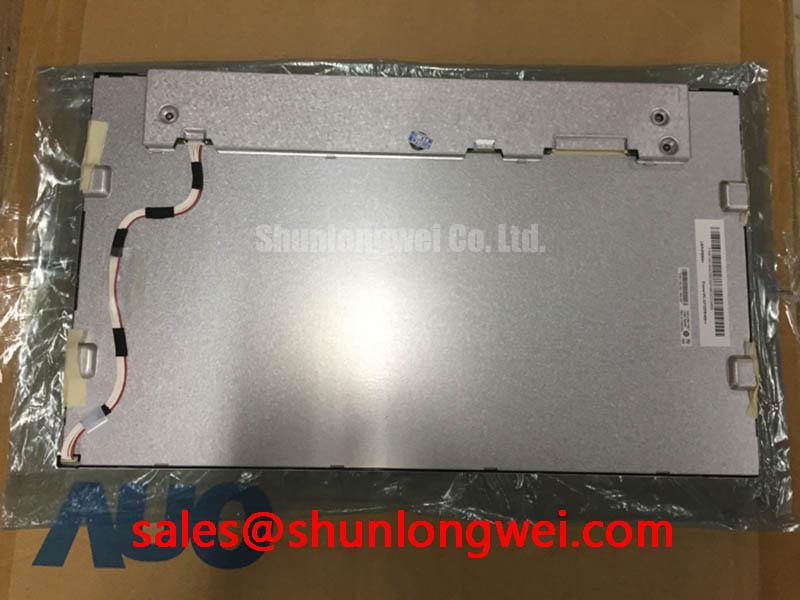
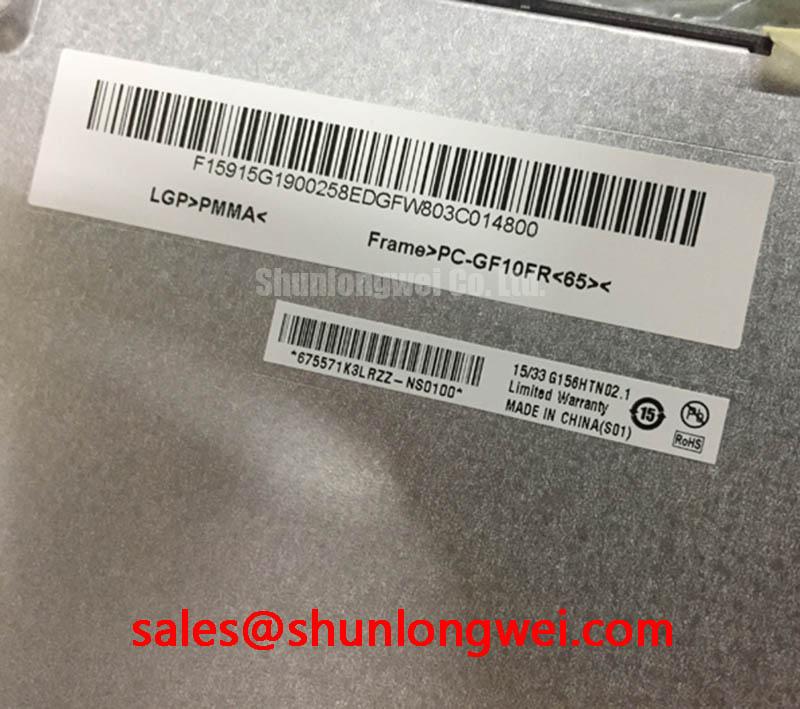
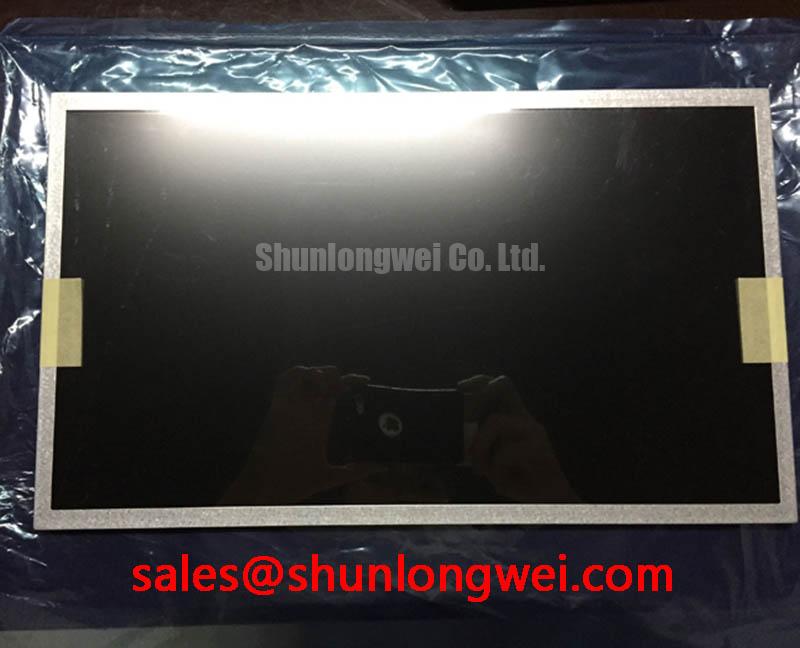
Engineered for Industrial Environments
The G156HTN02.1 is built to address the practical demands of industrial settings. Its typical brightness of 400 cd/m² and a 700:1 contrast ratio ensure clear image reproduction in typical indoor ambient lighting conditions found in control rooms and factory floors. The panel’s surface features an anti-glare treatment with a 3H hard coating, which mitigates reflections and provides a durable surface resistant to incidental contact. These features are critical for maintaining operator readability and protecting the display asset over its service life.
A key engineering attribute is the WLED backlight system, which is specified for a 50,000-hour lifetime. This extended lifespan directly contributes to a lower total cost of ownership by reducing the frequency of backlight replacement or complete panel servicing. Think of the backlight’s lifespan like the rated mileage of a commercial vehicle’s engine; a higher number signifies a more durable component designed for continuous operation, minimizing downtime and maintenance costs. The module’s ability to operate in temperatures ranging from -10 to 70°C further qualifies it for deployment in environments without stringent climate control.
Optimized Application Scenarios
The specific parameter set of the G156HTN02.1 makes it a strong candidate for several industrial uses. Its combination of resolution, durability, and standard connectivity provides a reliable foundation for system designers.
* **Industrial Automation & HMI:** The 1920×1080 resolution is well-suited for displaying complex SCADA interfaces, process control diagrams, and equipment status dashboards with high detail.
* **Test and Measurement Equipment:** The stable optical performance and 72% NTSC color gamut provide the necessary clarity and color accuracy for visualizing measurement data and waveforms.
* **Information Kiosks and Vending:** The 50,000-hour backlight lifetime and durable anti-glare surface make it a reliable choice for semi-attended, high-usage applications.
* **Medical Monitoring Stations:** While not intended for diagnostic imaging, its consistent performance is suitable for patient monitoring systems where clear and reliable data display is paramount.
This module is best matched for systems requiring a dependable FHD display with a proven, easy-to-integrate LVDS interface for long-term deployments.
Key Specifications of the G156HTN02.1
This data is derived from the official manufacturer’s specification document. For complete design-in details, the full datasheet should be consulted.
| Parameter | Specification |
|---|---|
| Screen Size | 15.6 inches |
| Resolution | 1920(RGB)×1080 (FHD) |
| Panel Technology | a-Si TFT-LCD, TN, Normally White |
| Brightness (Typical) | 400 cd/m² |
| Contrast Ratio (Typical) | 700:1 |
| Viewing Angle (L/R/U/D) | 70/70/60/60 (Typ.) (CR≥10) |
| Signal Interface | LVDS (2 ch, 8-bit), 30 pins |
| Supply Voltage | 3.3V (Typ.) |
| Backlight System | WLED, Edge light type |
| Backlight Lifetime (Typical) | 50,000 hours |
| Operating Temperature | -10°C to 70°C |
| Surface Treatment | Antiglare (Haze 25%), Hard coating (3H) |
Engineer’s FAQ
1. What are the LVDS interface requirements for the G156HTN02.1?
The display uses a 2-channel, 8-bit LVDS interface for data signals. This requires a compatible LVDS driver on the host controller. The physical connection is made via a 30-pin connector (e.g., DF14H-30P-1.25H). A stable 3.3V power supply is required for the panel’s logic.
2. What is the expected backlight behavior at low operating temperatures?
While the display is rated to operate down to -10°C, the datasheet notes that continuous operation in low-temperature environments can accelerate lamp exhaustion and potentially reduce luminance. For applications near the lower temperature limit, it is advisable to allow the system to warm up to mitigate these effects and ensure optimal backlight performance and longevity.
3. How should the display be mounted to ensure mechanical stability?
The G156HTN02.1 is designed for landscape orientation and should be secured within a bezel or enclosure that supports its overall dimensions of 363.8 x 215.9 mm. The datasheet advises against twisting or bending the module and recommends designing the final product to prevent direct external force on the panel itself. Proper mounting is crucial for maintaining mechanical integrity and mitigating the effects of system-level vibration.
4. Can this display be used in portrait mode?
The datasheet specifies that its optical characteristics are applicable when the module is in a landscape position. While portrait mode is physically possible, optical properties such as viewing angles and color consistency may be altered. Any implementation in portrait mode should be thoroughly tested to confirm it meets the application’s specific visual requirements.
The G156HTN02.1 provides a stable and well-documented platform for industrial display integration. Its adherence to the common LVDS standard, coupled with a long-life backlight and robust environmental specifications, allows engineers to develop reliable systems with predictable performance and a simplified supply chain. For further information on integrating displays, explore our articles on HMI specifications and thermal management for displays.