AUO M170ETN01.0: A High-Contrast 17-inch SXGA Display for Industrial and Medical Systems
## AUO M170ETN01.0 17-inch SXGA 1280×1024 TFT-LCD Module
High-Contrast Visuals for Industrial & Medical Systems
The AUO M170ETN01.0 is a 17.0-inch TFT-LCD module delivering precise, high-clarity images through its SXGA resolution and a classic 5:4 aspect ratio. This display’s technical specifications make it a strong candidate for systems requiring detailed visual analysis and consistent performance. It combines a high contrast ratio with rapid response times to ensure image fidelity in dynamic environments. This makes it particularly suitable for upgrading or sustaining legacy industrial control panels where specific form factors are a primary system constraint.
* **Core Specifications**: 17.0″ SXGA (1280×1024) | 1000:1 Contrast Ratio | 5ms Response Time.
* **Key Advantages**: Delivers sharp image detail and deep blacks. Renders motion with minimal blur or ghosting.
* **Application Focus**: Engineered for systems where the 5:4 aspect ratio and SXGA resolution are standard requirements.
Download Official Datasheet (PDF)
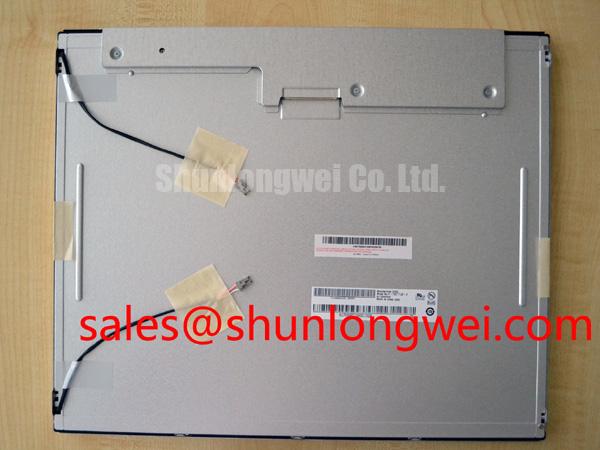

Technical Analysis for System Integration
The engineering value of the M170ETN01.0 is rooted in its core optical performance metrics. The specified typical contrast ratio of 1000:1 provides the display with the ability to render deep black levels alongside bright whites. This is critical in applications like medical imaging or industrial inspection, where the ability to distinguish subtle grayscale variations can directly impact diagnostic accuracy or quality control. The high contrast ensures that on-screen information is presented with clarity and precision.

Further enhancing its visual capability is a total response time of 5 ms (Typ). This figure, a sum of rise and fall times, indicates the speed at which pixels can change from black to white and back. Think of response time as a camera’s shutter speed; a lower number signifies a faster shutter, “freezing” motion more effectively. For an HMI monitoring a production line or a system displaying video feeds, this rapid pixel transition minimizes motion blur and ghosting, resulting in a clearer and more coherent moving image. This capability is supported by wide viewing angles of 85/85/80/80 (L/R/U/D), ensuring consistent image quality for operators at various positions.
Optimized Application Scenarios
The specific feature set of the M170ETN01.0 makes it a well-suited component for several key applications:
- Industrial HMI Panels: Its 5:4 aspect ratio is ideal for retrofitting legacy control systems, avoiding the need for costly mechanical redesigns of the enclosure.
- Medical Imaging Displays: The high contrast ratio (1000:1) and SXGA resolution provide the necessary detail for the analysis of diagnostic images.
- Automated Teller Machines (ATMs): The display’s physical dimensions and robust optical characteristics are a match for integration into financial transaction terminals.
- Point-of-Sale (POS) Systems: The antiglare surface treatment and consistent performance offer reliability in high-use commercial environments.
For systems requiring a 17-inch SXGA display with a 5:4 aspect ratio, this module’s specifications present a direct and effective integration path.
Key M170ETN01.0 Specifications
| Display & Optical Characteristics | |
|---|---|
| Screen Size | 17.0 inches |
| Resolution | 1280(RGB) x 1024 (SXGA) |
| Aspect Ratio | 5:4 (W:H) |
| Brightness | 250 cd/m² (Typ.) |
| Contrast Ratio | 1000:1 (Typ.) |
| Viewing Angle | 85/85/80/80 (Typ.)(CR≥10) |
| Response Time | 3.5/1.5 (Typ.)(Tr/Td) ms |
| Display Colors | 16.7M (6-bit + Hi-FRC) |
| Surface Treatment | Antiglare, Hard coating (3H) |
| Interface & Environmental | |
| Signal Interface | LVDS (2 ch, 8-bit), 30 pins Connector |
| Supply Voltage | 5.0V (Typ.) |
| Operating Temperature | 0 ~ 50 °C |
| Storage Temperature | -20 ~ 60 °C |
Engineer’s FAQ
What are the key details of the M170ETN01.0 LVDS interface?
The module uses a 2-channel, 8-bit LVDS signal interface. This connection is made via a 30-pin connector, requiring a 5.0V typical power supply. This is a common configuration for industrial displays of this class, simplifying integration with many standard controller boards. For more detailed information, explore topics on signal integrity for industrial displays.
How should thermal management be handled for this display?
The M170ETN01.0 is specified for an operating temperature range of 0°C to 50°C. The datasheet indicates power consumption values that must be considered in the end-product’s thermal design. Ensure the enclosure provides adequate ventilation to maintain the ambient temperature around the module within this specified range to ensure performance and longevity. A discussion on thermal management for industrial display reliability can provide further context.
Is the backlight user-replaceable?
The datasheet notes that the backlight system consists of two CCFL lamps with a typical lifetime of 50,000 hours. While the module itself does not contain an inverter, the CCFLs are components that may be serviceable depending on the final assembly design. Understanding proactive management of industrial LCD backlight lifespan is beneficial for long-term system maintenance planning.
What is the significance of the TN display mode?
The TN (Twisted Nematic) mode allows for very fast pixel response times, as seen in this module’s 5ms specification. This is a primary reason for its ability to render motion clearly. While other technologies like IPS may offer wider viewing angles, modern TN panels like this one provide excellent performance for the majority of industrial use cases, especially where operator viewing position is relatively fixed. A deeper understanding can be found by researching LCD core technology.
Enabling System Longevity and Performance
This display module provides engineers with a technically sound solution for applications demanding a 17-inch SXGA display. The combination of a high-contrast panel, rapid response time, and a standard industrial interface makes the M170ETN01.0 a reliable component for both new system designs and the maintenance of existing equipment, ensuring clear visual output and operational stability.