NIEC PT150S8: A Technical Analysis for Robust Power Control
## NIEC PT150S8 Thyristor Module | 800V 150A Power Control
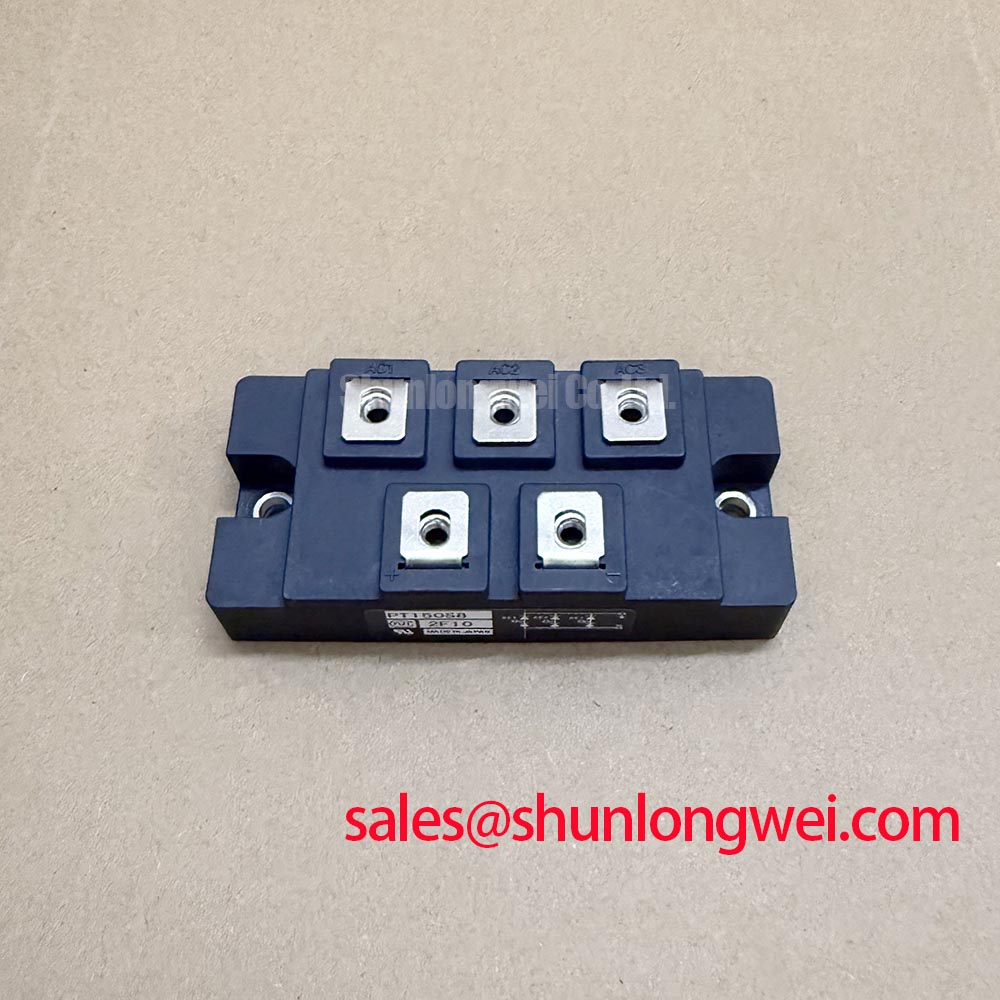
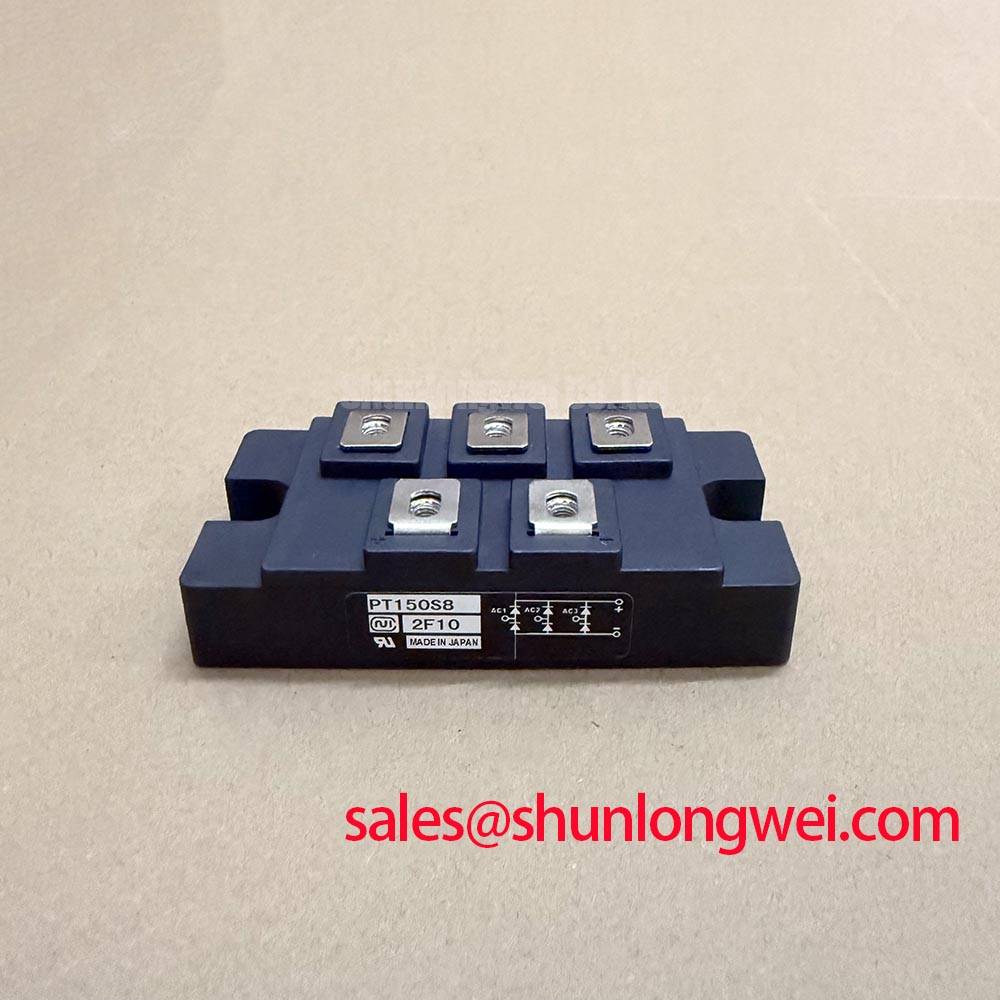
The NIEC PT150S8 is a dual thyristor module engineered for high reliability in demanding AC power control systems. Its defining feature is a formidable non-repetitive surge current capability, providing a robust safety margin against fault conditions. This module combines high voltage and current ratings within an industry-standard package, simplifying both system design and integration.
* **Core Specifications**: 800V VRRM | 150A IT(AV) | 2500A ITSM
* **Key Engineering Benefits**: Exceptional overload survivability, simplified thermal design due to an electrically isolated mounting base.
* This module’s robust construction and high isolation voltage address the critical need for reliable performance and safety in industrial power electronics.
Download the Official PT150S8 Datasheet (PDF)
### Technical Analysis for System Reliability
The PT150S8 module is built around two primary strengths documented in its datasheet: high surge current tolerance and effective thermal management. These characteristics are fundamental to designing durable and dependable power control circuits.
The standout feature is its 2500A non-repetitive surge current (ITSM) rating. In applications like motor soft-starters or circuits with large capacitive loads, initial power-on can create immense inrush currents. The PT150S8’s ability to withstand these brief but powerful events prevents catastrophic failure. Think of the ITSM rating like a dam’s emergency spillway; it’s designed to handle a sudden, massive surge of current without breaking, protecting the entire system from damage.
Effective thermal management is enabled by the module’s construction. It specifies an isolation voltage (Visol) of 2500V AC, meaning the mounting baseplate is electrically isolated from the active semiconductor elements. This allows multiple modules to be mounted on a single, non-isolated heatsink, reducing assembly complexity and cost. Combined with a low junction-to-case thermal resistance of 0.15 °C/W per arm, heat generated during its 150A continuous operation can be efficiently transferred to the cooling system, maintaining a safe operating junction temperature.
### Optimized Application Scenarios
The specifications of the PT150S8 make it a strong candidate for a range of medium-to-high power AC control applications. Its performance is particularly aligned with systems that experience significant load variations and potential fault conditions.
* **AC Motor Soft Starters**: The high ITSM rating is essential for reliably managing the large inrush currents typical of starting large induction motors.
* **Industrial Heater and Furnace Control**: The 150A average on-state current rating allows for precise and continuous phase-angle control of high-power resistive heating elements.
* **Welding Power Supplies**: Capable of handling the high-current pulses required in various welding processes, ensuring operational robustness.
* **Static Switches**: Provides a dependable solid-state solution for switching high-power AC lines, offering advantages over mechanical contactors.
This module is best matched for industrial AC loads up to 150A requiring high reliability and substantial surge current protection for long-term operational integrity.
### Key Specifications of the PT150S8
| Absolute Maximum Ratings (TC = 25°C unless otherwise noted) | |
|---|---|
| Repetitive Peak Reverse Voltage (VRRM) | 800 V |
| Average On-state Current (IT(AV)) | 150 A |
| Surge non-repetitive On-State Current (ITSM) | 2500 A (50Hz, 1 cycle) |
| Operating Junction Temperature (Tj) | -40 to 125 °C |
| Electrical & Thermal Characteristics | |
| Maximum On-state Voltage (VTM) | 1.5 V (at 470A peak) |
| Gate Trigger Current (IGT) | 150 mA (max) |
| Gate Trigger Voltage (VGT) | 3.0 V (max) |
| Thermal Resistance, Junction to Case (Rth(j-c)) | 0.15 °C/W (per arm) |
| Isolation Voltage (Visol) | 2500 V (AC, 1 minute) |
| Mounting Torque (Terminals) | 2.5 – 3.4 N·m (M5) |
| Mounting Torque (Heatsink) | 3.4 – 4.4 N·m (M6) |
*Note: All parameters are sourced directly from the official NIEC PT150S8 datasheet. The user is responsible for consulting the complete datasheet for full design context.*
### Engineer FAQ
**1. What are the key thermal considerations when mounting the PT150S8?**
To ensure optimal performance, a thin, uniform layer of thermal grease should be applied between the module’s baseplate and the heatsink. The heatsink mounting bolts should be tightened to the specified torque of 3.4 – 4.4 N·m. This guarantees low thermal resistance and prevents mechanical stress on the module’s isolated substrate.
**2. How does the 2500A surge current rating benefit my design?**
A high ITSM rating provides critical protection against unexpected current spikes from motor stalls, short circuits, or switching capacitive loads. This allows the module to survive events that might destroy lower-rated components, leading to a more robust and field-reliable system. It is a key parameter for achieving power semiconductor longevity.
**3. Is this thyristor module suitable for high-frequency switching applications like a switch-mode power supply (SMPS)?**
No. The PT150S8 is a phase-control thyristor (SCR) designed for low-frequency applications, primarily at line frequencies (50/60 Hz). Its turn-off characteristics are not fast enough for high-frequency switching, which requires devices like IGBTs, SiC, or GaN components.
**4. What is the purpose of the dual thyristor configuration?**
This module contains two thyristors connected in a common cathode or common anode configuration (depending on the specific circuit), often used for controlling a single phase of an AC load. This “half-bridge” style topology is a fundamental building block for AC switches and single-phase controlled rectifiers.
### Empowering Robust Power System Design
The NIEC PT150S8 thyristor module offers a foundation for creating resilient and efficient AC power control systems. Its high surge current immunity and thermally efficient, isolated package provide engineers with the necessary components to build systems that can withstand the rigors of industrial environments. These features enable the development of reliable motor controls, heater regulators, and static switches where long-term operational stability is not optional.