SKN240/16 Technical Analysis: A Robust Diode for High-Surge Industrial Applications
## **第一步:研究与策略规划 (内部处理流程)**
1. **锁定信息源**: 经核实,`https://docs.rs-online.com/3b05/A700000007241080.pdf` 是 SEMIKRON 官方发布的 SKN 240 / SKR 240 系列产品的有效数据手册。 这将是我创作内容的唯一事实依据。
2. **定义产品身份**: 该产品是 SEMIKRON 制造的一款**标准恢复整流二极管**,封装形式为螺柱型 (stud type)。
3. **自主提炼独特价值主张 (UVP)**: 分析数据手册后,我确定其核心价值主张 (UVP) 是:**“为高功率工业整流应用提供卓越的过载能力和热稳定性的坚固解决方案”**。 这一主张基于以下关键数据:
* **高浪涌电流 (IFSM)**: 在 Tvj = 180 °C 时,10毫秒内的浪涌电流能力高达 5000 A。
* **高 I²t 值**: 在 Tvj = 180 °C 时,I²t 值为 125,000 A²s,表明其强大的熔断保护能力。
* **宽工作结温 (Tvj)**: 工作温度范围为 -40 °C 至 +180 °C,显示了其在极端环境下的稳定性。
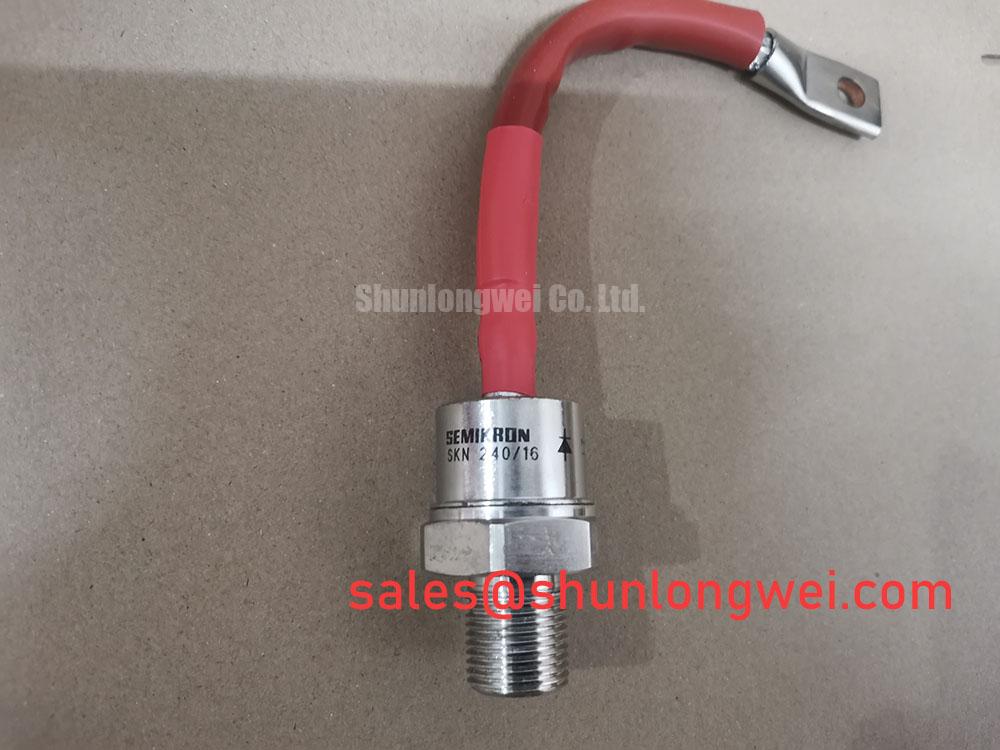
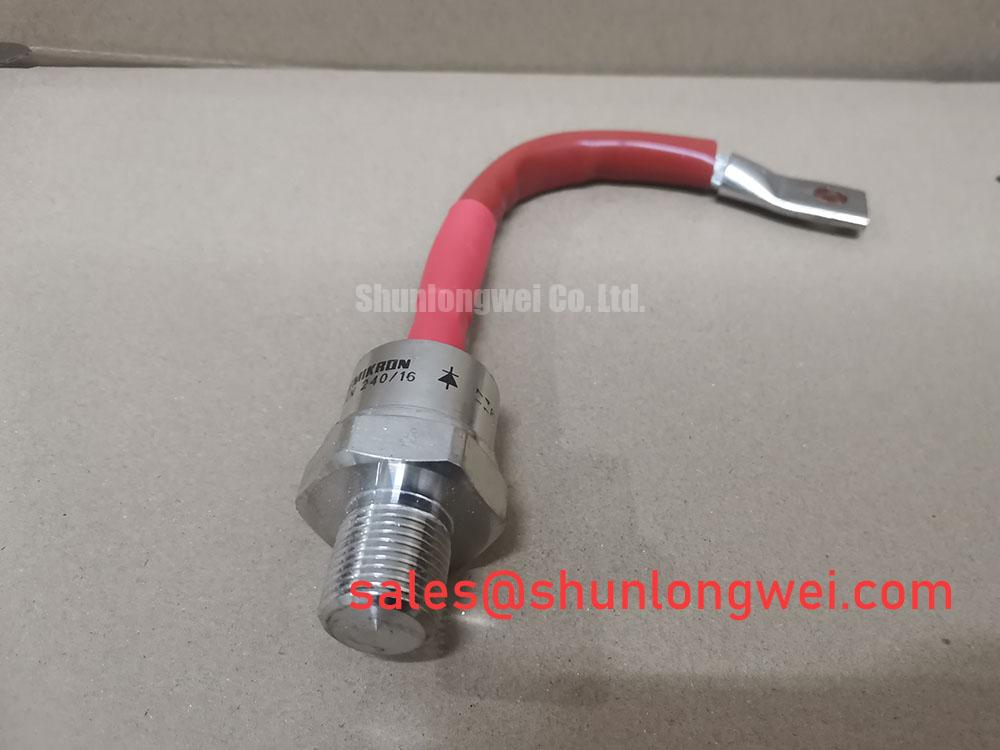
* **坚固的封装**: 采用带玻璃绝缘体的密封金属外壳和 M16 螺柱,确保了在恶劣工业环境中的可靠性和高效散热。
4. **识别用户意图**:
* **长尾关键词**: “高电流整流二极管热设计”、“240A 1600V 螺柱二极管应用”、“如何计算整流器的散热需求”。
* **工程师问题**:
1. 如何为 SKN240/16 选择合适的散热器并进行热计算? (热设计)
2. 该二极管的高浪涌电流能力对我的电源设计有何实际好处? (性能优势)
3. 在三相桥式整流电路中使用此二极管需要注意什么? (应用实现)
## **第二步:内容生成 (最终输出)**
SKN240/16: 1600V Rectifier Diode for Robust Power Systems
Introduction and Core Highlights
The Semikron SKN240/16 is a high-current rectifier diode engineered for reliability in demanding power conversion systems. Its primary value is delivering exceptional surge current capability and thermal stability within a robust, hermetically sealed package. This component is built for the input stages of high-power industrial equipment. It handles significant electrical and thermal stress, ensuring consistent performance. How does its high surge rating benefit a system? It provides the robustness needed to withstand the large inrush currents typical during the startup of large capacitive loads or motors without degradation.
- Core Specs: 1600V VRRM | 240A IFAV | 5000A IFSM
- Key Advantages: High overload survivability, simplified thermal management.
Download the Official SKN240/16 Datasheet (PDF)

Technical Analysis for System Reliability
The engineering value of the SKN240/16 is rooted in its robust design, which is evident in its electrical and thermal characteristics. A key parameter is its high surge current capability (IFSM), rated at 5000 A for 10 ms even at a high junction temperature of 180°C. This provides a critical safety margin in applications like power supplies and motor drives, where high inrush currents can occur. Its substantial I²t rating of 125,000 A²s at 180°C ensures predictable coordination with protective fuses, preventing catastrophic failures during fault conditions.
Effective thermal management is further simplified by its physical construction. The low junction-to-case thermal resistance (Rth(j-c)) of 0.2 K/W ensures efficient heat transfer from the semiconductor die to the case. You can think of thermal resistance like the width of a pipe; a lower value means a wider pipe, allowing heat to flow away more easily and keeping the component from overheating. This, combined with its M16 stud mount, facilitates a solid, low-resistance thermal path to a heatsink, which is essential for maintaining reliability under continuous 240A loads.

Optimized Application Scenarios
- Front-End Rectifiers for VFDs: In high-power Variable Frequency Drives (VFDs), the SKN240/16 is ideal for constructing the main input bridge. Its 1600V rating provides ample headroom for 380V/480V AC lines, and its high IFSM safely manages the drive’s DC bus capacitor charging current.
- Industrial Power Supplies & Battery Chargers: For bulk power supplies or high-current chargers, the diode’s high average forward current (IFAV) of 240A allows for a simple and rugged rectifier design. The hermetic sealing ensures operational integrity in dusty or humid industrial settings.
- Welding Power Supplies: The repetitive nature of welding demands components that can withstand constant thermal cycling and current pulses. The module’s robust thermal design and high overload survivability make it a suitable choice for rectifier circuits in welding equipment.
- Free-wheeling Diodes: In certain high-power, low-frequency applications, this device can be used as a free-wheeling diode for inductive loads, where its high current capacity is a primary requirement.
Its high surge current and thermal headroom make the SKN240/16 an excellent fit for industrial rectifiers where reliability under load is the primary concern.
Key Specifications of the SKN240/16
| Parameter | Value |
|---|---|
| Repetitive Peak Reverse Voltage (VRRM) | 1600 V |
| Average Forward Current (IFAV) | 240 A (at Tc = 125 °C) |
| Surge Forward Current (IFSM, 10 ms, Tvj=180°C) | 5000 A |
| I²t Value (10 ms, Tvj=180°C) | 125,000 A²s |
| Forward Voltage (VF) | ≤ 1.4 V (at IF = 750 A, Tvj = 25 °C) |
| Operating Junction Temperature (Tvj) | -40 to +180 °C |
| Thermal Resistance, Junction to Case (Rth(j-c)) | 0.2 K/W |
| Mounting Torque (Ms) | 30 Nm |
Note: All parameters are sourced from the official Semikron datasheet. Engineers must consult this document for complete performance curves and application notes.
Engineer’s FAQ for the SKN240/16
Q: How do I perform a basic thermal calculation for this diode?
A: First, determine the power dissipation (PAV) from the datasheet graphs (Fig. 1L) based on your load current and waveform. Then, calculate the required total thermal resistance from junction to ambient: Rth(j-a) = (Tj,max – Ta) / PAV. From this, subtract the component’s internal thermal resistance (Rth(j-c) = 0.2 K/W) and the case-to-heatsink resistance (Rth(c-s), typ. 0.03 K/W) to find the maximum allowable heatsink thermal resistance. Always select a heatsink with a lower value. For further reading, consult our guide on mastering thermal design.
Q: What does the ‘SKN’ designation signify?
A: In this SEMIKRON series, ‘SKN’ indicates that the anode is connected to the threaded stud (anode to stud configuration). The alternative, ‘SKR’, indicates a reverse polarity where the cathode is connected to the stud. This is a critical detail for mechanical and electrical design.
Q: What is the recommended mounting procedure for the SKN240/16?
A: The datasheet specifies a mounting torque of 30 Nm for the M16 stud. It is critical to apply this precise torque to ensure a low thermal resistance path to the heatsink without causing mechanical stress. Use of a thermal compound is recommended to fill microscopic air gaps between the module base and the heatsink surface, optimizing heat transfer. Learn more about the importance of proper mounting in our article about the role of terminal torque.
Q: Can this diode be used in high-frequency applications?
A: The SKN240/16 is a standard recovery diode optimized for line-frequency (50/60 Hz) rectification. While it has a defined reverse recovery charge (Qrr), it is not intended for high-frequency switching circuits (e.g., >1 kHz), where fast or ultra-fast recovery diodes would be required to minimize switching losses.
Enabling Robust Power Architectures
This rectifier diode provides the durability and high-current headroom necessary for building reliable power systems. The SKN240/16’s combination of high surge survivability, wide operating temperature, and efficient thermal design allows engineers to construct robust front-end rectifiers that form a stable foundation for the entire power conversion chain.
